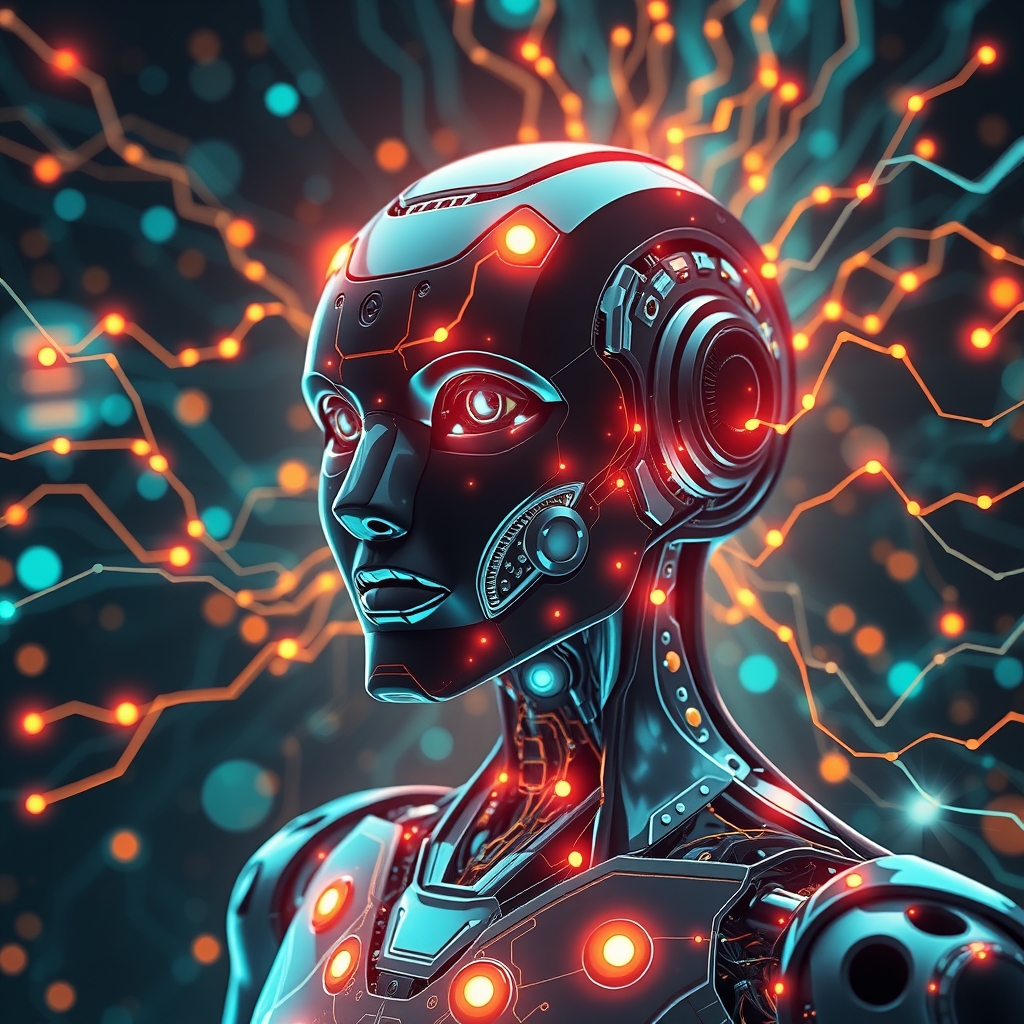
Google DeepMind has officially entered a new era of embodied AI with the launch of Gemini Robotics 2, a cutting-edge vision-language-action (VLA) model. This breakthrough technology is designed to serve as a universal intelligence layer, enabling robots to navigate and interact with the physical world across diverse hardware platforms.
The Rise of Vision-Language-Action (VLA) Models
At the core of this announcement is the shift toward sophisticated VLA models. Unlike traditional robotics programming that relies on rigid, pre-defined instructions, Gemini Robotics 2 integrates image recognition, language processing, and real-time action control. This synergy allows a robot to not only "see" an object and "understand" a verbal command but also execute the precise physical movements required to interact with that object.
DeepMind’s new architecture is remarkably versatile, designed to scale across various form factors. The model is capable of controlling everything from specialized tabletop robotic arms used in manufacturing to complex, full-body humanoid robots. This capability suggests a future where a single underlying intelligence can be ported to different hardware, significantly lowering the barrier to deploying advanced robotics in unpredictable environments.
Gemini Robotics ER 2: Advancing Embodied Reasoning
Complementing the VLA model is the introduction of Gemini Robotics ER 2, a model specifically engineered for "embodied reasoning." While VLA models focus on the loop of perception and action, ER 2 focuses on the high-level cognitive decision-making process—understanding the physical nuances of an environment and determining the optimal sequence of actions to achieve a goal.
Gemini Robotics ER 2 succeeds the Gemini Robotics ER 1.6 model released in April, marking a significant jump in reasoning capabilities. By acting as a high-level control system, ER 2 allows robots to move beyond simple repetitive tasks and toward complex problem-solving in real-world settings. For developers looking to integrate these capabilities, ER 2 is already available via Google AI Studio.
Why This Matters for the AI Landscape
The development of Gemini Robotics 2 represents a pivotal step in the quest for General Purpose Robotics. For years, the industry has struggled with "brittleness"—the tendency for robots to fail when faced with slight variations in their environment. By applying the scaling laws and transformer-based logic of the Gemini family to physical movement, DeepMind is working to solve the problem of adaptability.
If successful, this "intelligence layer" approach could decouple software intelligence from hardware engineering. This would allow for a massive acceleration in robotics deployment, as developers can focus on refining physical actuators while relying on Google’s robust, pre-trained models to handle the complex logic of movement and spatial reasoning.
Key Takeaways
- Universal Compatibility: Gemini Robotics 2 is a VLA model capable of controlling diverse hardware, ranging from compact tabletop arms to complex humanoid robots.
- Enhanced Reasoning: The new Gemini Robotics ER 2 provides advanced "embodied reasoning," acting as a high-level cognitive controller for physical decision-making.
- Developer Accessibility: Google is opening these tools to the ecosystem, with ER 2 available in Google AI Studio and early access to Gemini Robotics 2 available via a waitlist.
Bottom line
Gemini Robotics 2 and the accompanying ER 2 module represent a concrete step toward a universal AI brain for robots, collapsing perception, language, and control into a single trainable system. The approach could dramatically lower the cost and complexity of deploying sophisticated robots.