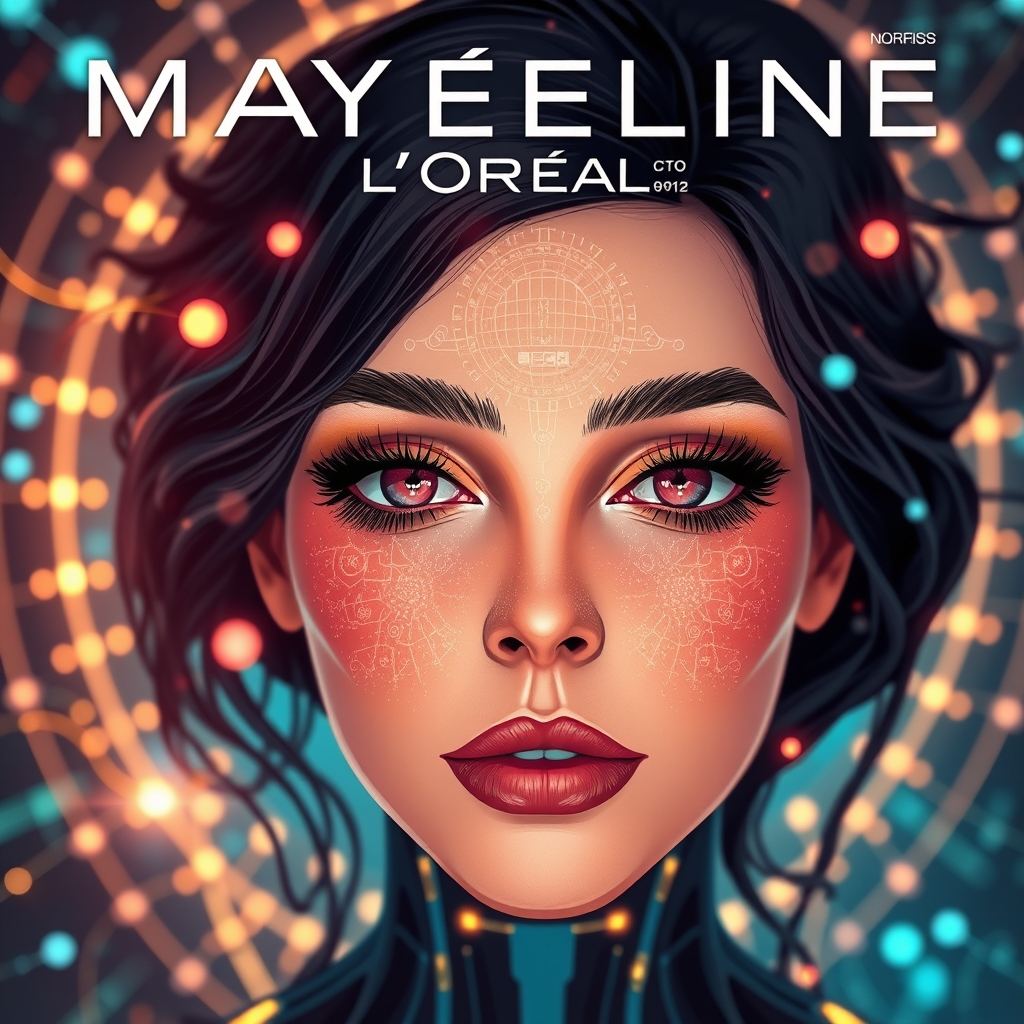
L’Oréal Integrates Maybelline Virtual Try-On into ChatGPT
The boundary between conversational AI and interactive e-commerce is blurring as L’Oréal announces a landmark partnership with OpenAI. By integrating Maybelline New York’s advanced virtual try-on capabilities directly into ChatGPT, the beauty giant is transforming a text-based interface into a sophisticated, visual shopping assistant.
A New Era of Conversational Commerce
Announced at VivaTech 2026, this collaboration marks a significant leap in how consumers interact with retail brands through Large Language Models (LLMs). Rather than navigating traditional product pages or separate mobile apps, users can now leverage ChatGPT to discover products and visualize results in real-time.
The integration of Maybelline’s virtual try-on technology allows the AI to go beyond text descriptions. Users can engage in natural language dialogues about their makeup preferences, and the system can respond with visual demonstrations of how specific shades and textures look on their unique features. This synergy between OpenAI’s generative capabilities and L’Oréal’s computer vision technology represents a massive shift toward "agentic commerce," where AI agents handle the entire discovery-to-visualization loop.
Comprehensive Integration Across the Value Chain
The partnership extends far beyond a simple consumer-facing chatbot. L’Oréal’s roadmap with OpenAI is multi-faceted, covering several critical layers of the business:
- Consumer Experience: Beyond virtual try-ons, the collaboration focuses on enhanced product discovery and innovative advertising pilots designed to increase engagement.
- Research and Development: L’Oréal plans to utilize OpenAI’s models to accelerate scientific research and product formulation, potentially shortening the lifecycle from concept to shelf.
- Content Production: The agreement includes the use of AI for internal content creation, streamlining how the company generates marketing assets and localized media.
By embedding AI into the very core of their research and production workflows, L’Oréal is positioning itself not just as a beauty company, but as a tech-driven enterprise leveraging generative intelligence to optimize every stage of the supply chain.
Why This Matters for the AI Landscape
This development is a bellwether for the broader industry, signaling that the "killer app" for LLMs may lie in deep, specialized integration with real-world physical products. For developers and founders, the L’Oréal-OpenAI partnership demonstrates that the future of AI is multimodal—combining text, vision, and interactive utility to solve complex consumer needs.
As LLMs move from being mere information retrieval tools to active participants in the global economy, we can expect more legacy industries to pursue similar deep-tech integrations. This move sets a precedent for how high-end consumer brands can leverage the scale of OpenAI to create personalized, high-fidelity digital experiences that drive conversion and brand loyalty.
Key Takeaways
- Direct Visual Integration: Maybelline’s virtual try-on technology will allow ChatGPT users to visually test makeup products through natural language prompts.
- End-to-End AI Adoption: The partnership spans consumer shopping tools, advertising pilots, and internal R&D, including product formulation and content production.
- Shift Toward Multimodality: This collaboration exemplifies the move toward multimodal AI, where LLMs integrate computer vision to bridge the gap between digital conversation and physical product interaction.