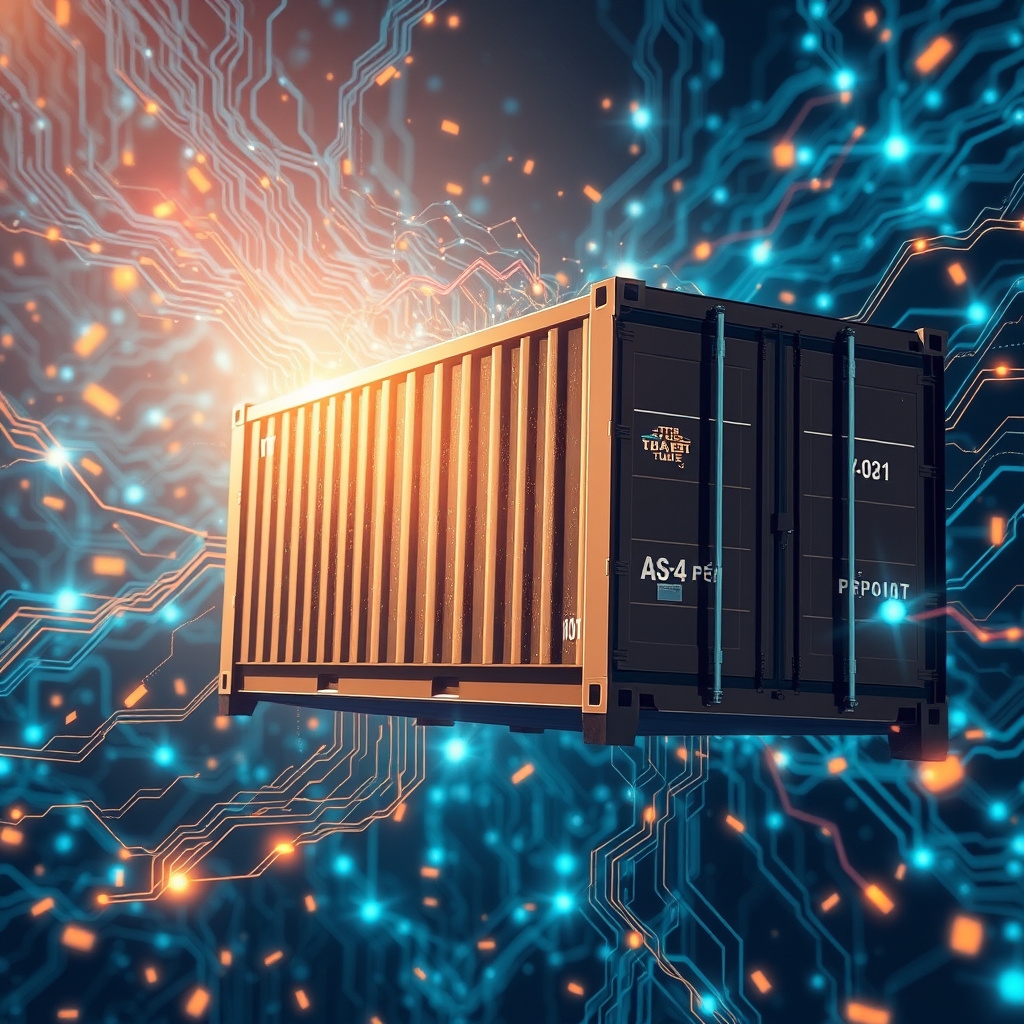
The Shipping Container for AI
Building AI agents is hard.
On day one, you connect an agent to a database. On day two, you connect it to a weather API. By day ten, your code is a mess of custom integrations.
If you switch your AI model, you must rebuild every connection. This wastes time and money.
The Model Context Protocol (MCP) solves this.
Think about global shipping before the 1950s. Every company used different sized crates. Moving goods was slow and difficult.
Everything changed when we standardized the shipping container. A crane operator does not need to know what is inside a container. They only need to know how to move the container itself.
MCP is the shipping container for AI data.
What is MCP? Anthropic introduced MCP to give AI models context through a single standard. It replaces custom code with a universal way to connect tools and data.
The structure uses three parts:
- MCP Host: The main app, like a chat interface or code editor.
- MCP Client: The part inside the host that maintains connections.
- MCP Server: A small service that shares specific data or tools.
How it works: Servers share three things with the AI:
- Tools: Actions the AI can take, such as checking weather or creating events.
- Resources: Data the AI can read, like text files or database schemas.
- Prompt Templates: Instructions on how to ask for information.
Why you need it:
- Interoperability: Your tools work with different models like OpenAI or Anthropic.
- Reusability: Build a tool once and use it in many projects.
- Speed: You stop writing manual glue code for every new data source.
- Accuracy: Real-time data access reduces AI mistakes and hallucinations.
- Security: It uses standard encryption and authorization.
MCP is not just another API. An API is a specific way to talk to one service. MCP is a protocol that sits on top of those services to make them uniform for AI.
Stop rebuilding connections. Start using a standard.
Optional learning community: https://t.me/GyaanSetuAi