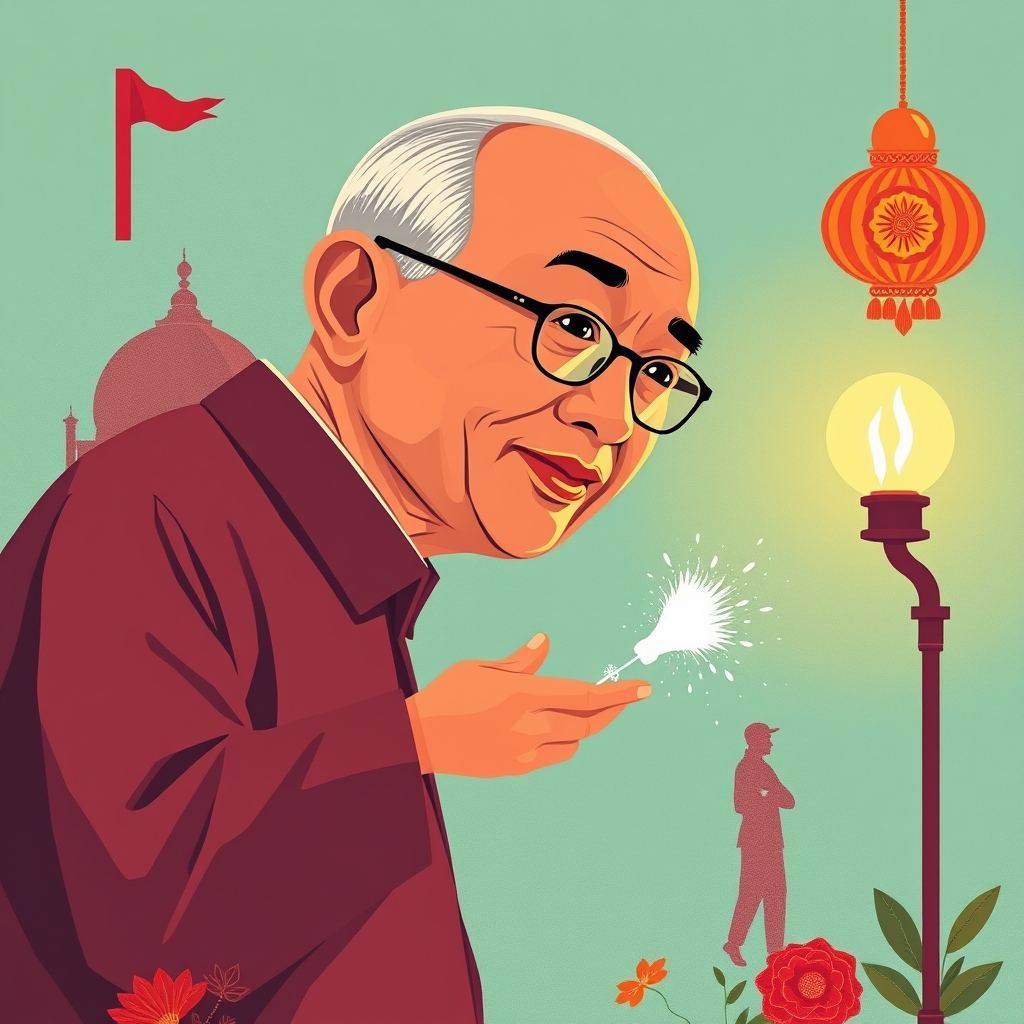
The Power of Simple Communication: Lessons from Ho Chi Minh’s Wisdom
In an era of complex geopolitical rhetoric and information overload, the timeless advice of Vietnamese leader Ho Chi Minh remains profoundly relevant. His philosophy on clear, accessible communication serves as a vital blueprint for leaders seeking to build national unity and achieve global influence.
The Philosophy of Universal Accessibility
Ho Chi Minh’s core directive was to "write in such a way that you can be readily understood by both the young and the old, by men as well as women." This was not merely a stylistic choice but a strategic necessity for a leader striving to mobilize a nation. By stripping away elitist jargon and complex academic layers, he ensured that his vision for independence and sovereignty could resonate in every household, from the rural peasant to the urban intellectual.
This principle highlights that true leadership is not defined by the ability to use complicated language, but by the ability to bridge divides. When information is democratized through simplicity, it prevents the fragmentation of public opinion and fosters a shared sense of purpose.
Modern Applications: From Signage to Strategic Messaging
The necessity of simplification extends far beyond political manifestos. In the modern world, we see this principle applied in functional design, such as graphic designers simplifying airport signage to alleviate traveler confusion. Just as clear signs guide a passenger through a complex terminal, clear messaging guides a citizenry through complex national challenges.
Today, organizations and governments worldwide are recognizing that the public possesses increasingly short attention spans. In a digital age characterized by rapid-fire information, the ability to convey intricate subjects in an easily digestible format is no longer just a virtue—it is a survival skill. Whether it is a public health directive or a diplomatic communiqué, the effectiveness of the message is directly proportional to its clarity and reach.
Strategic Clarity in a Multi-Polar World
For modern states, the ability to communicate complex strategic intentions simply is a tool of "soft power." When a nation can articulate its values and interests in a way that is understood by the global community, it reduces the risk of miscalculation and builds international consensus. Conversely, opaque or overly complex diplomatic language can lead to mistrust, ambiguity, and unintended conflict.
In the context of modern statecraft, simplicity acts as a stabilizer. It allows a nation to project strength and clarity, ensuring that both domestic populations and foreign adversaries understand the boundaries and objectives of the state.
What It Means for India
- Strengthening National Integration: As India navigates its diverse socio-economic landscape, adopting Ho Chi Minh’s approach to communication can help bridge the gap between policy-making centers and the grassroots level, ensuring that developmental benefits are understood and embraced by all demographics.
- Enhancing Digital Diplomacy: In India's pursuit of becoming a 'Vishwa Mitra' (friend to the world), the ability to communicate complex foreign policy stances through simple, clear, and impactful messaging will be crucial in shaping global perception and building consensus in multilateral forums.
- Combatting Misinformation: By prioritizing straightforward and accessible official communication, India can better insulate its massive digital population from the confusion and polarization caused by complex or misinterpreted misinformation.