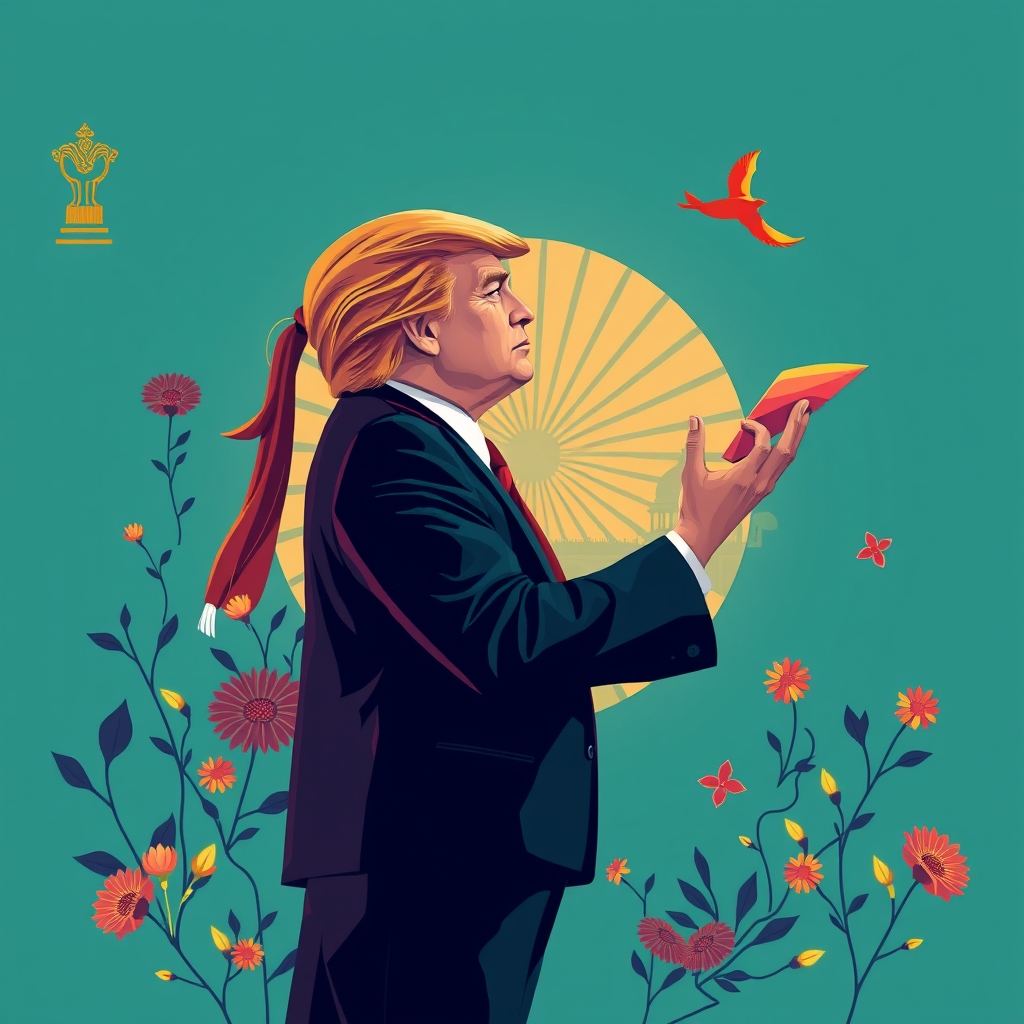
Trump’s AI-Altered Posts: The New Frontier of Digital Diplomatic Volatility
The use of generative AI to spread doctored imagery has moved from social media fringes to the center of high-stakes political discourse. Recent actions by US President Donald Trump involving AI-manipulated images of former President Barack Obama and international leaders highlight a shifting landscape where digital misinformation can directly impact diplomatic relations.
The Mechanics of AI-Driven Disinformation
On Sunday, President Donald Trump shared a falsified image depicting former President Barack Obama and Michelle Obama waving from the steps of Air Force One. The image was digitally altered to show the presidential aircraft covered in graffiti, including the phrases “Yes We Can,” “Obama,” “BLM,” and Arabic script reading “Alhamdulillah.”
This incident follows a pattern of similar digital provocations. Months prior, Trump faced bipartisan backlash for sharing an image depicting the Obamas as primates—a post that was eventually deleted following intense criticism from civil rights leaders and Republican senators. Additionally, the President recently shared a manipulated image of the Obama Presidential Library in Chicago, depicting it surrounded by wasteland. These incidents signal a growing reliance on "deepfake" aesthetics to reinforce specific political narratives and target domestic opponents.
Strained Bilateral Ties and Diplomatic Friction
The volatility of these digital posts is not limited to domestic politics; it is actively bleeding into US foreign relations. In a recent development, Trump shared an older photo of Italian Prime Minister Giorgia Meloni with the caption “RESTRAINED ORDER NEEDED.” This move reignited a dispute stemming from the G7 summit, prompting Meloni to issue a sharp rebuttal, stating, “Italy and I never beg.”
The diplomatic fallout was immediate, with Italian Foreign Minister Antonio Tajani canceling a scheduled visit to Washington. This demonstrates how unverified or AI-manipulated social media content can bypass traditional diplomatic channels, causing real-world friction between allies and complicating official state visits and international cooperation.
The High Stakes of Symbolic Assets
The choice of imagery also carries deep symbolic weight. The use of Air Force One—a symbol of American sovereignty and power—as a canvas for digital graffiti is a significant departure from traditional presidential decorum. This comes at a time when the aircraft itself is a subject of political debate; Trump recently debuted a new $400 million Boeing 747-8, gifted by Qatar, which features a distinct navy-blue, red, and gold livery instead of the traditional light-blue scheme.
As Trump prepares for the upcoming NATO summit in Turkey, the intersection of digital disinformation and official statecraft suggests that the "information war" is becoming an inseparable component of modern presidency and international diplomacy.
What It Means for India
- Navigating Information Chaos: As India increasingly relies on digital infrastructure, the weaponization of AI-altered imagery by global leaders serves as a cautionary tale regarding the speed at which disinformation can destabilize political and social stability.
- Diplomatic Predictability: For India’s foreign policy, the unpredictability of US communication—where official stances may be complicated by the personal social media activity of the President—necessitates a highly agile and cautious approach to bilateral engagements.
- Cyber-Diplomacy Requirements: The blurring of lines between personal digital expression and state representation underscores the need for India to strengthen its own strategic communication and digital forensics capabilities to counter similar disinformation trends in the regional context.