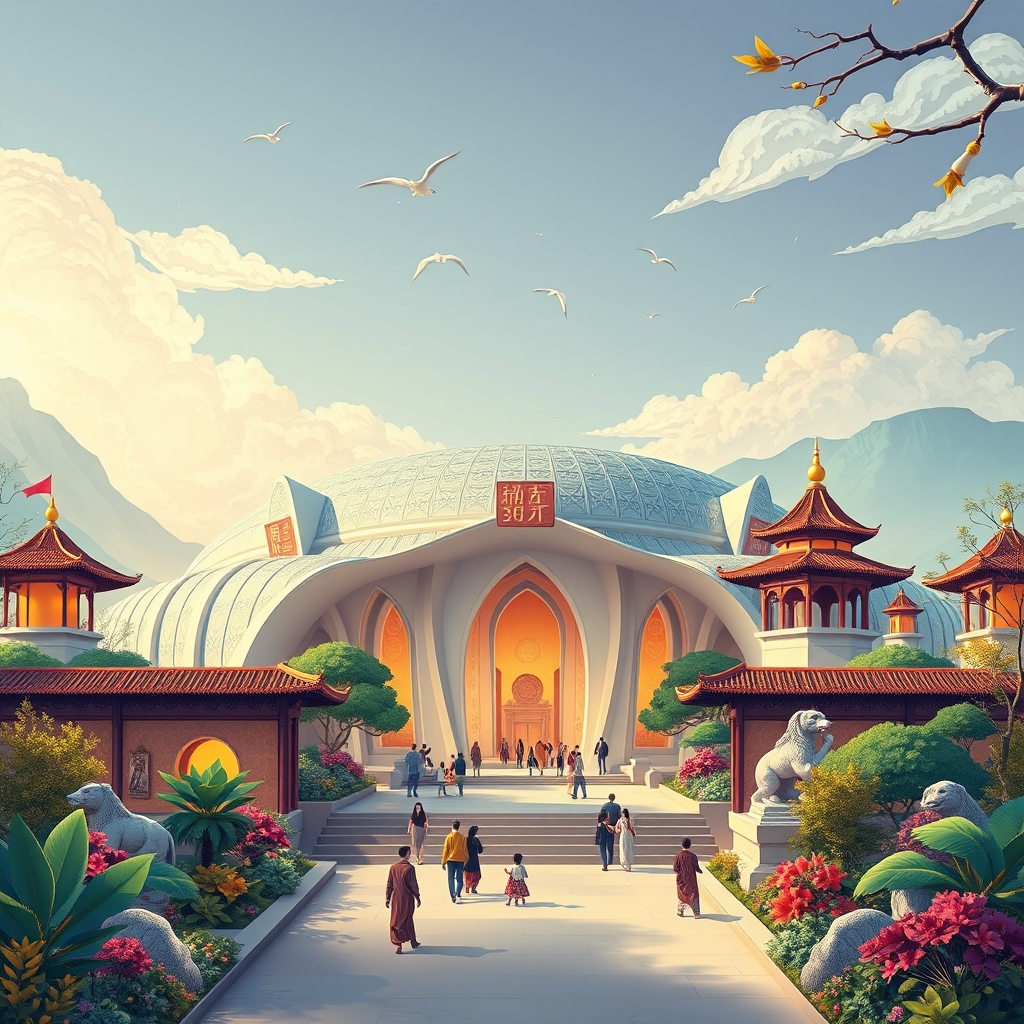
China Unveils $517 Million Shenzhen Natural History Museum
China has officially opened the Shenzhen Natural History Museum, a massive $517 million facility that marks a significant investment in scientific infrastructure and cultural soft power. The landmark institution, which opened on July 28, 2026, serves as southern China's first major dedicated natural history hub, blending architectural grandeur with scientific education.
A Masterpiece of Architectural and Scientific Integration
The Shenzhen Natural History Museum is not merely a repository for specimens but a feat of modern engineering. Its design is deeply symbolic, drawing direct inspiration from the concept of a river delta. This results in a flowing, curvilinear structure that mimics the natural movements of water, integrating the building into the landscape of the rapidly growing Shenzhen metropolis.
Inside, the museum is designed as a chronological journey through existence. The exhibition layout is meticulously structured to guide visitors from the vastness of the cosmos through the complexities of Earth's geological history. The collection features high-profile exhibits including rare meteorites, extensive dinosaur eras, and a deep dive into human evolution. By showcasing the delicate balance of the natural world, the museum aims to foster a new generation of scientific literacy among the Chinese public.
Soft Power Through Scientific Infrastructure
The scale of this investment—exceeding half a billion dollars—is a clear indicator of China's broader strategy to integrate scientific advancement with public diplomacy. Large-scale museum projects like this are often used by Beijing to signal technological sophistication and cultural maturity to the global community.
By establishing such a significant institution in Shenzhen—a global hub for technology and innovation—China is reinforcing the link between its manufacturing prowess and its scientific ambitions. This project serves as a tool for "soft power," projecting an image of a nation that is not only economically dominant but also a guardian of global scientific heritage and natural history.
The Strategic Dimension of Scientific Dominance
In the contemporary geopolitical landscape, the competition for scientific leadership is as intense as the competition for market share. Investments in massive research and educational facilities are part of a long-term play to secure intellectual capital. As China builds out its physical and digital infrastructure, it is simultaneously building the institutional frameworks required to sustain a high-tech economy.
For the global community, the rise of these mega-institutions signifies a shift in where scientific discourse and public engagement are centered. The Shenzhen Natural History Museum represents a consolidated effort to institutionalize scientific curiosity, ensuring that the next wave of innovators is nurtured within a state-backed framework of immense resources and curated knowledge.
What It Means for India
- Soft Power Competition: As China utilizes massive cultural and scientific investments to project global leadership, India must continue to strengthen its own institutional frameworks, such as the National Museum and scientific research bodies, to ensure its cultural and scientific narratives remain competitive.
- Focus on STEM Education: China's heavy investment in making science "spectacular" and accessible to the public underscores the importance of modernizing India’s science communication and museum infrastructure to engage its large youth population.
- Technological and Urban Development: The integration of advanced architecture with scientific purpose in Shenzhen highlights the trend of "smart cities" using cultural landmarks to drive regional prestige, a model India can observe as it develops its own urban hubs and technological corridors.