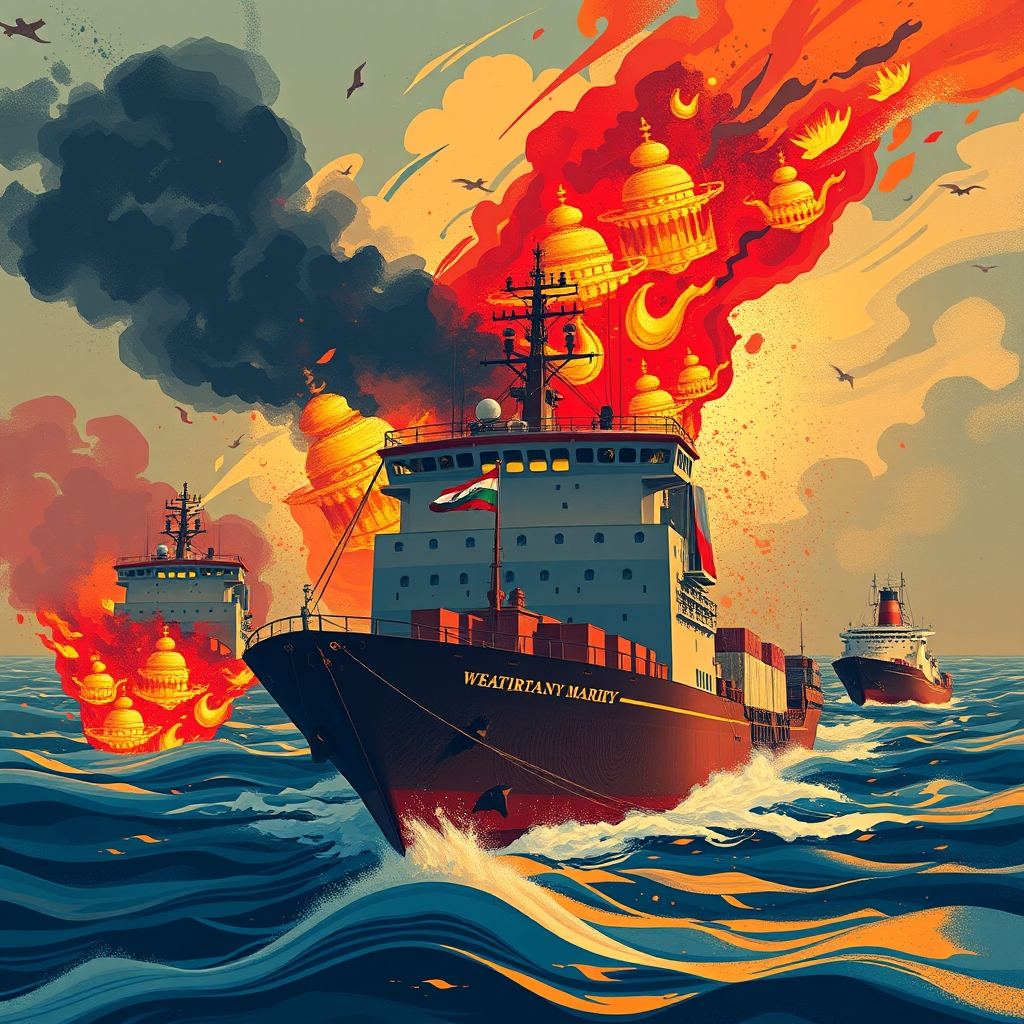
Escalation in Strait of Hormuz: US Strikes Iran Amid Maritime Chaos
The Strait of Hormuz has returned to the center of global volatility as U.S. military strikes hit Iranian soil following a confrontation involving a civilian vessel. This sudden breakdown in the interim ceasefire threatens to destabilize global energy markets and redraw the security architecture of the Middle East.
Maritime Confrontation and Military Retaliation
The current crisis was triggered when the Iranian Revolutionary Guards Corps fired warning shots at a Cyprus-flagged container ship, claiming the vessel used an unauthorized route. The engagement resulted in significant engine room damage to the ship and one missing crew member. In immediate response, U.S. Central Command launched a third round of strikes targeting Iranian locations, including the coastal towns of Bandar Abbas and Sirik.
U.S. Defense Secretary Pete Hegseth framed the strikes as a necessary measure to degrade Iran's ability to harass commercial shipping. The escalation follows a period of intense diplomatic maneuvering, including meetings between Iranian and Omani foreign ministers on July 11, 2026, aimed at securing the waterway. However, the ceasefire appears to have collapsed under the weight of Iranian hardline actions and U.S. retaliatory policy.
Political Instability and the New Iranian Leadership
The geopolitical landscape in Tehran has shifted following the death of Ayatollah Ali Khamenei. The new Supreme Leader, Mojtaba Khamenei, has taken a hardline stance, vowing to avenge his father's death and promising retaliation against any further aggression. This transition of power coincides with a period of heightened personal rhetoric from U.S. President Donald Trump, who has threatened massive missile strikes in response to alleged Iranian assassination plots.
Simultaneously, the conflict is expanding beyond a bilateral U.S.-Iran struggle. Following Iranian strikes on Bahrain, Jordan, Kuwait, and Qatar on July 8, 2026, there are growing indications of a broader regional confrontation. Unclaimed attacks on Iranian soil have raised suspicions of involvement by Gulf Arab states seeking to deter Iranian maritime aggression.
The Battle Over International Waterways
At the heart of the conflict is a fundamental disagreement over the legal status of the Strait of Hormuz. While the international community views it as a global waterway, Iran has asserted control over the strait, attempting to charge transit fees—a stance that intensified during the recent war.
The economic stakes are immense; before the current conflict, approximately one-fifth of all traded oil and natural gas passed through this narrow passage. While global oil prices have retreated from wartime highs of $120 per barrel, the closure of the strait "until further notice" by Iran poses a systemic risk to global energy security and maritime trade routes.
What It Means for India
- Energy Security Risks: As a major importer of crude oil from the Persian Gulf, any prolonged closure or heightened risk in the Strait of Hormuz will lead to extreme volatility in Indian fuel prices and increase freight insurance costs for Indian tankers.
- Maritime Trade Vulnerability: Indian commercial vessels frequently transit this corridor; the shift toward "unauthorized routes" and Iranian attempts to control the waterway directly threatens the safety of India's merchant navy and its vital trade links with Europe and East Asia.
- Strategic Balancing Act: The escalation forces India to navigate a complex diplomatic corridor, balancing its traditional ties with Iran (essential for regional connectivity like the Chabahar Port) against its deepening strategic and defense partnership with the United States.