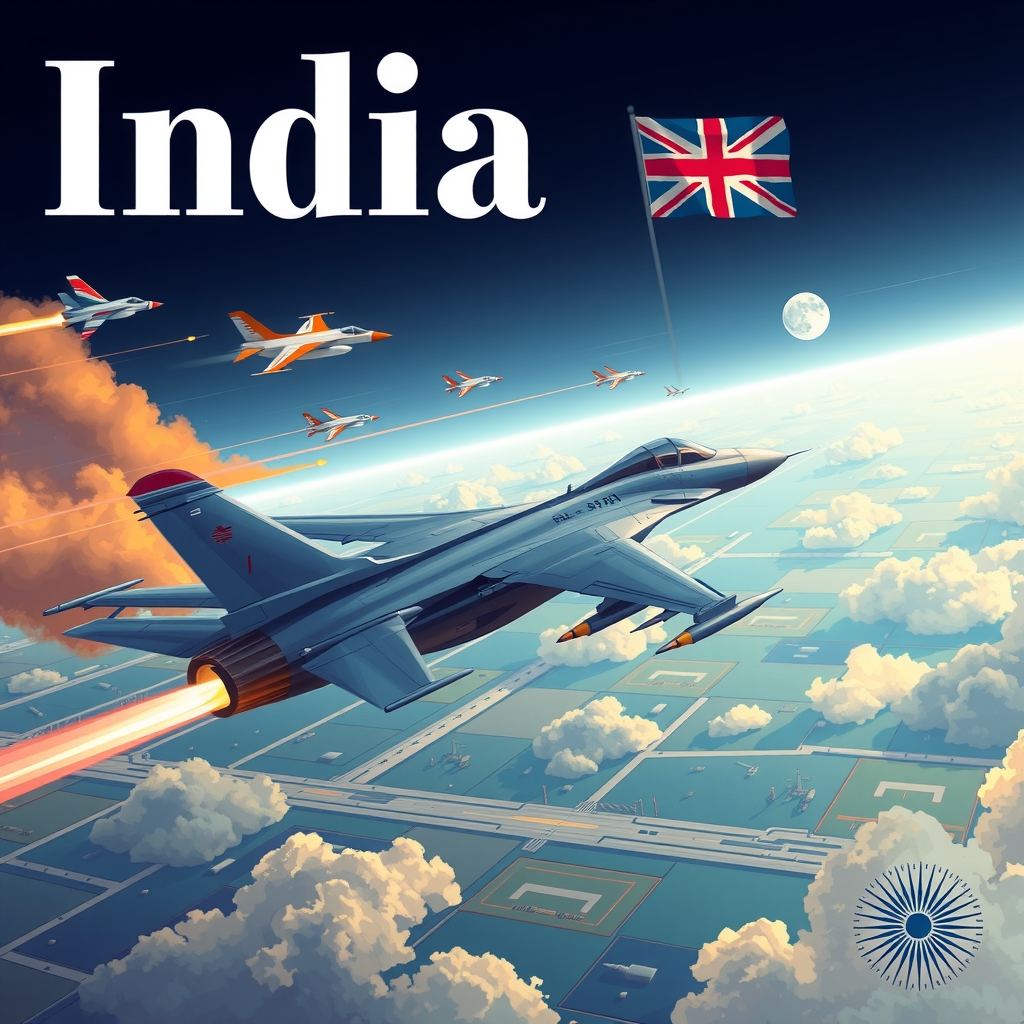
Title: Indian Air Force Instructors Join RAF Valley
Three Indian Air Force Qualified Flying Instructors have been posted to RAF Valley in Wales to train Royal Air Force fast-jet pilots, marking the first time Indian instructors have operated from a UK base. The move shows growing trust between New Delhi and London and could shape future joint training programmes.
Why the deployment matters
India’s air force maintains a large pool of QFIs—pilots who have completed a rigorous instructor-training course and are authorized to teach operational flying techniques. Sending three of them to the RAF’s premier fast-jet training unit signals that Britain sees the Indian cadre as equivalent to its own. For the RAF, the extra expertise helps keep pilot throughput steady while many air forces wrestle with pilot shortages and soaring training costs.
The road to a joint training effort
India and the United Kingdom have long exchanged senior officers and held joint exercises, but most cooperation has been limited to short-term visits or tabletop planning. In recent years both ministries signed memoranda of understanding to boost interoperability, especially in the Indo-Pacific where their navies are expanding presence. The RAF Valley posting moves the relationship from paperwork to daily operations.
Stakes for both sides
- India gets a showcase for its training standards, which could lift export prospects for its aviation-training services.
- The UK receives experienced instructors without pulling its own staff from operational duties.
- Allies may view the partnership as a template for similar exchanges, as Western air forces hunt for cost-effective ways to keep pilots proficient.
What’s not being said
Some analysts warn that relying on foreign instructors could hide deeper shortfalls in India’s domestic training pipeline. Critics note that the arrangement may be politically sensitive in India, where defence procurement and ties with former colonial powers sometimes spark debate. Nonetheless, officials from both air forces stress that the deployment is a reciprocal, skill-based exchange, not a dependence-creating pact.
What to watch next
- Will more Indian personnel join the RAF Valley team in the coming months?
- Will a formal agreement let RAF instructors rotate to India?
- How will pilot graduation rates at RAF Valley respond, and what will that reveal about the partnership’s effectiveness?
Takeaway: By placing its top flying instructors on a UK training line, India is not just offering a service; it is cementing defence cooperation that could redefine how the two air forces train together in the years ahead.