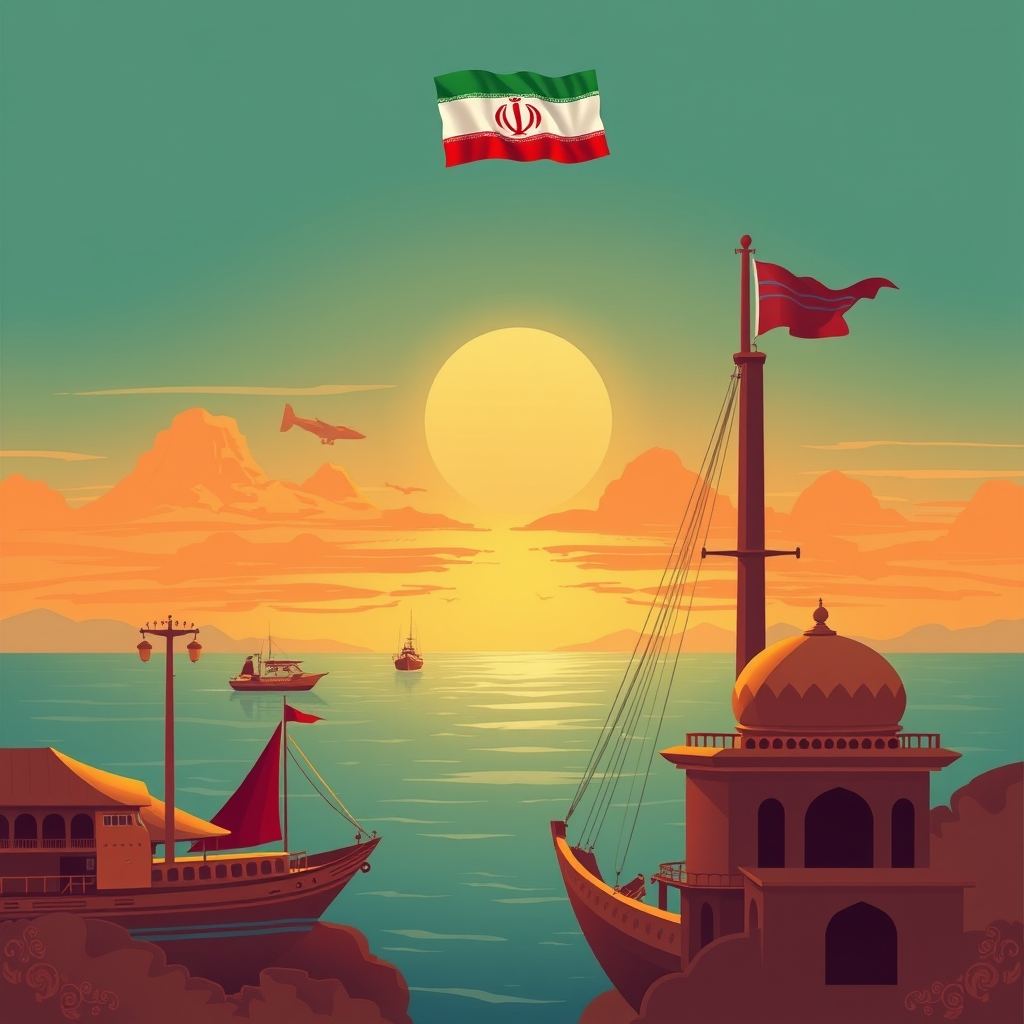
Iran Asserts Control Over Strait of Hormuz Amid Swiss Peace Talks
As tensions in West Asia fluctuate, Iran has signaled a significant shift in the maritime security architecture of the Middle East. Following high-stakes negotiations in Switzerland, Tehran has declared its intent to administer the vital Strait of Hormuz, a move that could redefine regional power dynamics.
Breakthrough in Switzerland: De-escalation and De-confliction
On June 22, 2026, negotiators from Iran and the United States met at the luxury resort of Burgenstock in Switzerland to address the escalating conflict involving Israel and the Islamic Republic. The first round of talks yielded critical breakthroughs aimed at ending the fighting in Lebanon and stabilizing the volatile West Asian region.
A central component of this diplomatic effort is the establishment of direct communication lines between Washington and Tehran. According to Qatari and Pakistani mediators, these lines are designed to prevent "incidents and miscommunication," ensuring the safe passage of commercial vessels through the Strait of Hormuz. While the waterway was briefly closed by Tehran in response to Israeli strikes in Lebanon, maritime traffic began flowing at an increased pace on June 23 following the agreement.
Tehran’s New Maritime Doctrine
The most striking development came from Iran's chief negotiator, Mohammad Bagher Ghalibaf. Returning from the Swiss talks, Ghalibaf asserted that the Strait of Hormuz "will never return to its pre-war conditions" and will henceforth be administered by the Islamic Republic under the guise of international law.
This assertion of sovereignty follows a series of significant concessions and trade-offs. In exchange for Tehran allowing UN nuclear inspectors to return to the country, the United States, represented by Vice President J.D. Vance, has temporarily suspended sanctions on Iranian oil. The deal also involves the unfreezing of Iranian assets and broader sanctions relief, marking a cautious pivot toward economic stabilization for the Islamic Republic.
The Geopolitical Tug-of-War Over Oil and Sanctions
The negotiations have touched upon the most sensitive nerves of global geopolitics: energy security and nuclear oversight. The "oil waiver" discussed in Switzerland is a critical lever for both nations. By suspending sanctions, the U.S. seeks to stabilize global energy markets, while Iran aims to revitalize its economy through the release of frozen funds.
However, the situation remains fragile. Ghalibaf himself noted that the current progress is merely "at the beginning of this work." The involvement of Oman, where Ghalibaf made a strategic stop, underscores the importance of regional players in mediating between the two giants to ensure that the Strait—a chokepoint through which a massive portion of the world's oil passes—remains navigable.
What It Means for India
- Energy Security Volatility: As a major importer of crude oil from the Persian Gulf, any shift in the "administration" of the Strait of Hormuz directly impacts India's energy import costs and supply chain stability.
- Strategic Autonomy in West Asia: The de-escalation between the U.S. and Iran provides India with much-needed breathing room to pursue its "Link West" policy without the immediate threat of a full-scale regional war disrupting trade routes.
- Naval and Maritime Interests: India’s growing presence in the Indian Ocean Region (IOR) will require careful navigation as Iran asserts more formal control over the maritime corridors, potentially necessitating enhanced maritime domain awareness for the Indian Navy.