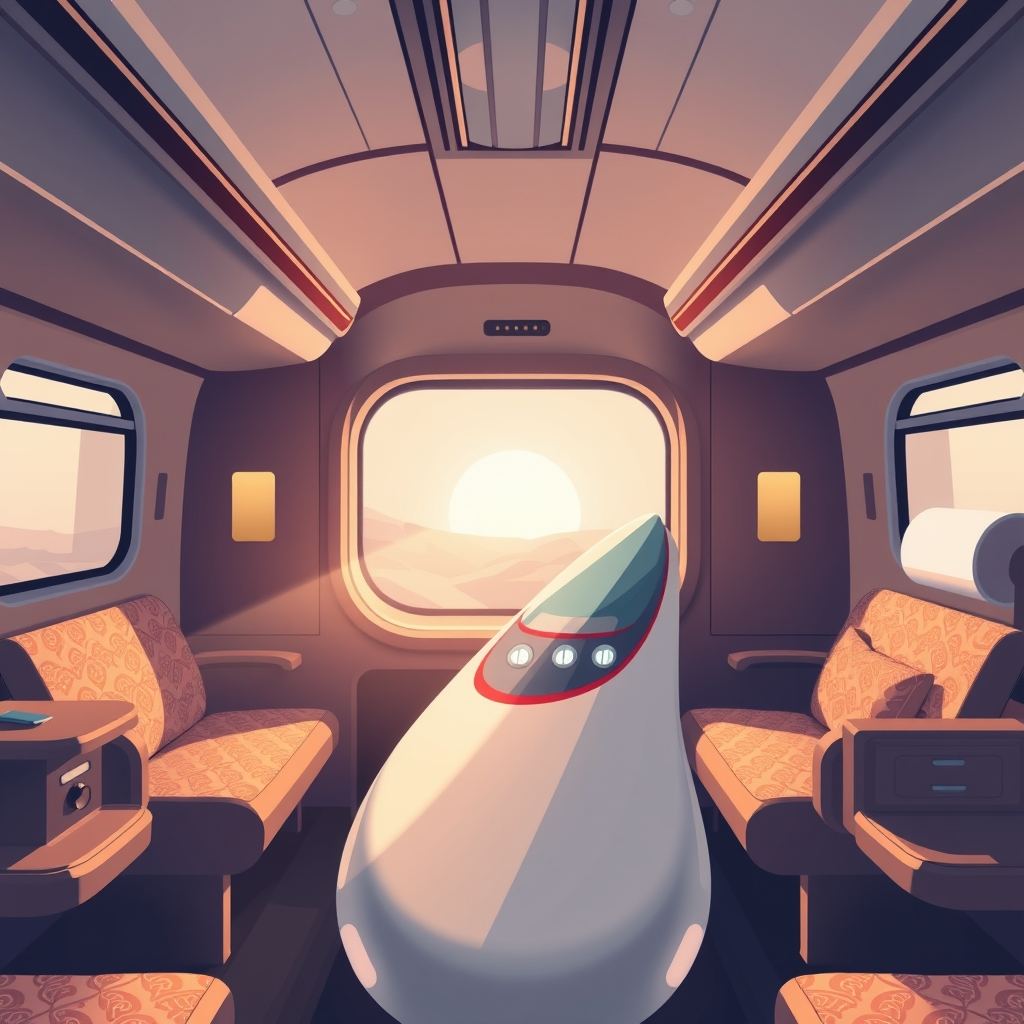
Japan’s Shinkansen to Launch 'Supreme Class' Luxury Private Cabins
Japan is set to redefine high-speed rail travel with the introduction of "Supreme Class" on the Tokaido-Sanyo Shinkansen network starting October 1, 2026. This new premium tier, positioned above the existing Green Car, aims to cater to high-end business travelers and leisure passengers seeking unparalleled privacy and luxury.
A New Era of High-Speed Rail Luxury
The Japan West Railway Company (JR West) has announced that the Supreme Class will feature cutting-edge technology and bespoke amenities. Initially, the service will be available on the N700S 16-car Shinkansen trainsets running between Tokyo and Hakata. The rollout focuses on two distinct types of accommodations: fully private cabins and semi-private premium seats.
The fully private cabins, located in Car 7 and Car 10, offer highly specialized environments. Car 7 is designed for two passengers with sofa-style seating, while Car 10 is optimized for single occupancy. These cabins are equipped with electronic locking doors that can be operated via IC cards or QR codes, ensuring maximum security and privacy for elite travelers.
Cutting-Edge Technology and Premium Amenities
What sets the Supreme Class apart is its integration of advanced technology. For the first time in railway rolling stock, Japan will deploy transparent 5G glass antennas to ensure seamless connectivity. Passengers will have access to high-speed Wi-Fi, Bluetooth seat speakers, and dedicated tablets for controlling lighting, climate, and onboard announcements.
Other luxury features include:
- Ergonomic Comfort: Premium reclining seats with adjustable lumbar support and leg rests.
- Bespoke Service: Mobile ordering through onboard tablets and complimentary food and beverages.
- Aesthetic Excellence: Cabin interiors decorated with traditional Japanese crafts, blending modernity with cultural heritage.
- Business Readiness: Large work tables and dedicated luggage compartments for airline-sized suitcases.
The service will initially operate on the Nozomi and Hikari services, with approximately 12 Supreme Class services scheduled per day in both directions.
Pricing and Route Availability
The Supreme Class will be available on key corridors, with prices varying significantly based on the distance and cabin type. For instance, a journey from Tokyo to Hakata—the longest route—will cost ¥90,220 for a two-person cabin (Car 7) and ¥63,620 for a single-occupancy cabin (Car 10). The most affordable segment will be the Tokyo to Nagoya route, starting at ¥32,440 for the single-occupancy option.
Ticket reservations are scheduled to open at 5:30 am on September 15, 2026, through the Express Reservation and Smart EX booking platforms.
What It Means for India
As India progresses with its own High-Speed Rail (HSR) project in collaboration with Japan, the developments in the Shinkansen network hold significant strategic implications:
- Benchmarking Future Standards: As India’s Mumbai-Ahmedabad High-Speed Rail (MAHSR) project moves toward completion, the introduction of "Supreme Class" provides a blueprint for premium service tiers that can cater to India's growing elite business demographic.
- Technological Knowledge Transfer: The deployment of world-first technologies, such as 5G glass antennas and advanced electronic locking systems, serves as a technical benchmark for the indigenization and upgrading of high-speed rail components in India.
- Model for Non-Fare Revenue: Japan's focus on high-margin, luxury segments demonstrates how high-speed rail operators can diversify revenue streams beyond standard passenger fares, a model highly relevant for the long-term financial sustainability of India's upcoming HSR networks.