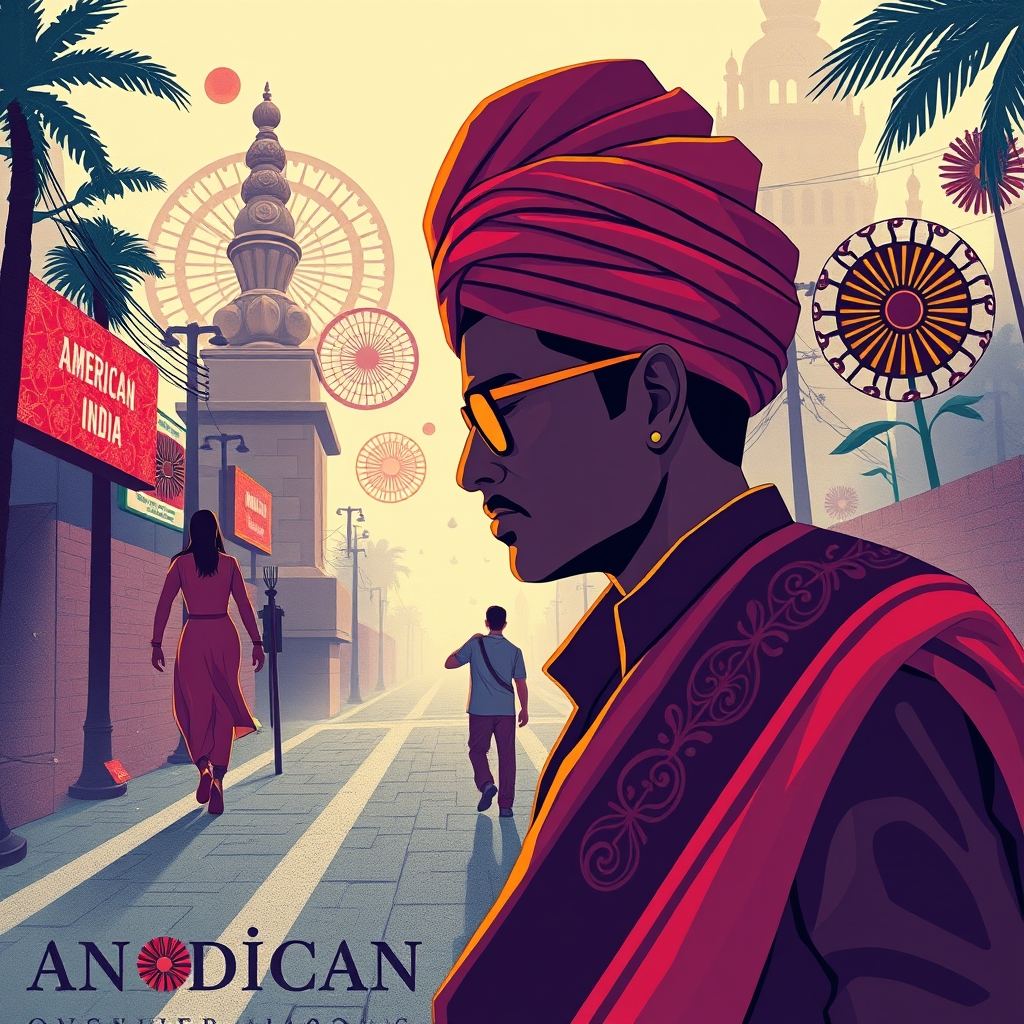
The American Dream at a Crossroads: Rising Tensions for Indian Americans
As the United States approaches its 250th anniversary of independence, the narrative of the "American Dream" is facing unprecedented scrutiny. While Indian Americans remain a cornerstone of US innovation and economic success, a growing sense of turbulence is reshaping the community's outlook on their future in the West.
A Community in Transition: From Success to Uncertainty
For decades, the Indian diaspora has been celebrated as one of America’s most successful immigrant stories, making significant strides in medicine, technology, and academia. However, recent data paints a more complex picture. According to a 2026 survey by the Carnegie Endowment, the Indian American community is navigating a period of intense "turbulence."
The statistics are striking: approximately 40% of Indian Americans surveyed have considered leaving the United States. This shift is driven by a convergence of systemic and social factors, including massive green card backlogs, increasing uncertainty surrounding H-1B visa regulations, and a rise in anti-Indian sentiment. Experts like Vivek Wadhwa, CEO of Vionix Biosciences, note that the community is increasingly facing hostility from both political extremes, suggesting that America may be inadvertently closing its doors to the very talent that sustains its global leadership.
The Paradox of Meritocracy and Marginalization
The current American landscape presents a profound paradox. On one hand, figures like Padma Bhushan awardee Jagdish N. Sheth argue that America remains a premier merit-based economy that attracts the world's top scientists and leaders through personal freedom and opportunity. The ability to integrate while celebrating cultural traditions remains a core strength of the American fabric.
On the other hand, the social reality is becoming increasingly polarized. Journalists and educators, such as Moni Basu, observe an erosion of trust and a departure from the multiculturalism that previous generations of immigrants embraced. There is a growing sentiment that the political climate is subtly—and sometimes overtly—marginalizing immigrant stories. This sense of being "unwelcome" has real-world consequences, affecting everything from community safety to the ability of survivors of violence to trust public institutions, as highlighted by activist Sundal Ali.
Resilience Amidst Political Shifts
Despite the rising anxieties, a strong thread of resilience persists. While some, like author Anjali Enjeti, call for a radical reinvention of the American system to protect civil and human rights, others maintain an optimistic view of the nation's capacity for renewal. The tension between the "hope" of limitless opportunity and the "doubt" regarding social cohesion defines the current American era. As the country prepares for its semiquincentennial, the debate remains whether America can continue to innovate by embracing diversity or if the tightening of immigration and social policies will stifle its historic engine of growth.
What It Means for India
The shifting dynamics within the United States have significant strategic implications for India’s own growth and global positioning:
- Reverse Brain Drain Potential: As 40% of Indian Americans consider leaving the US due to visa uncertainties and social hostility, India may see an influx of high-skilled talent, contributing to the nation's domestic technological and scientific prowess.
- Diplomatic and Diaspora Management: The rise in anti-Indian sentiment necessitates a more proactive Indian foreign policy to protect the interests and safety of its diaspora, which remains a vital bridge for bilateral relations.
- Economic and Human Capital Shifts: Uncertainty in the H-1B pipeline could force US tech giants to diversify their talent pools, potentially leading to increased investment in Indian IT hubs and a shift in the global landscape of innovation.