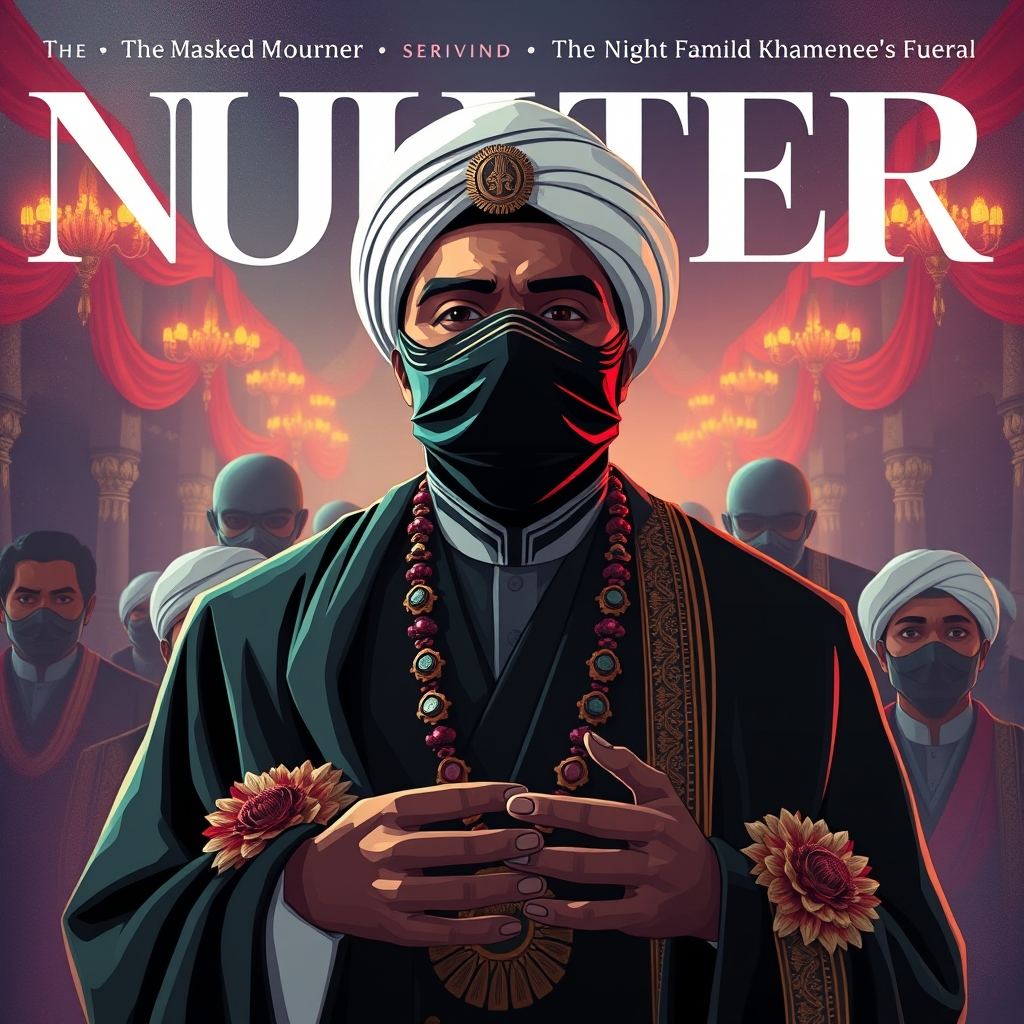
The Masked Mourner: Solving the Mystery Behind Khamenei’s Funeral
The recent funeral ceremonies for Iran’s assassinated Supreme Leader, Ali Khamenei, were marked by intense global speculation regarding a mysterious masked figure seen in the front row. While many believed the figure was the new Supreme Leader, Mojtaba Khamenei, official reports have now identified the individual as the late leader's grandson.
Clarifying the Identity of the Masked Figure
During the six-day funeral proceedings, which state media claimed drew up to 43 million mourners across Iran and Iraq, a man wearing a baseball hat and a black mask became the center of international scrutiny. Social media analysts and intelligence observers initially speculated that the figure was Mojtaba Khamenei, the son of the late Ayatollah, who has remained conspicuously absent from public view since the February 28 US-Israeli strikes that claimed his father's life.
However, reports from Iran International and the Rokna news agency have clarified that the individual was Mohammad Javad Khamenei, the eldest grandson of the slain Supreme Leader. Mohammad Javad is the son of Mostafa Khamenei, Ali Khamenei’s eldest son. It is reported that Javad suffered severe facial burns and injuries during the same February 28 airstrikes that killed the former Supreme Leader, necessitating the use of a mask.
Uncertainty Surrounding Mojtaba Khamenei’s Leadership
While the identity of the masked man has been resolved, a significant layer of uncertainty remains regarding the stability of Iran’s new leadership. US intelligence reports suggest that Mojtaba Khamenei may also have been badly disfigured in the strikes that killed his father.
Since assuming office in March, Mojtaba Khamenei has yet to appear in public or release any audio or video messages, relying solely on written communications. His first public statement, a written message released via Telegram on Saturday, vowed to avenge his father's death. This lack of visual presence continues to fuel speculation regarding his physical condition and his ability to command the absolute authority required of the Supreme Leader in the volatile Iranian political landscape.
Regional Stability and the Vow of Retaliation
The funeral of Ali Khamenei marks a period of profound transition for the Islamic Republic. The massive scale of the mourning ceremonies underscores the deep-seated religious and political mobilization within the region. However, the transition of power to Mojtaba Khamenei occurs under extreme duress, following direct military strikes from US and Israeli forces.
The written vow of vengeance issued by Mojtaba Khamenei signals a potential period of heightened regional tension. As the new leadership seeks to consolidate power while dealing with the physical and political aftermath of the February strikes, the Middle East remains on high alert for retaliatory actions that could disrupt regional security architectures.
What It Means for India
- Heightened Regional Volatility: The vow of vengeance by the new Iranian leadership increases the risk of kinetic escalations in the Middle East, which could impact India’s energy security and maritime trade routes in the Persian Gulf and the Gulf of Oman.
- Strategic Balancing Act: As Iran undergoes a period of leadership transition and potential internal consolidation, India will need to carefully navigate its "Link West" policy, balancing its strategic energy interests with its growing security partnerships in the region.
- Monitoring Intelligence Shifts: The ambiguity surrounding the physical health and public visibility of Mojtaba Khamenei suggests a period of unpredictable decision-making in Tehran, requiring New Delhi to enhance its intelligence monitoring of Iranian domestic stability and foreign policy shifts.