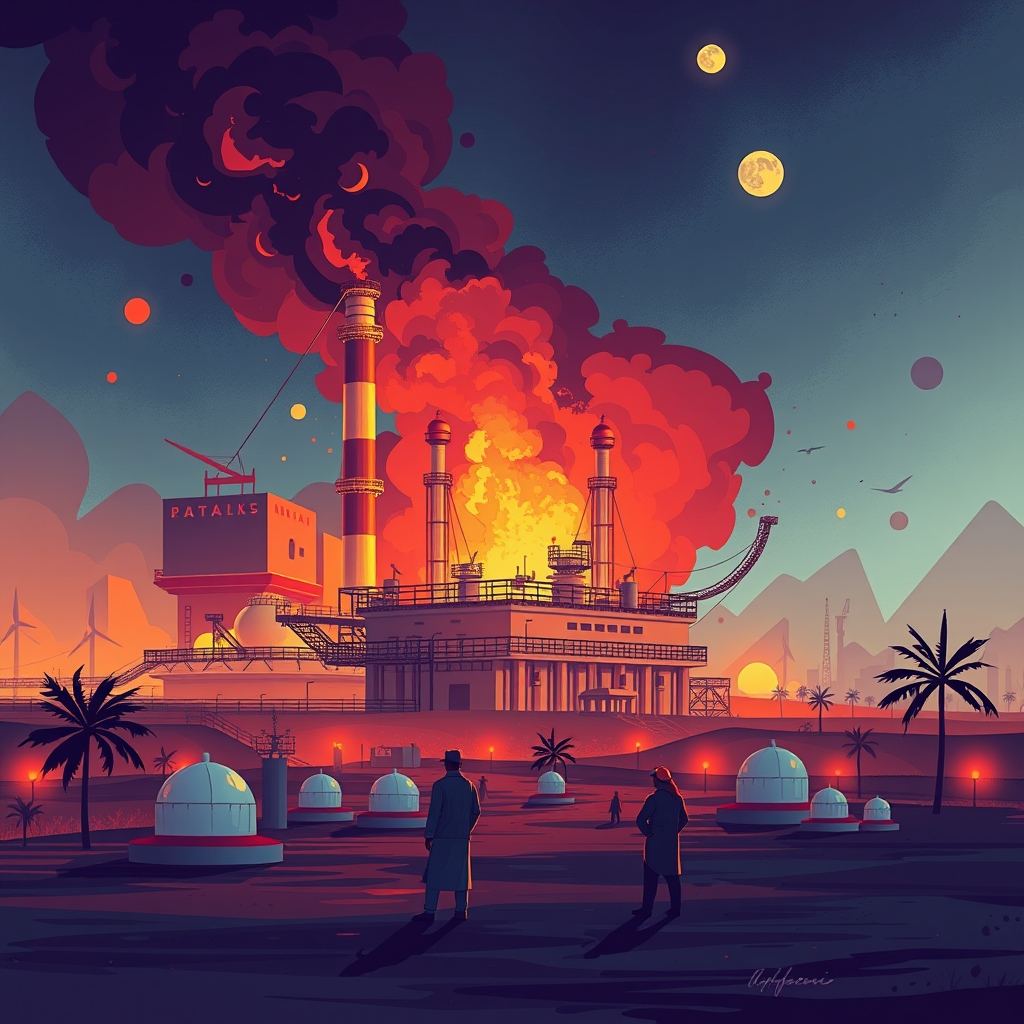
Tragedy at Ras Laffan: Indian Lives Lost in Major Qatar Gas Facility Explosion
A devastating explosion at the Barzan local gas supply facility in Qatar's Ras Laffan Industrial City has claimed at least 13 lives, including several Indian nationals. The incident, which occurred on the evening of Sunday, June 21, 2026, has sent shockwaves through the Indian diaspora and the global energy sector.
The Incident at Ras Laffan Industrial City
On Monday, June 22, 2026, Qatar’s Energy Minister and CEO of QatarEnergy, Saad bin Shreida Al-Kaabi, confirmed the details of the catastrophic event. The explosion and subsequent fire took place during the start-up of operations at the Barzan local gas supply facility. While emergency response teams were deployed immediately and the fire is now reported to be under control, the human cost remains high.
According to Minister Al-Kaabi, at least 66 people were injured in the blaze. Among the 13 confirmed fatalities, several were identified as being of Indian and Pakistani origin. While the exact number of Indian victims is still being ascertained, the Embassy of India in Doha has confirmed that it is working closely with Qatari authorities to identify all affected individuals and support their families.
Diplomatic Response and On-Ground Support
The Embassy of India in Doha has taken immediate steps to manage the crisis, issuing emergency helpline numbers (+974-55647502 or +975-55384683) and a dedicated email address (cons.doha@mea.gov.in) to assist grieving families. In a statement released via X, the Embassy expressed deep condolences and emphasized its solidarity with both the Indian community and the Government of Qatar during this difficult period.
The casualties and injuries represent a diverse group of nationalities, including citizens from Tanzania, Guinea, Nepal, Bangladesh, Kenya, and Nigeria, underscoring the international workforce that drives the Gulf's critical energy infrastructure.
Implications for Energy Infrastructure and Labor Safety
The fact that the explosion occurred during the "start-up of operations" at a major gas facility points toward potential technical vulnerabilities in the commissioning phase of high-pressure energy assets. For a global energy hub like Ras Laffan, which is central to the world’s Liquefied Natural Gas (LNG) supply chains, such incidents necessitate rigorous safety audits and enhanced protocols for operational transitions.
For India, which relies heavily on the Middle East for its energy security, the stability and safety of Qatari gas facilities are of paramount importance. Beyond the geopolitical energy link, the tragedy highlights the inherent risks faced by the millions of Indian expatriates who form the backbone of the Gulf's industrial and energy sectors.
What It Means for India
- Protection of Diaspora Interests: This incident reinforces the need for robust consular mechanisms and heightened diplomatic engagement to ensure the safety and welfare of Indian blue-collar workers in high-risk industrial zones across the GCC.
- Energy Security Continuity: As Qatar is a critical partner in India’s energy landscape, any disruption or safety crisis in major facilities like Ras Laffan necessitates close monitoring to ensure no long-term impact on the steady supply of natural gas to Indian markets.
- Workforce Safety Standards: The tragedy serves as a grim reminder for Indian labor recruitment agencies and policy frameworks to advocate for stringent international safety standards and comprehensive insurance coverage for Indian workers deployed in hazardous energy environments abroad.