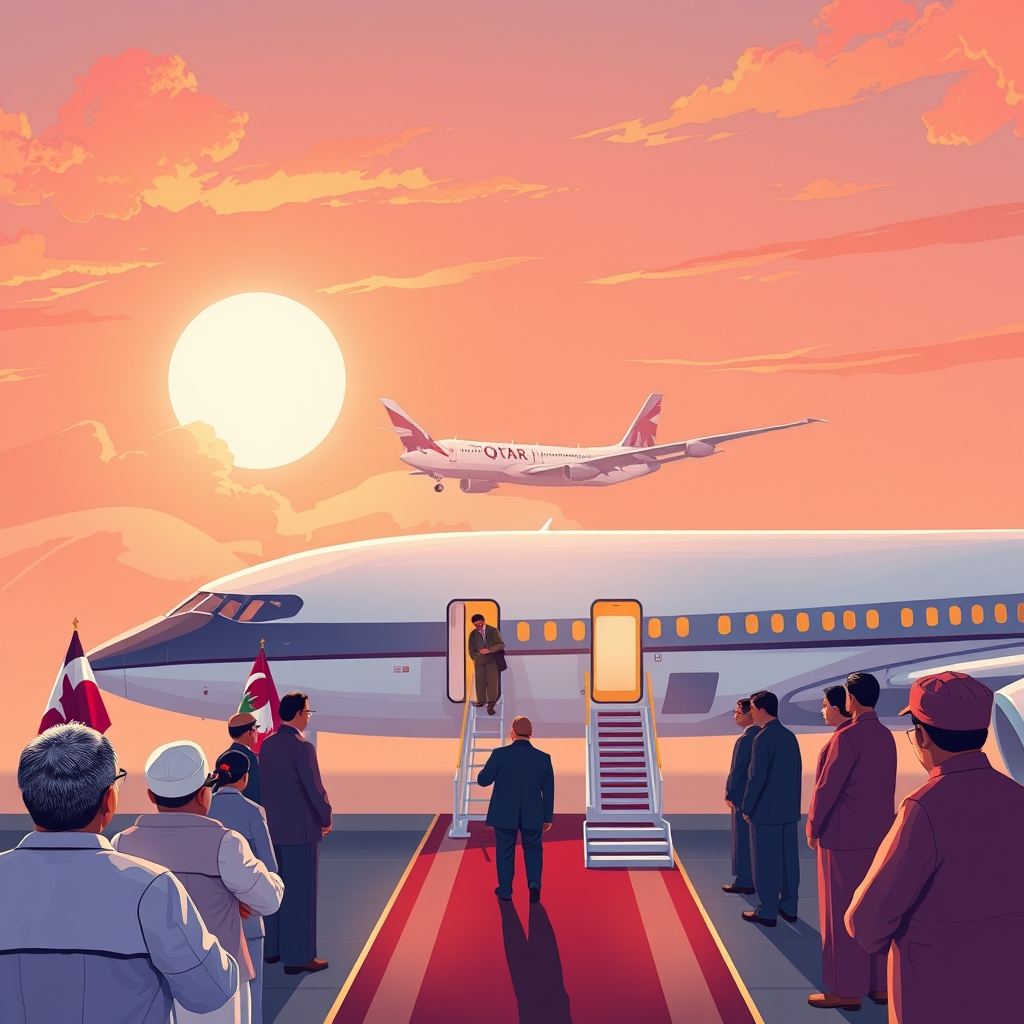
Trump Debuts Qatar-Gifted Air Force One Amidst Geopolitical Debate
President Donald Trump took his first flight on a new, heavily modified Boeing 747-8 aircraft gifted by the Qatari government on July 1, 2026. While the President expressed immense excitement over the luxury jet's advanced capabilities, the move has ignited intense scrutiny regarding diplomatic ethics and national security.
A Controversial Diplomatic Gift
The aircraft, which serves as a temporary replacement for the aging Air Force One fleet, was donated by the wealthy Gulf emirate of Qatar last year. During his departure from Joint Base Andrews in Maryland, President Trump praised the jet's sophistication, stating that the United States "couldn't build a plane like this" due to the massive expenditure involved. He noted that the Emir of Qatar insisted on making the contribution rather than simply lending the aircraft.
The plane is intended to serve as a stopgap for the next two years while Boeing completes the delivery of two purpose-built Air Force One aircraft, which have faced significant delays and cost overruns. Despite the President's enthusiasm, the gift has faced criticism from those questioning the constitutional and ethical implications of a foreign power providing such a high-value asset to the U.S. Executive branch.
Security and Ethical Scrutiny
The transition to this new aircraft comes at a sensitive time for the Trump administration. Beyond the ethical questions surrounding the gift, critics have raised concerns about the security protocols integrated into a jet originally funded by a foreign entity. Although the plane has undergone extensive modifications and testing to ensure presidential-grade security, the geopolitical optics remain complex.
This development coincides with increased scrutiny over the President’s personal finances, specifically reports that he earned approximately $1.2 billion from family cryptocurrency ventures during his first year back in office. While Trump dismissed any impropriety, arguing that the cost to U.S. taxpayers to adapt the Qatari jet was minimal compared to building one from scratch, the intersection of foreign gifts and personal wealth continues to be a flashpoint in American domestic politics.
Qatar’s Growing Role as a Global Mediator
The gifting of the aircraft underscores Qatar's significant leverage in international relations. Beyond its massive wealth, Doha has established itself as a critical diplomatic hub, playing a central role as a mediator in complex negotiations between the United States and Iran. By providing such a high-profile gift, Qatar reinforces its status as an indispensable partner to Washington, even as it navigates the delicate balance of Middle Eastern geopolitics.
For the United States, the aircraft provides much-needed operational capacity, but the reliance on a foreign-gifted asset highlights the logistical challenges and delays currently facing the American aerospace sector and the Boeing delivery schedule.
What It Means for India
- Shifting Middle East Dynamics: Qatar's ability to influence U.S. logistics through high-value diplomacy signals its rising stature as a "soft power" heavyweight, a trend India must monitor as it manages its own multi-aligned relationships in the Gulf.
- Energy and Security Stability: As Qatar deepens its ties with the U.S. executive branch, it may strengthen its role as a regional mediator, which could lead to more stabilized energy markets and security corridors in the Middle East, benefiting India’s energy security.
- Strategic Autonomy: The controversy surrounding the gift highlights the complexities of foreign influence in high-level state functions; for India, this serves as a reminder of the importance of maintaining strict protocols and strategic autonomy to avoid entanglement in the domestic political or ethical debates of major powers.