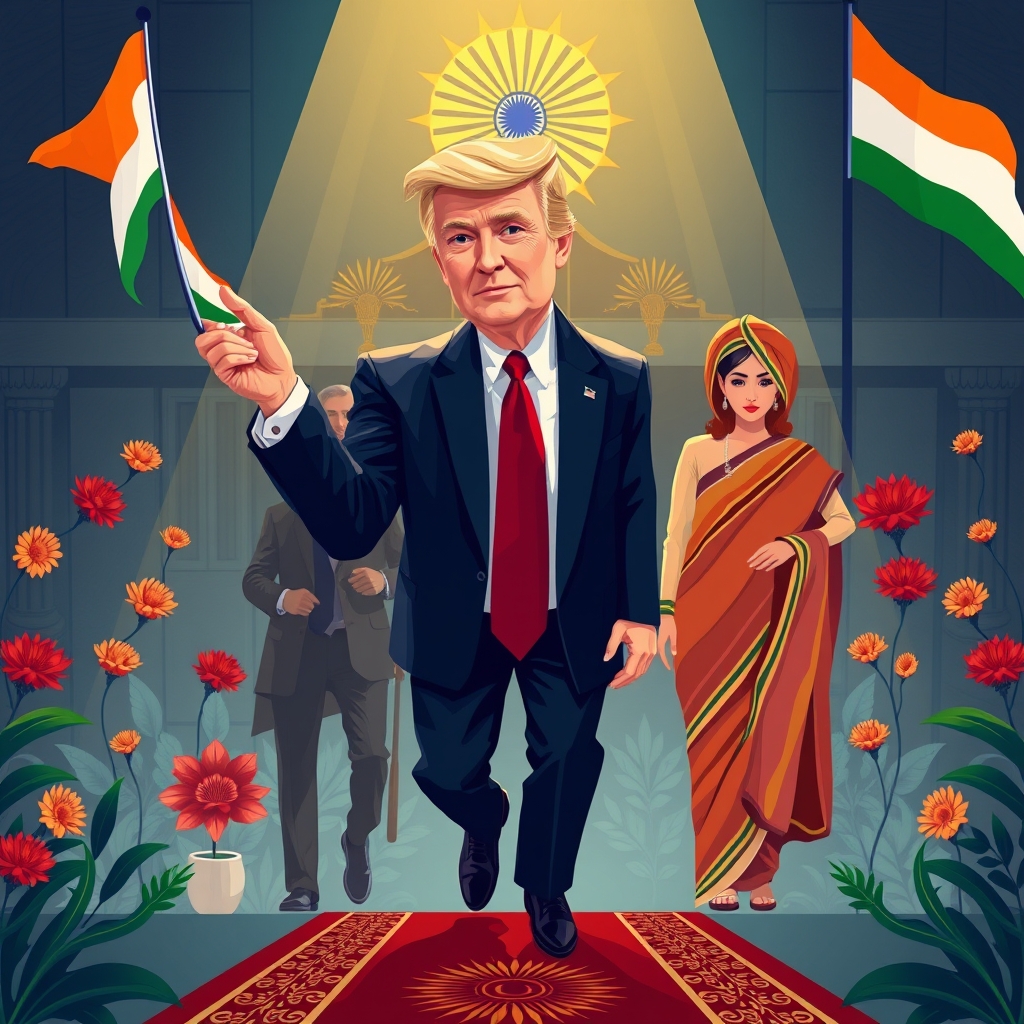
Trump’s Potential 2027 India Visit: A New Era of Strategic Ties
The momentum of the India-U.S. bilateral relationship is reaching a new crescendo, with high-level diplomatic signals suggesting a significant presidential visit to New Delhi. U.S. Secretary of State Marco Rubio has indicated that the Trump administration is actively working toward a visit by President Donald Trump in the early part of next year.
Strengthening the Modi-Trump Chemistry
In a recent exclusive interview with IANS, Secretary of State Marco Rubio emphasized the unprecedented strength of the relationship between President Trump and Prime Minister Narendra Modi. Following their recent interaction on the sidelines of the G7 Summit, Rubio described the rapport between the two leaders as a cornerstone of modern diplomacy. This personal chemistry, reminiscent of the "Namaste Trump" era in Ahmedabad in February 2020, serves as a vital lubricant for navigating complex geopolitical waters.
Rubio’s remarks underscore a shift in Washington’s perception of New Delhi. He specifically praised Prime Minister Modi’s leadership, noting that India is "coming into its own as a global power" and is increasingly central to global decision-making. For India, this recognition from a key U.S. official validates its pursuit of strategic autonomy and its rising stature on the world stage.
Finalizing Trade and Critical Supply Chains
A major pillar of this upcoming diplomatic engagement is the push toward a bilateral trade agreement. Secretary Rubio revealed that negotiators are in the "last inches" of finalizing a deal, expressing high optimism about the outcome. This move is crucial as both nations seek to reduce economic dependencies on adversarial actors and build more resilient, transparent supply chains.
Beyond traditional commerce, the U.S. and India are deepening cooperation in high-stakes sectors. Rubio identified critical minerals, energy security, advanced technology, and maritime security as the primary "binding issues" between the two democracies. This aligns with India's domestic push for manufacturing excellence and technological self-reliance, as well as its need for secure access to global energy and mineral markets.
The Quad and Indo-Pacific Security
The potential presidential visit also signals a renewed commitment to the Quadrilateral Security Dialogue (Quad). Rubio expressed eagerness for an upcoming meeting of the Quad leaders, including Japan and Australia, to address regional security and freedom of navigation.
As the Indo-Pacific remains the primary theater of global geopolitical competition, the alignment between Washington and New Delhi within the Quad framework is essential. The partnership is increasingly focused on maintaining a rules-based order and ensuring maritime security, which is critical for India's extensive coastline and its growing role as a net security provider in the Indian Ocean Region.
What It Means for India
- Economic Certainty: The nearing conclusion of a bilateral trade deal provides much-needed predictability for Indian exporters and helps integrate India more deeply into the high-tech global value chain.
- Strategic Leverage: The explicit recognition of India as a "close partner and ally" by the U.S. Secretary of State reinforces India's ability to navigate a multipolar world while maintaining strong ties with Western powers.
- Security Anchoring: Renewed focus on the Quad and maritime security ensures that India’s interests in the Indo-Pacific are bolstered by a powerful democratic coalition, countering regional hegemony and ensuring freedom of navigation.