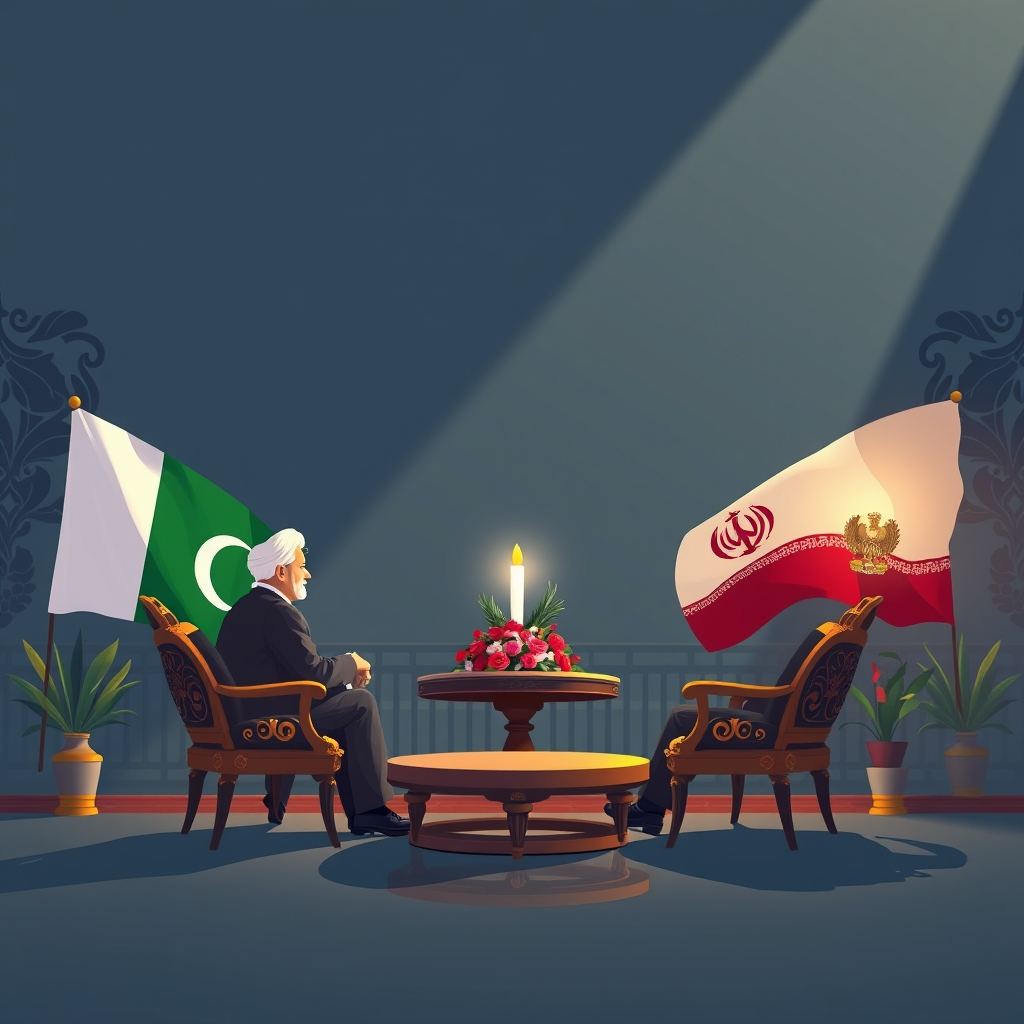
US-Iran Peace Talks Set to Resume: Pakistan Steps Up as Key Mediator
A significant diplomatic shift is unfolding in West Asia as negotiations between the United States and Iran are poised to resume next week. Following recent technical-level discussions in Switzerland, the international community is watching closely to see if this momentum can lead to a lasting peace agreement.
The Burgenstock Roadmap and Pakistan's Role
According to a statement issued by Pakistan's Foreign Office spokesperson, Tahir Andrabi, on June 24, 2026, the dialogue between Washington and Tehran is expected to restart, likely on Tuesday. This follows a crucial meeting held earlier this week in Burgenstock, Switzerland, where technical-level talks took place.
The momentum is driven by a recently signed Memorandum of Understanding (MoU) aimed at restoring stability in West Asia. A defining feature of this diplomatic process is the involvement of mediators. Pakistan, alongside Qatar, has taken on the critical role of "guarantor" for the peace process. This is a significant upgrade in Pakistan's diplomatic posture, as its delegation was physically present in Switzerland on June 22 to facilitate the talks. The current pause in discussions is being described not as a breakdown, but as a "temporary gap" before the next phase of engagement.
A 60-Day Countdown to a Peace Deal
The primary objective of these renewed discussions is to adhere to a specific roadmap designed to achieve a final peace deal within a 60-day window. While both the United States and Iran have remained officially silent regarding the exact timing of the resumption, the Pakistani delegation has expressed optimism, labeling the development as "positive."
The stakes for this roadmap are exceptionally high. The involvement of a guarantor suggests that the parties are moving beyond mere rhetoric toward structured, verifiable milestones. If the technical-level talks succeed, the transition from Burgenstock to a formal agreement could fundamentally alter the security architecture of the Middle East, potentially de-escalating long-standing tensions that have frequently spilled over into broader regional conflicts.
Strategic Implications for New Delhi
For India, the potential rapprochement between the U.S. and Iran is a development of paramount strategic importance. India maintains a delicate balancing act in West Asia, fostering a robust strategic partnership with the United States while simultaneously managing deep-rooted energy and connectivity ties with Iran.
A stabilized Iran-U.S. relationship would likely reduce the "geopolitical volatility premium" that currently affects energy markets and maritime security in the Persian Gulf and the Arabian Sea. Furthermore, as India seeks to operationalize the Chabahar Port and explore the International North-South Transport Corridor (INSTC), a de-escalated West Asian landscape provides a more predictable environment for long-term infrastructure investments.
What It Means for India
- Energy Security and Market Stability: A successful peace roadmap would reduce the risk of sudden supply disruptions in the Persian Gulf, ensuring more predictable energy imports and stable oil prices for the Indian economy.
- Enhanced Connectivity Prospects: Improved relations between Tehran and the West could lower the diplomatic hurdles for India’s strategic projects in Iran, such as the Chabahar Port, which are vital for accessing Central Asian markets.
- Strategic Autonomy and Regional Balance: As the U.S. and Iran move toward a deal, India gains more breathing room to pursue its "multi-aligned" foreign policy, engaging with both powers without the constant threat of regional spillover from Iran-U.S. tensions.