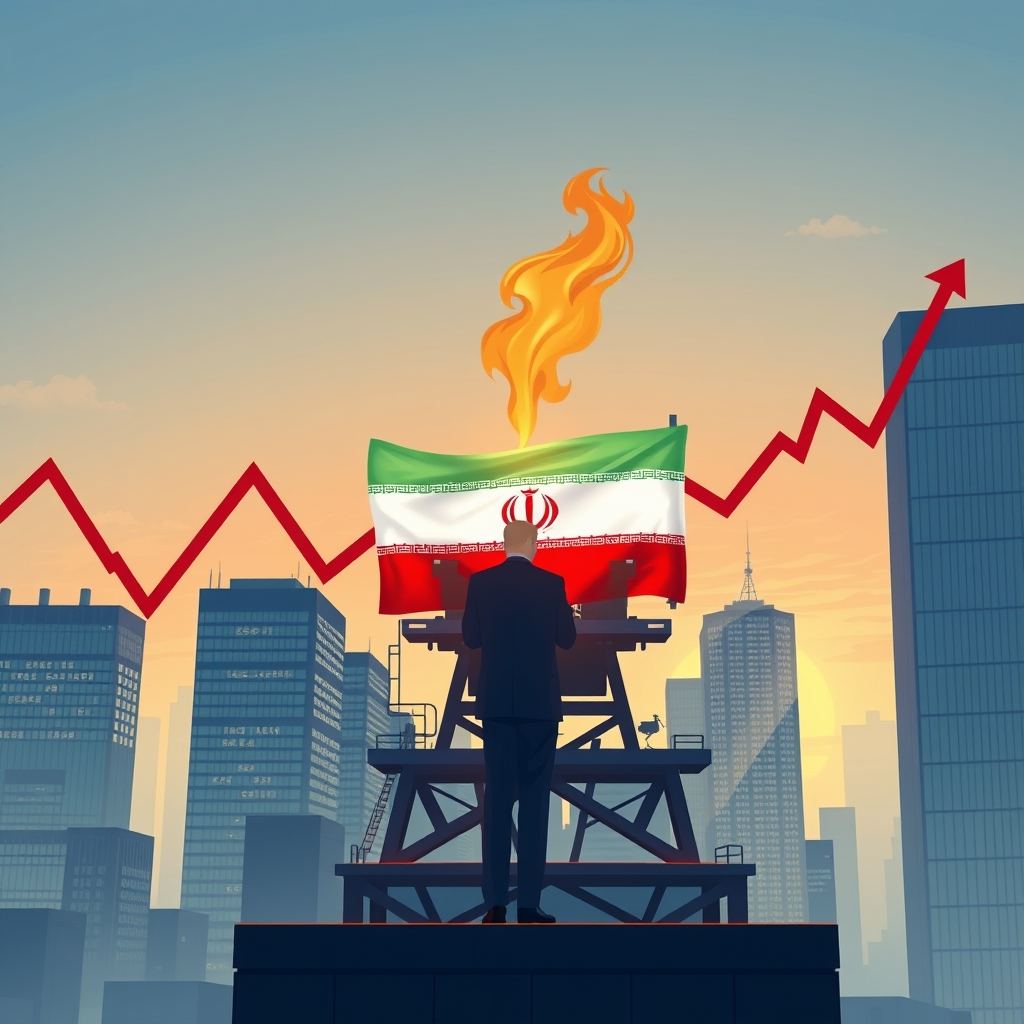
Trump Waives Iran Oil Sanctions: What It Means for India’s Energy Security
The United States has issued a 60-day sanctions waiver for Iranian petroleum, a move aimed at fostering a new peace arrangement following discussions in Switzerland. While this decision aims to stabilize global energy markets and ensure free passage through the Strait of Hormuz, its implications for India’s complex energy landscape are multifaceted.
The US Treasury's Strategic Move
Following productive talks in Switzerland, the US Treasury has issued a temporary general license authorizing the production, transportation, and sale of Iranian petroleum and petrochemical products. This waiver, valid until August 21, 2026 (with specific 60-day provisions currently in focus), allows Tehran to export oil and receive payments for those sales.
US Treasury Secretary Scott Bessent noted that the move aligns with Iran's commitment to permit International Atomic Energy Agency (IAEA) inspectors and ensure open transit through the Strait of Hormuz. However, the US has clarified that these exemptions do not extend to North Korea or Cuba, which remain under stringent sanctions.
Immediate Impact: Lower Global Crude Prices
For India, the most immediate benefit of this waiver is likely to be macroeconomic rather than a direct increase in Iranian imports. As Iranian oil re-enters the global supply chain, it is expected to exert downward pressure on global crude prices.
For an economy that relies on imports for 88% of its crude oil requirements, lower prices are a significant win. A reduction in global benchmarks would help reduce India’s massive oil import bill and provide much-needed relief to Oil Marketing Companies (OMCs), which often struggle to balance domestic fuel prices with international volatility.
Why India May Not Rush Back to Iranian Crude
Despite the waiver, a massive surge in Indian imports from Iran is not expected immediately. Industry experts, including Sumit Ritolia of Kpler, suggest that the "flip-flop" nature of US sanctions policy makes long-term commitments risky for Indian buyers.
The geopolitical situation remains highly fluid, and with President Trump warning that Washington will act if Tehran fails to uphold its commitments, Indian refiners are likely to remain cautious. Instead of crude oil, more realistic areas of engagement might include LPG, petrochemicals, and fertilizers, though even these sectors face uncertainty due to Washington's unpredictable policy stance.
India’s Diversified Energy Portfolio
India has already built a robust diversification strategy to mitigate supply risks. Recent data shows a heavy reliance on alternative sources:
- Russia: India’s largest supplier, with imports averaging 2.66 million barrels per day (bpd) in June, up from 1.91 million bpd in May.
- UAE: Remains a critical supplier, with imports averaging 636,000 bpd.
- Venezuela: Has emerged as a key fourth-largest supplier, providing 209,000 bpd to help refiners process heavier grades.
As the global market reacts to the US-Iran developments, India’s strategy of balancing Russian, Middle Eastern, and Atlantic Basin supplies will remain central to its energy security.
Key Takeaways
- Price Relief: The waiver is expected to increase global oil supply, potentially lowering crude prices and reducing India's import bill.
- Policy Uncertainty: Due to the unpredictable nature of US sanctions, Indian refiners are unlikely to make immediate, large-scale commitments to Iranian crude.
- Diversification is Key: India continues to rely heavily on a mix of Russian, UAE, and Venezuelan crude to ensure a stable energy supply.