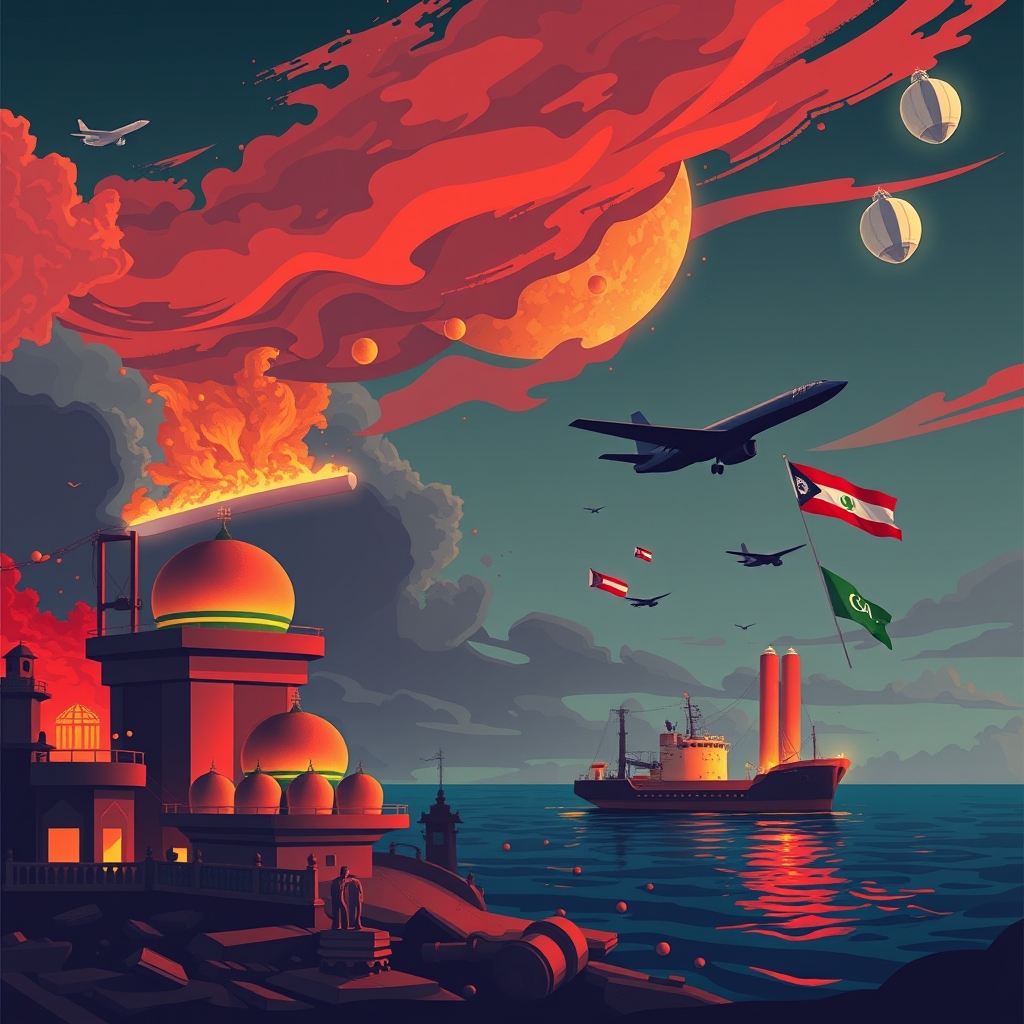
Escalation in Persian Gulf: Iran Targets Bahrain and Tankers Amid US Strikes
The Middle East has drifted toward a dangerous new phase of kinetic warfare as tensions between Iran and the United States explode into direct regional confrontation. Following targeted US airstrikes, Tehran has retaliated by launching attacks on Bahrain and targeting commercial shipping in the vital Strait of Hormuz.
Direct Confrontation: From Airstrikes to Regional Retaliation
The cycle of violence escalated rapidly following a series of precision airstrikes conducted by the United States against Iranian-aligned targets. In immediate response, the Iranian military apparatus has shifted from proxy warfare to direct engagement. Reports confirm that Iranian forces have launched attacks against Bahrain, a key US ally in the Gulf, signaling a significant departure from previous patterns of indirect conflict.
The geopolitical stakes were further heightened by reports of a commercial tanker being hit within the Strait of Hormuz. This narrow maritime chokepoint, through which a massive percentage of the world’s oil supply passes, has once again become a theater of war. The targeting of commercial vessels suggests that Iran is prepared to use maritime disruption as a strategic lever to offset American military superiority.
The Strait of Hormuz: A Maritime Chokepoint Under Siege
The strike on a tanker in the Strait of Hormuz is perhaps the most destabilizing development in this current escalation. The Strait is a geographic bottleneck that serves as the primary artery for global energy security. Any sustained military activity in these waters threatens to disrupt the flow of crude oil and liquefied natural gas (LNG) to major economies, particularly in Asia.
By targeting shipping, Tehran is effectively holding global energy markets hostage, attempting to force a de-escalation of US military presence through economic attrition. The involvement of commercial assets indicates that the conflict is no longer confined to military installations but has spilled over into the realm of global commerce and international maritime law.
Geopolitical Shifts and the Risk of Regional Contagion
The decision to target Bahrain moves the conflict beyond the traditional US-Iran binary and pulls in more Gulf Cooperation Council (GCC) states. This escalation risks a broader regional war that could involve multiple sovereign nations, complicating any immediate diplomatic efforts to broker a ceasefire.
The US military response appears focused on degrading Iranian capabilities, but the asymmetrical nature of Iran's retaliation—using missiles and maritime disruption—makes traditional containment difficult. As the US maintains its strike posture, the risk of miscalculation by either side remains at an all-time high, potentially leading to a full-scale regional conflagration.
What It Means for India
As a nation heavily reliant on stable energy corridors and maintaining complex diplomatic ties across the Middle East, India faces significant challenges:
- Energy Security and Inflationary Pressure: Any prolonged disruption in the Strait of Hormuz will lead to an immediate spike in global crude oil prices, directly impacting India's fiscal deficit and domestic fuel inflation.
- Strategic Autonomy and Diplomacy: India will face increased pressure to navigate its "de-hyphenated" policy, balancing its growing defense partnership with the US against its vital economic and energy relationship with Iran.
- Maritime Security Concerns: The escalation underscores the necessity for India to strengthen its presence in the Indian Ocean Region (IOR) and enhance its naval surveillance capabilities to protect merchant vessels from regional volatility.