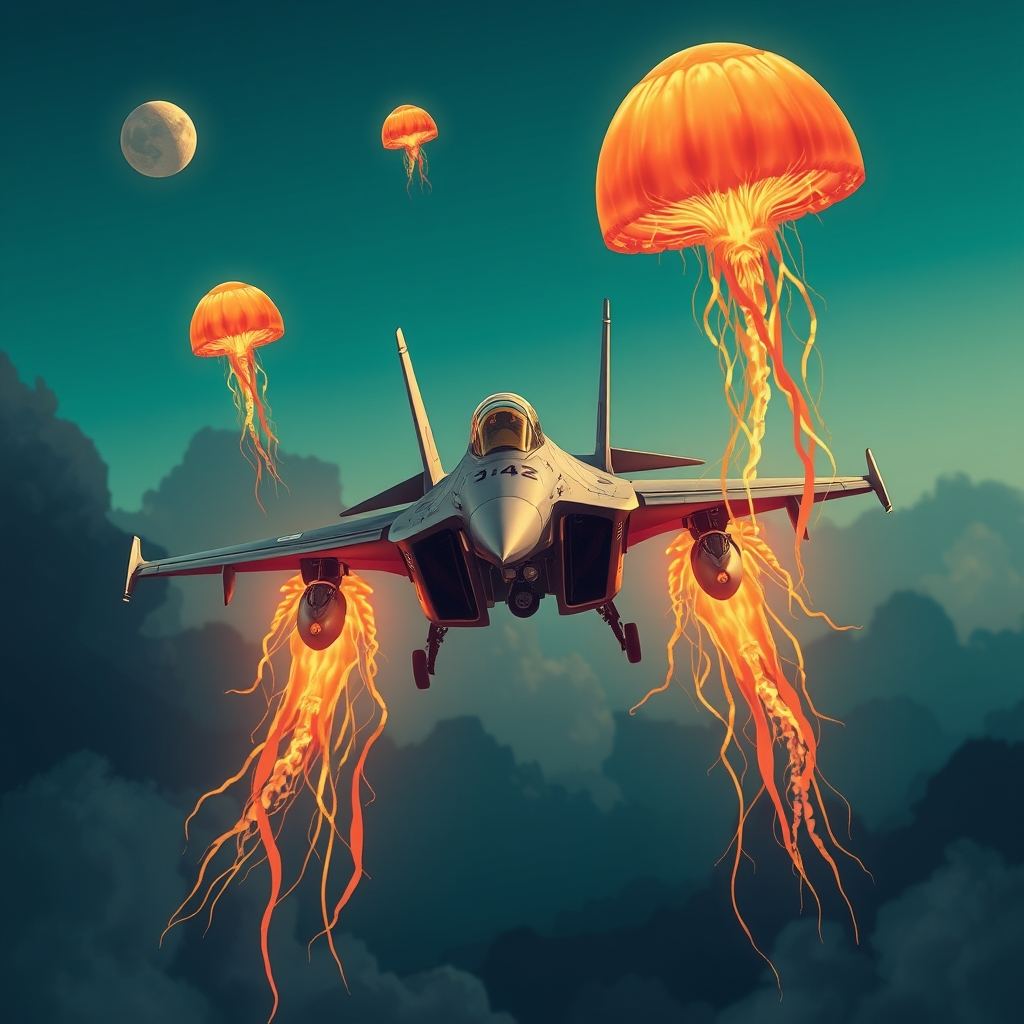
US F-15 Downed Over Iran: Mysterious ‘Jellyfish’ Drones Spark Tension
A high-stakes aerial confrontation over Iranian airspace has escalated following the downing of a United States F-15 fighter jet. Amidst the chaos, a surviving pilot has provided a chilling eyewitness account of encountering a bizarre "jellyfish-like" formation of drones prior to ejection.
The Aerial Confrontation and the 'Jellyfish' Phenomenon
The incident unfolded when a US F-15 fighter jet was intercepted and shot down while operating near Iranian airspace. According to the pilot who successfully ejected, the encounter was preceded by an encounter with highly unusual unmanned aerial vehicles (UAVs). The pilot described these drones as moving in a "jellyfish" formation—a synchronized, undulating pattern that suggests advanced swarm intelligence technology.
This specific description points toward a significant leap in drone warfare capabilities. Unlike traditional single-target UAVs, swarm technology allows multiple drones to communicate and act as a single, cohesive organism. The "jellyfish" movement suggests these drones may be utilizing sophisticated autonomous algorithms to evade traditional radar and electronic countermeasures, making them exceptionally difficult to intercept using standard kinetic or electronic warfare tactics.
Escalating Tensions in the Middle East Corridor
The downing of a sophisticated US asset like the F-15 marks a critical escalation in the existing shadow war between Washington and Tehran. This incident occurs at a time when regional volatility is at an all-time high, with various proxy conflicts and direct military posturing creating a precarious security environment.
The use of advanced drone swarms indicates that Iran, or its technological partners, may be deploying next-generation electronic and autonomous warfare capabilities designed specifically to negate US air superiority. If these "jellyfish" formations are indeed a standardized part of Iran's tactical repertoire, it fundamentally alters the risk calculus for any Western military asset operating in the Middle East. The ability to neutralize high-value targets like the F-15 using low-cost, high-tech swarm drones represents a massive shift in the cost-exchange ratio of modern aerial combat.
Technological Implications for Global Air Defense
Beyond the immediate geopolitical fallout, the "jellyfish" drone formation raises urgent questions for global defense contractors and military strategists. Traditional air defense systems, such as the Patriot missile batteries, are designed to target individual high-speed threats. A swarm of smaller, highly maneuverable drones moving in a coordinated, fluid pattern can overwhelm these systems through sheer volume and unpredictable flight paths.
The incident suggests that the era of solo air superiority is being challenged by distributed, autonomous systems. For global powers, the focus must now shift from individual platform dominance to developing robust anti-swarm technologies, including directed-energy weapons (lasers) and advanced AI-driven defensive interceptors.
What It Means for India
- Modernization of Indian Air Power: The emergence of effective drone swarms necessitates that India accelerates its own development of "counter-swarm" technologies and indigenous UAV capabilities to ensure dominance in both conventional and asymmetric aerial theaters.
- Regional Security Calibration: As Middle Eastern volatility impacts global energy markets and maritime security, India must remain vigilant regarding its strategic interests in the Persian Gulf, ensuring that shifts in US-Iran dynamics do not disrupt vital energy corridors.
- Focus on Autonomous Defense: The "jellyfish" phenomenon highlights the urgent need for the Indian Armed Forces to integrate AI-driven electronic warfare and autonomous defensive systems to counter potential non-traditional threats on both its western and northern borders.