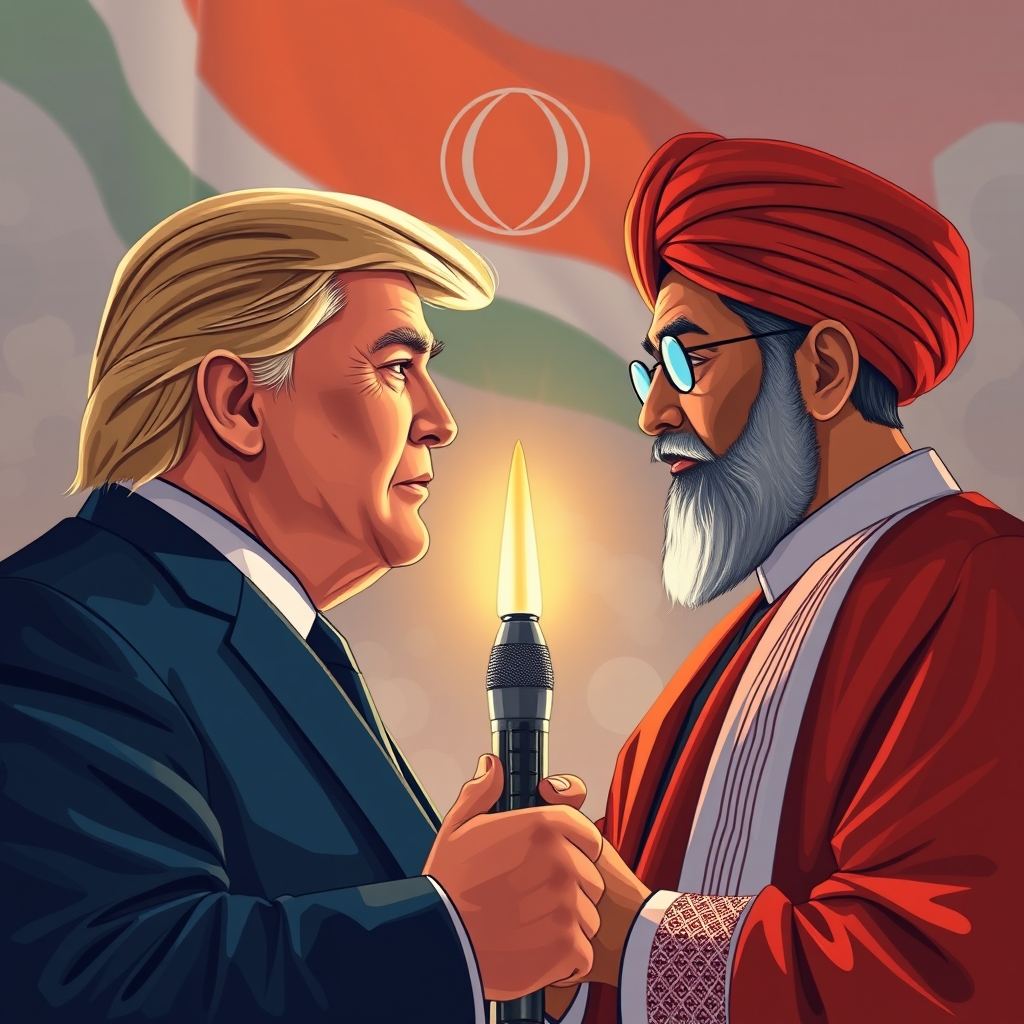
Trump vs Mojtaba: US Missile Threats and Iran's Vow of Revenge
The fragile peace in the Middle East has shattered as US President Donald Trump and Iran's new Supreme Leader, Mojtaba Khamenei, trade unprecedented threats of total war. With the ceasefire declared "over" following maritime attacks in the Strait of Hormuz, the region teeters on the edge of a massive military confrontation.
Trump’s Ultimatum: "1,000 Missiles are Locked and Loaded"
The escalation reached a fever pitch following intelligence reports suggesting an Iranian plot to assassinate President Donald Trump. Responding via Truth Social, Trump issued a chilling warning, stating that the US military is prepared to "completely decimate and destroy all areas of Iran" if any attempt is made against his life.
Trump specifically noted that "1,000 missiles are locked and loaded" aimed at the Islamic Republic, with thousands more prepared to follow. This rhetoric follows a period of intense volatility, including US airstrikes on Iranian targets and subsequent Iranian retaliatory strikes across the Gulf region. The President’s declaration that the recent memorandum of understanding (MoU) is effectively dead marks a significant pivot from diplomacy to direct military brinkmanship.
Mojtaba Khamenei and the Vow for Blood
On the other side of the divide, the transition of power in Tehran has added a volatile new dimension to the conflict. Mojtaba Khamenei, who recently succeeded his father, Ayatollah Ali Khamenei—who was killed in US-Israeli strikes earlier this year—has officially vowed revenge.
Speaking via Iranian state television, Mojtaba declared that avenging his father’s blood is the "will of our nation." This shift from the elder Khamenei to the younger, more defiant leader suggests that Tehran may be moving away from the cautious diplomacy of the past toward a more ideological and confrontational stance. The atmosphere in Iran remains charged, with mourners at recent funerals calling for the deaths of both Trump and Israeli Prime Minister Benjamin Netanyahu.
The Strait of Hormuz: The Economic Flashpoint
While the personal vendettas of leaders dominate the headlines, the structural cause of the conflict remains the Strait of Hormuz. The ceasefire collapsed after Iran targeted three commercial ships in the strategic waterway, prompting US retaliatory strikes.
The diplomatic impasse is defined by two irreconcilable positions:
- The United States demands that Iran publicly commit to keeping all shipping lanes open and free of attacks to ensure global commercial stability.
- Iran maintains that it holds sole authority over the strait, insisting on the right to charge transit fees and control navigation.
Despite Iranian Foreign Minister Abbas Araghchi traveling to Oman for urgent mediation talks in Muscat, the gap between Washington’s demand for "toll-free passage" and Tehran's demand for "sovereign control" remains vast.
What It Means for India
The potential for a full-scale war between the US and Iran carries profound implications for India’s strategic and economic stability:
- Energy Security and Oil Volatility: As a major importer of crude oil, any disruption in the Strait of Hormuz will lead to a massive spike in global oil prices, directly impacting India’s trade deficit and domestic inflation.
- Maritime Security and Trade Routes: India relies heavily on the stability of the Arabian Sea and the Persian Gulf for its trade. Increased hostilities in the Gulf will necessitate higher maritime insurance premiums and could force Indian commercial vessels to take longer, costlier routes.
- Diplomatic Balancing Act: With tensions rising between a major US partner and a critical Middle Eastern power, India will face increased pressure to navigate its "strategic autonomy," maintaining ties with both sides while ensuring regional stability in its extended neighborhood.