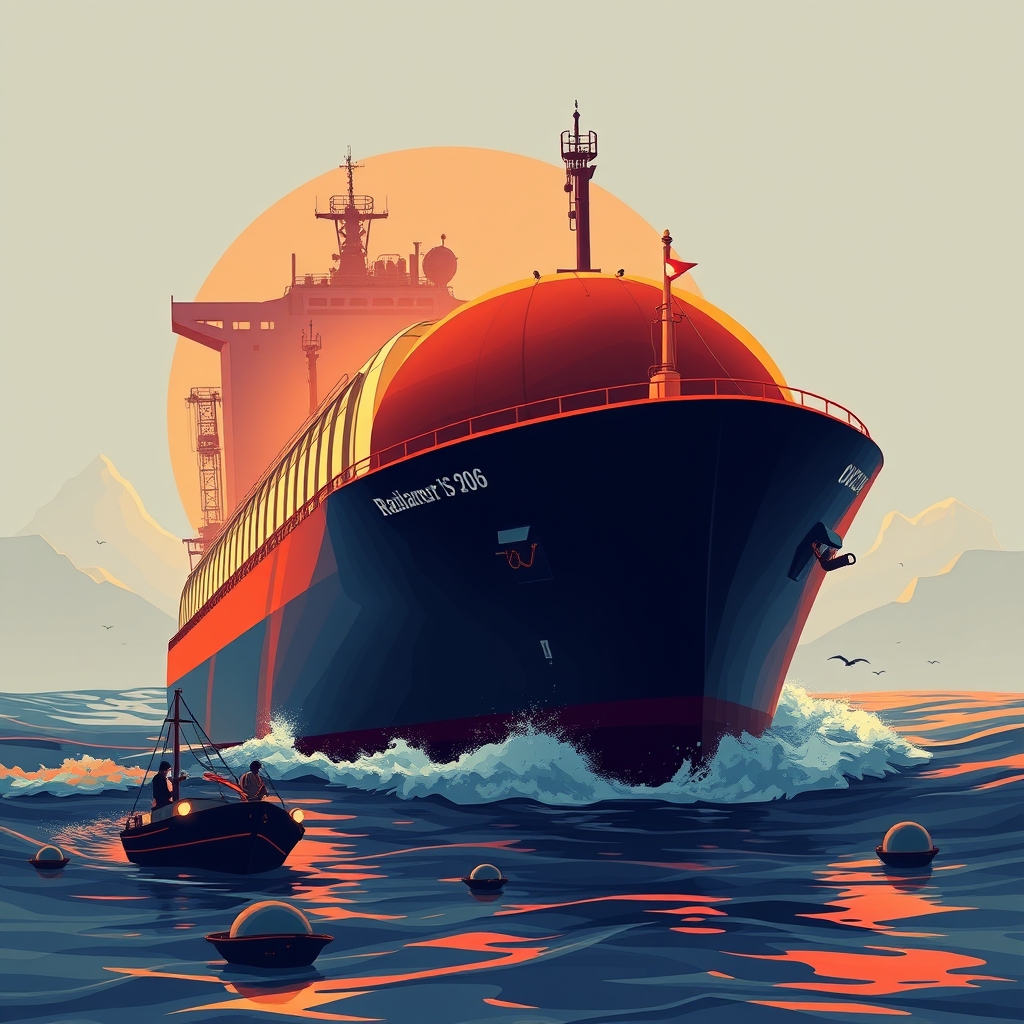
Black Sea Escalation: LPG Tanker Struck Near Romanian Waters
A targeted strike on a gas tanker in the Black Sea has escalated tensions in the region, wounding three crew members and forcing a high-stakes maritime evacuation. This incident, occurring near Romanian territorial waters, marks a dangerous intensification of the maritime conflict surrounding Ukraine's supply routes.
The Attack on Gas Lisbon
On the night of July 20, 2026, the Gas Lisbon, an LPG tanker flying the Liberian flag, was struck by an unidentified projectile while navigating the Black Sea. The vessel was transporting over 3,790 tonnes of propane, sourced from the port of Alexandria in Egypt, destined for the Ukrainian port of Reni. The strike, which occurred approximately 20 nautical miles off the Romanian coast, ignited a major fire on board the vessel.
Romanian President Nicusor Dan reported that the attack took place just outside Romanian territorial waters. While a formal investigation is underway to identify the perpetrator, President Dan stated that the strike is "most likely part of the Russian Federation's illegal war of aggression against Ukraine."
Maritime Rescue and Human Toll
The strike resulted in immediate casualties and a perilous situation for the crew. Two Romanian rescue vessels were deployed to the site to conduct an emergency evacuation of the ship’s 17 crew members. Emergency services confirmed that three individuals required urgent medical intervention. Two victims sustained burns covering 10-15% of their bodies, while a third sailor suffered multiple wounds and significant blood loss.
The Black Sea has increasingly become a volatile theatre of war since the Kremlin’s full-scale invasion of Ukraine in 2022. This latest incident highlights the growing risks to commercial shipping and the vulnerability of energy supply chains in the region, even for vessels operating in international waters near NATO member states like Romania.
India’s Diplomatic Response and Growing Stakes
This incident follows a recent tragedy involving Indian interests in the region. On Tuesday, July 21, 2026, the Indian government summoned Russia’s top envoy in New Delhi to lodge a formal protest. This diplomatic move was in response to a weekend attack on a cargo ship at the Ukrainian Black Sea port of Odesa, which resulted in the deaths of four Indian nationals.
The dual crises—the wounded crew on the Gas Lisbon and the loss of Indian lives in Odesa—place New Delhi in a complex position. While India maintains a nuanced and independent foreign policy regarding the Russia-Ukraine conflict, the safety of its citizens and the stability of global maritime trade routes remain paramount national interests.
What It Means for India
- Protection of Indian Nationals: The repeated targeting of commercial vessels in the Black Sea poses a direct security threat to Indian seafarers, necessitating stronger diplomatic safeguards and clearer protocols for Indian maritime workers in conflict zones.
- Global Energy and Trade Volatility: As a major importer of energy, India must monitor Black Sea escalations closely; disruptions to LPG and propane shipments can lead to increased volatility in global energy prices, impacting India's domestic inflation and trade balance.
- Strategic Diplomatic Balancing: The necessity of summoning Russian envoys to protest the loss of Indian lives demonstrates India's commitment to a rules-based international order, even as it navigates its complex, multi-aligned relationship with the Russian Federation.