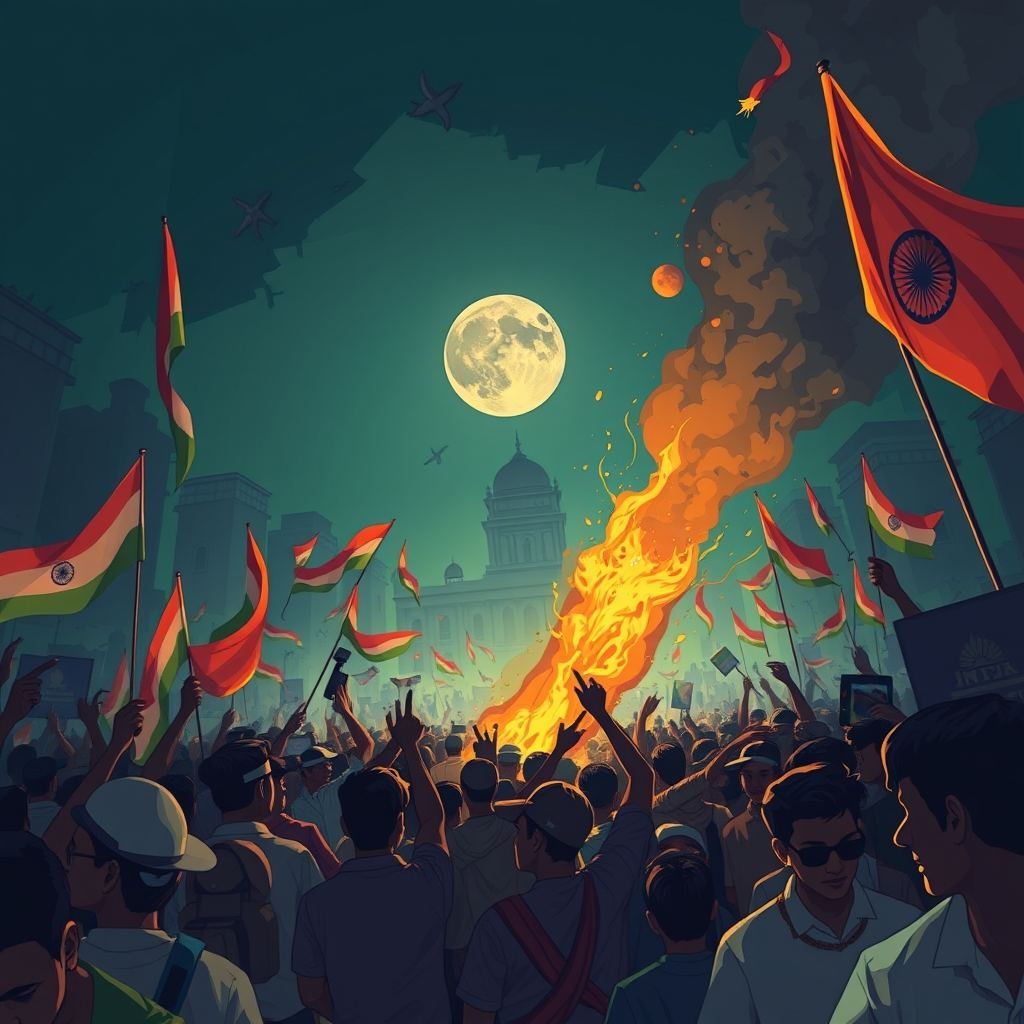
Bomb Blast at Bangladesh Student Rally Targets Key Leaders of July Movement
A bomb explosion struck a National Citizen Party (NCP) rally in Savar, near Dhaka, on Monday night, injuring at least three people. The attack occurred while high-profile student leaders, who were instrumental in the 2024 uprising, were addressing the gathering.
Violence Erupts During NCP's 'July March' Anniversary
The explosion took place around 9:45 pm at the Eidgah Ground near Savar Thana Stand. The rally was organized by the newly formed National Citizen Party (NCP) to mark the second anniversary of the "July Movement"—the mass student-led uprising that eventually forced former Prime Minister Sheikh Hasina to resign and flee the country in 2024.
The blast occurred while Dhaka District NCP Convener Engineer Nabila Tasnid was speaking. Crucially, several prominent figures of the new political order were on stage at the time, including NCP convener and Dhaka-11 MP Nahid Islam, Member Secretary Akhtar Hossain, MP, and Chief Organiser Sarjis Alam. While no major casualties among the top leadership were reported, the blast left at least three individuals injured, who were subsequently rushed to Enam Medical College Hospital for treatment.
The Fragile Transition of Power in Bangladesh
This incident highlights the volatile security situation in Bangladesh as the country attempts to navigate a post-Hasina political landscape. The NCP, led by the very students who spearheaded the protests against the previous regime’s quota system and subsequent crackdown, is attempting to institutionalize the momentum of the 2024 revolt.
The 2024 movement, which began as a protest against job reservations but escalated into a nationwide uprising after the government used lethal force, resulted in approximately 1,000 deaths and 20,000 injuries. The fact that political rallies for the new leadership are being met with explosive violence suggests that residual elements of the old guard or extremist factions may still be active, seeking to destabilize the burgeoning student-led political structure.
A Landscape of Uncertainty
The targeted nature of the timing—occurring during a commemorative march for the movement that toppled the previous administration—suggests a deliberate attempt to intimidate the new political class. As the NCP seeks to establish itself as a formal political entity, the recurring threat of violence poses a significant challenge to the stability of the interim political environment. For the residents of Savar and the broader Dhaka region, the explosion serves as a stark reminder that the transition from street protest to stable governance remains fraught with peril.
What It Means for India
- Security Implications on the Border: Persistent political instability and the rise of asymmetric violence (such as bomb blasts) in Bangladesh could lead to increased volatility along India's eastern border, complicating border management and internal security.
- Strategic Continuity: India’s primary interest lies in a stable, secular, and friendly government in Dhaka. If student-led parties like the NCP struggle to maintain order due to targeted violence, it may create a power vacuum that non-state actors or anti-India elements could exploit.
- Economic and Connectivity Risks: Continued civil unrest and political targeting of new leaders could disrupt bilateral trade, transit agreements, and ongoing infrastructure projects that are vital for India's "Act East" policy and regional connectivity.