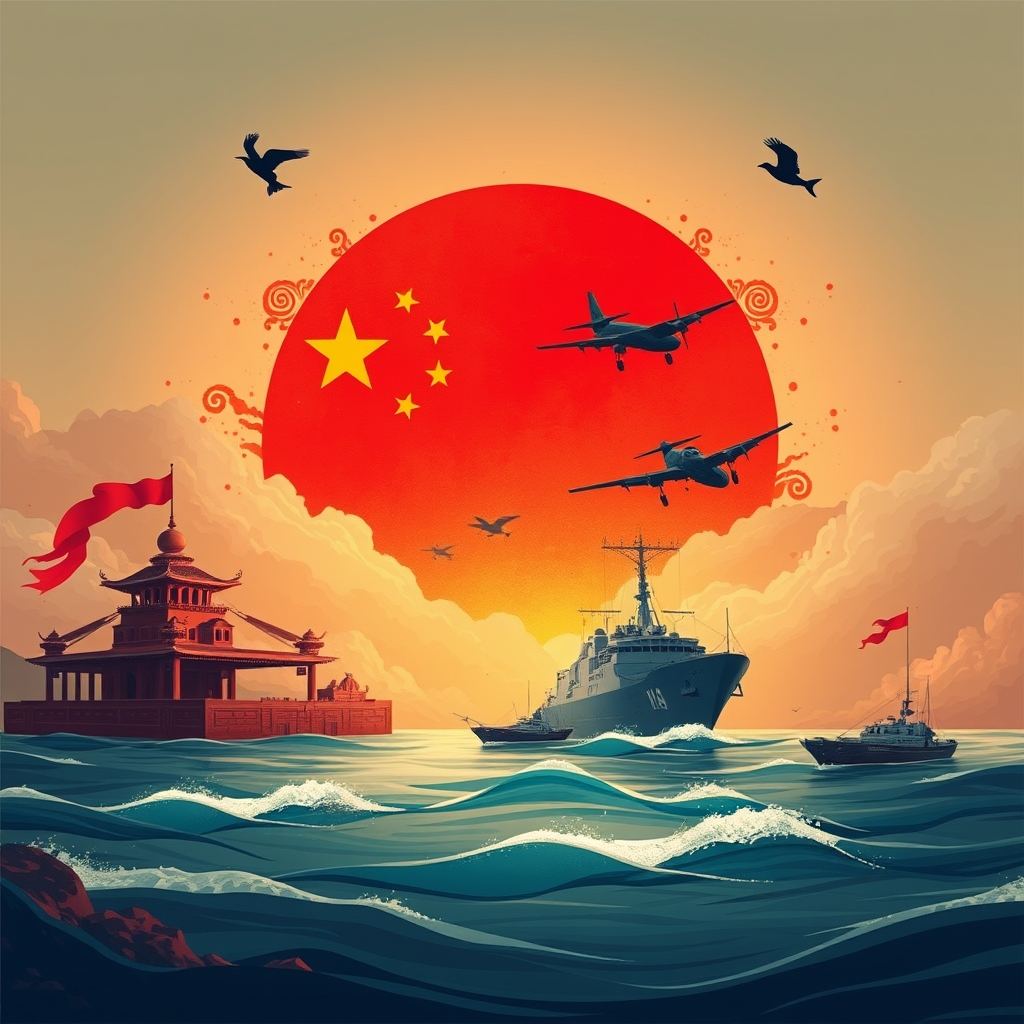
Article: China and Indonesia will stage a joint naval drill east of Taiwan in mid-August, with a Chinese warship and an Indonesian vessel practising communication and at-sea replenishment. The exercise puts Beijing’s ships in waters that have become a flashpoint as the island faces growing Chinese patrol activity.
Why the location matters
The drill’s venue sits in the maritime corridor to the east of Taiwan, an area that has seen a surge in Chinese coast-guard and navy movements since June. While the exact coordinates remain undisclosed, the location signals Beijing’s intent to normalise its presence near the contested island through routine, cooperative operations rather than overt shows of force.
How the partnership unfolded
On 11 August 2026, China’s Defence Ministry confirmed that a Chinese navy warship would take part in a “navigation exercise” with an Indonesian navy ship. The brief said the drill would focus on two core tasks: radio-communication drills and the transfer of fuel and supplies while underway. Beijing framed the activity as a step toward “enhancing joint operational capabilities” and “contributing to regional peace and stability.”
Indonesia’s involvement adds a new dimension to the Indo-Pacific balance. The country adheres to the “One China” policy and does not maintain formal diplomatic ties with Taipei, yet it hosts more than 300,000 Indonesian migrant workers on the island. No immediate comment has come from Taiwan’s Defence Ministry or the Indonesian Navy, but the timing coincides with heightened U.S. and Western concern over China’s increasing military pressure on Taiwan.
The broader stakes
- China’s narrative: By conducting drills with a major Southeast Asian navy, Beijing aims to portray its activities around Taiwan as part of a wider, consensual regional security effort.
Counter-point from Taipei
Taiwan views any Chinese military activity near its shores as a challenge to the status quo. Officials in Taipei repeatedly argue that the island’s future should be decided by its people, not by external pressure. From that perspective, even a routine-sounding “navigation exercise” can be read as a step toward normalising intimidation tactics, especially when the drill occurs in a zone that China has been using to test its operational reach.
What to watch next
- Follow-up statements: Reactions from Taiwan’s defence officials and Indonesia’s navy in the days after the drill will show whether the exercise is seen as a benign confidence-building measure or a strategic signal.
- Further joint activities: Additional drills, especially in other contested waters, could signal a systematic effort to broaden China’s naval partnership network.
- U.S. and allied responses: Washington may adjust its own presence in the Taiwan Strait or ramp up joint exercises with regional partners to counterbalance Beijing’s growing cooperation with Southeast Asian navies.
- ASEAN dynamics: Indonesia’s role could influence other ASEAN members’ willingness to engage in similar drills, testing the bloc’s cohesion on security matters tied to China’s maritime ambitions.
Implications for India
- Maritime security monitoring: Shifts in the naval balance east of Taiwan can affect the safety of Sea Lines of Communication that link Indian ports to East Asian markets.
- ASEAN diplomacy: Indonesia’s participation underscores the importance of India’s “Act East” outreach; deeper engagement with Southeast Asian navies may be needed to keep regional security architectures inclusive.
- Strategic autonomy: As Beijing seeks more partners, India must preserve its ability to work with both Western allies and ASEAN states without being drawn into a binary alignment.