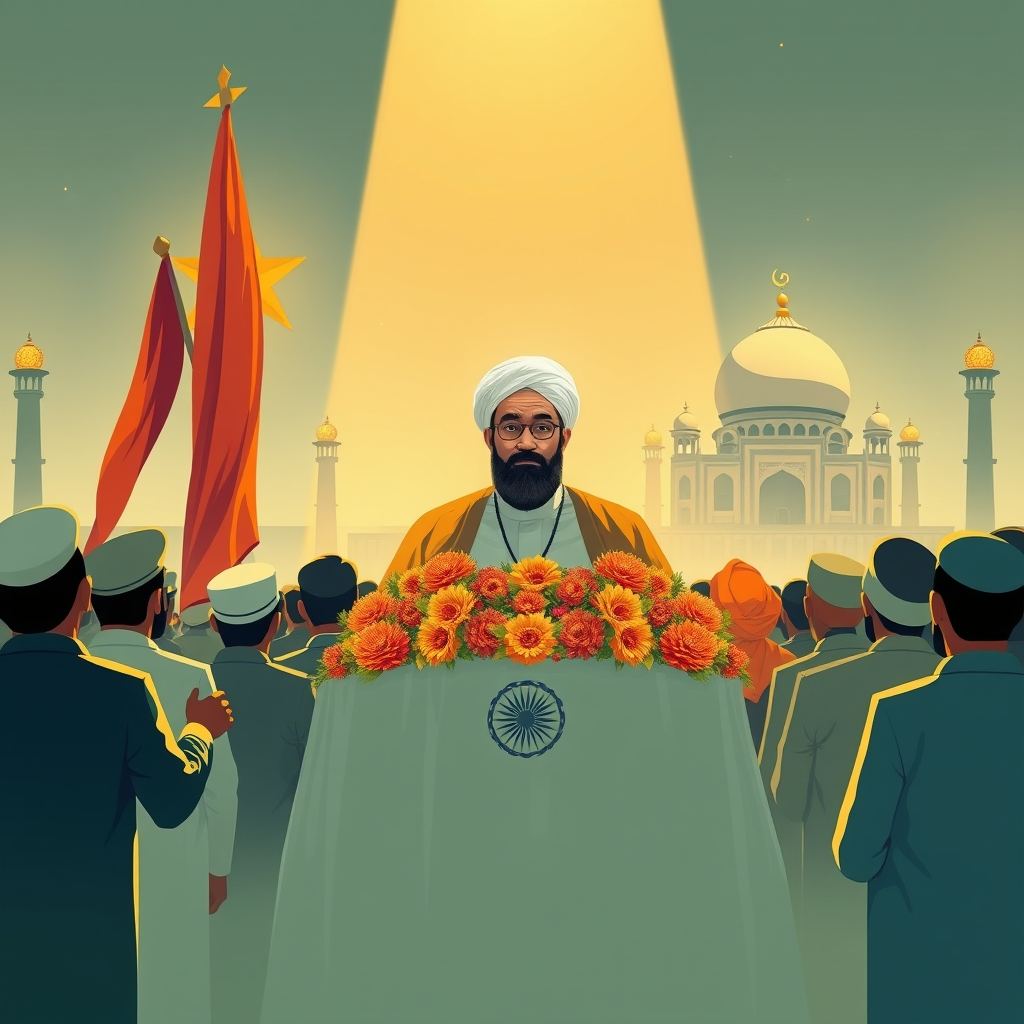
Funeral of Ayatollah Ali Khamenei: Iran Grapples with Uncertainty
The passing of Supreme Leader Ayatollah Ali Khamenei has plunged Iran into a period of profound mourning and political volatility. As his remains travel from Tehran to the holy city of Qom, the massive funeral processions are marked by intense grief and public vows of revenge against the United States and Israel.
Massive Mourning and the Question of Succession
Hundreds of thousands of mourners have flooded the streets of Tehran and Qom to witness the funeral rites for the late Supreme Leader and members of his family. The scale of the crowds highlights the deep-seated ideological mobilization within the Islamic Republic. However, beneath the displays of religious fervor, significant questions regarding the future of the Iranian state are emerging.
A central point of concern is the leadership vacuum. Mojtaba Khamenei, the late leader's son and designated successor, has notably remained absent from the public eye since his father’s death. This absence has fueled speculation regarding the stability of the transition of power. In a surprising turn of political realignment, former hard-line President Mahmoud Ahmadinejad made a rare public appearance at the funeral, signaling potential shifts in the internal power dynamics of the Iranian establishment.
Geopolitical Tensions and the Resistance Axis
While the nation mourns, the regional security landscape remains extremely volatile. During the funeral proceedings, Iran’s Parliament Speaker Mohammad Bagher Ghalibaf met with the head of Hamas’s political bureau, using the occasion to reaffirm Tehran's steadfast support for the regional armed groups it backs. This message serves as a warning to regional adversaries during a moment of perceived vulnerability.
Simultaneously, military escalations continue in the Levant. Despite US-brokered ceasefires being technically in place, Israeli forces have carried out fresh attacks in Gaza and Lebanon, resulting in casualties. The intersection of Iran's internal leadership crisis and the ongoing kinetic conflict in the Middle East creates a highly combustible environment where miscalculations could trigger a wider regional war.
Diplomatic Channels Amidst Turmoil
Despite the heightened rhetoric of "revenge" from the mourning crowds, formal diplomatic channels appear to be functioning. Iran’s top negotiator has indicated that while implementing a nuclear or broader agreement with the United States is "difficult," it remains "achievable." This suggests that even in the wake of a leadership death, the Iranian state apparatus is attempting to maintain a pragmatic lane for negotiations to avoid total economic or military isolation.
What It Means for India
The transition of power in Tehran is a critical development for New Delhi, given India's deep strategic and economic interests in West Asia.
- Energy Security and Trade: Any prolonged instability or escalation in the Persian Gulf could disrupt oil supply chains and maritime trade routes, impacting India's energy security and inflation management.
- Regional Stability and Diaspora Safety: A shift in Iran's foreign policy—either toward more aggressive regional posturing or a pragmatic rapprochement with the West—will directly affect the security environment for the millions of Indian expatriates working in the Gulf and Middle East.
- Strategic Balancing Act: India must navigate a complex diplomatic path, maintaining its growing ties with Israel and the US while managing its long-standing, vital relationship with Iran, particularly regarding connectivity projects like the Chabahar Port.