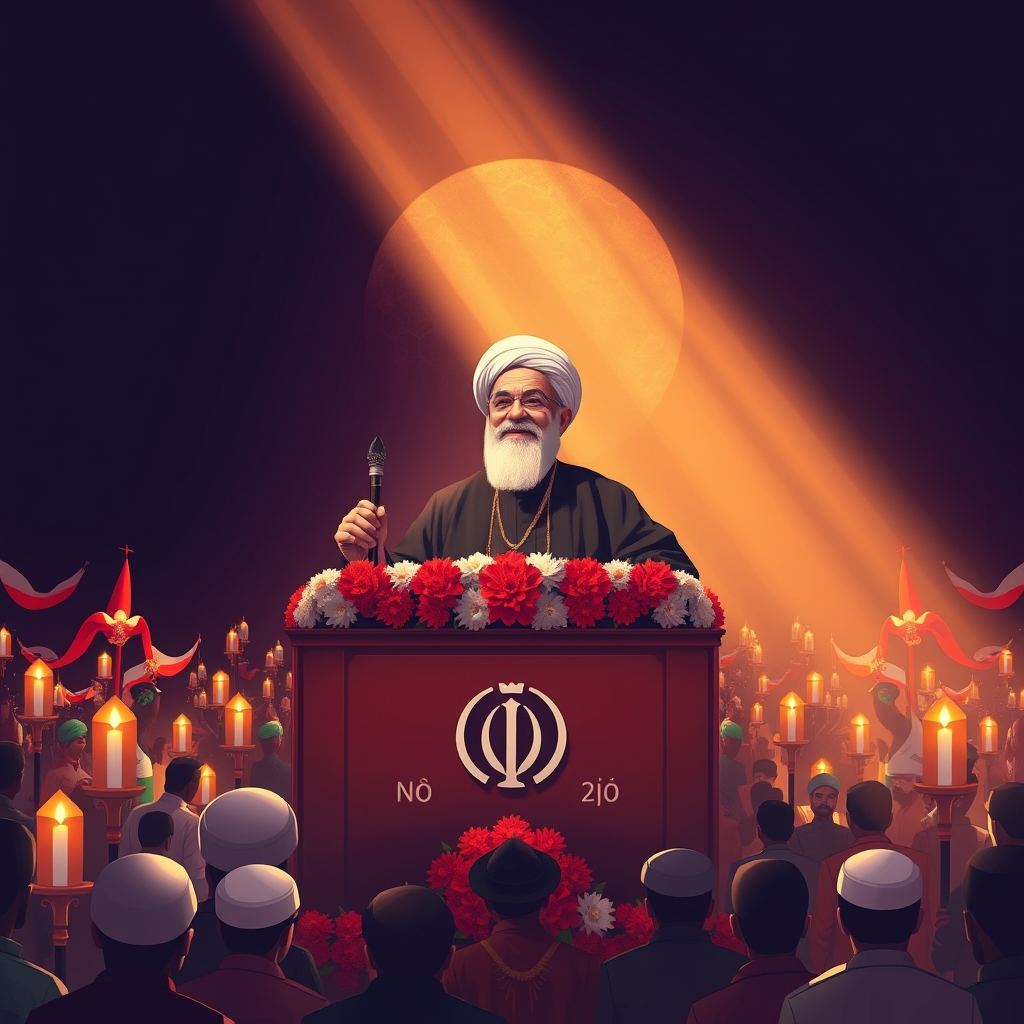
Iran Holds Massive Funeral for Ali Khamenei Amid West Asian Volatility
Tehran is currently hosting a multi-day state funeral for the late Supreme Leader Ayatollah Ali Khamenei, marking a significant turning point for the Middle East. Following his death in precision strikes on February 28, 2026, the delayed ceremony comes at a critical moment of fragile stability between Iran, Israel, and the United States.
A High-Stakes Gathering of Global Powers
The funeral, scheduled for July 4–5, 2026, at the Imam Khomeini Musalla in Tehran, has become a focal point for international diplomacy. While the Iranian government remains selective about official attendance figures, representatives from approximately 30 countries are expected.
The attendee list underscores the shifting geopolitical alignments in the region. Russia is represented by Dmitry Medvedev, Deputy Chairman of the Security Council, while China is sending He Wei, a deputy leader of its top legislative body. Pakistan’s Prime Minister Shehbaz Sharif is also confirmed to attend. These presences signal a continued support network for the Iranian establishment despite the recent military escalations involving the U.S. and Israel.
Uncertainty Surrounding the Successor
A central question haunting the proceedings is the whereabouts of Mojtaba Khamenei. The son and presumed successor of the late Ayatollah has not been seen in public since the strikes that also claimed the lives of his wife and children. As the funeral procession moves from Tehran to the holy cities of Qom and Mashhad, the international community is watching closely to see if Mojtaba will appear, which would serve as a crucial signal of stability and legitimacy for the next phase of Iranian leadership.
The funeral is set to be a protracted affair. Following the main ceremonies in Tehran, the procession will travel to Qom on July 7, before concluding with a final burial in Mashhad on July 9. The late leader will be laid to rest near the tomb of Imam Reza, a site of immense religious significance.
Indian Representation and Diplomatic Nuance
India’s presence at the ceremony is marked by a diverse group of political figures rather than a singular high-ranking central government official, reflecting the complex delicate balance New Delhi must maintain. The delegation includes Deputy Foreign Minister Pabitra Margherita, former External Affairs Minister Salman Khurshid, and several prominent political figures such as Bihar Governor Syed Ata Hasnain and Jammu and Kashmir leaders Mehbooba Mufti and Aga Syed Hassan Mosavi Al Safavi.
This composition allows India to maintain diplomatic engagement and observe the transition of power in a neighboring region without being seen as overtly aligning with any specific faction in the volatile West Asian landscape.
What It Means for India
- Regional Stability and Energy Security: The transition of power in Tehran is a critical variable for India’s energy security. Any prolonged instability or a hardline shift in the successor's policy could disrupt vital maritime trade routes in the Persian Gulf and the Strait of Hormuz.
- Strategic Autonomy: India's decision to send a multi-faceted delegation demonstrates its commitment to "strategic autonomy," ensuring it maintains channels of communication with Iran while navigating its growing security partnerships with the West and Israel.
- Diaspora and Security Concerns: A period of transition in Iran could lead to increased regional volatility, impacting India's security interests in West Asia and necessitating heightened vigilance regarding regional intelligence and the safety of Indian interests in the Middle East.