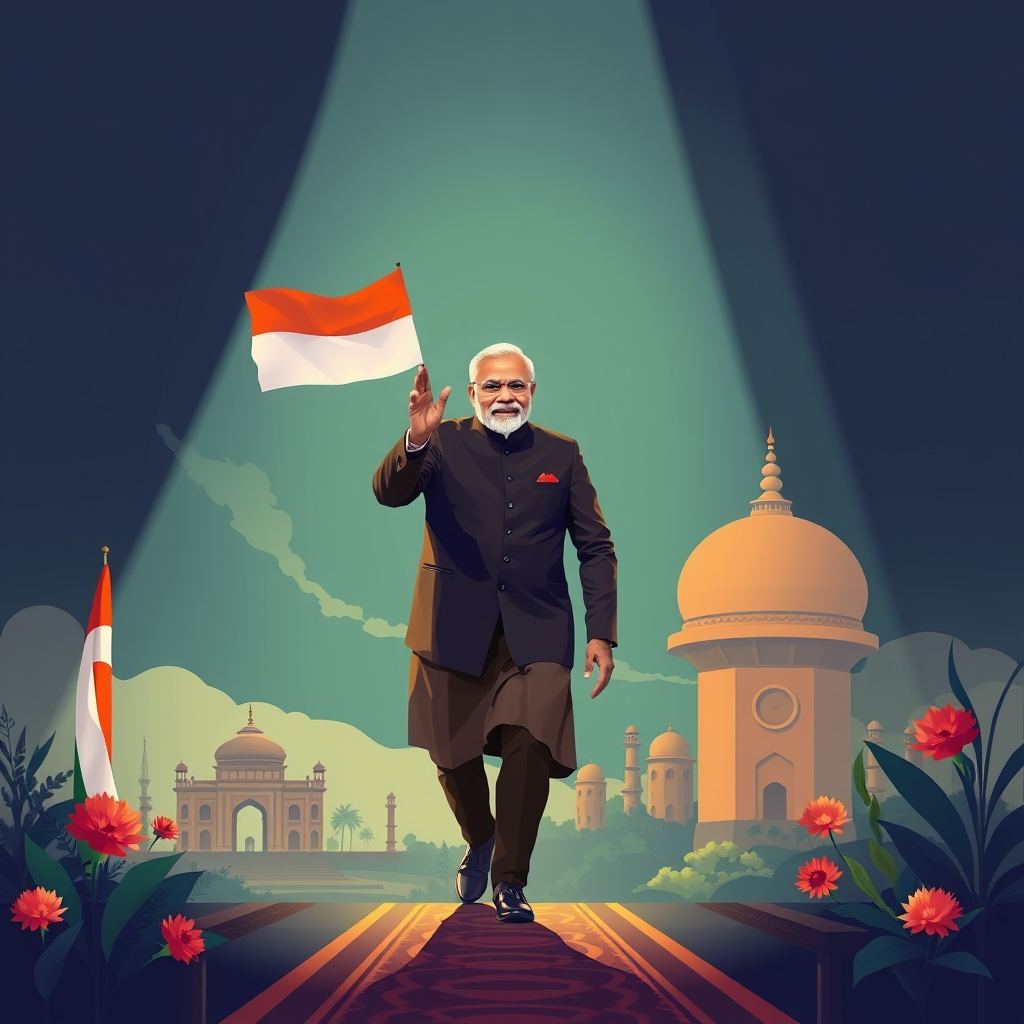
Why PM Modi’s Indonesia Visit is a Strategic Pivot for India
Prime Minister Narendra Modi’s latest visit to Indonesia marks a critical milestone in India's proactive engagement with Southeast Asia. As the first bilateral visit to the archipelago since 2018, this mission goes beyond traditional diplomacy to address deep-seated maritime, economic, and security imperatives.
The Malacca Dilemma and Maritime Security
At the heart of India's interest in Indonesia lies the Strait of Malacca, one of the world’s most vital maritime chokepoints. Currently, nearly 40% of India’s total maritime trade passes through this narrow corridor. Because Indonesia sits at the gateway to this strategic lane, any instability or shift in control over these waters directly impacts India's energy security and trade continuity.
By strengthening ties with Jakarta, New Delhi is working to ensure "freedom of navigation" in the Indo-Pacific. As the region becomes increasingly contested by major powers, having a stable, cooperative partner in Indonesia is essential for India to safeguard its sea lines of communication (SLOCs). This visit serves as a foundational step in building a more resilient maritime architecture that prevents any single power from dominating these critical transit routes.
Strengthening Economic and Regional Partnerships
Beyond the security dimension, the visit is a significant driver for economic integration. Indonesia represents a massive market and a key player within ASEAN, an organization that remains central to India's "Act East Policy." Expanding bilateral trade and deepening economic partnerships with Indonesia allows India to diversify its supply chains and tap into the growing economic dynamism of Southeast Asia.
The discussions are expected to move beyond simple trade figures to include cooperation in critical sectors such as digital economy, sustainable energy, and infrastructure. As India seeks to position itself as a global manufacturing hub, securing stable trade corridors and economic synergies with Indonesia is a logical extension of its long-term developmental goals.
Navigating the Indo-Pacific Geopolitics
The visit comes at a time when the Indo-Pacific is the primary theater of geopolitical competition. For India, maintaining a balance of power in this region is a non-negotiable strategic priority. Indonesia, as a leading voice in the Global South and a central actor in ASEAN, provides a platform for India to project its influence and promote a rules-based international order.
Strengthening the India-Indonesia relationship helps New Delhi build a network of "middle powers" that can collectively advocate for a multipolar Indo-Pacific. This diplomatic maneuvering is crucial to ensuring that the region remains open, inclusive, and not dominated by any single hegemon, thereby protecting the sovereignty and interests of all littoral states.
What It Means for India
- Securing Trade Arteries: By deepening ties with the guardian of the Strait of Malacca, India mitigates the risk of trade disruptions affecting the 40% of its maritime commerce that relies on this route.
- Act East Policy Momentum: The visit revitalizes India’s commitment to Southeast Asia, transforming the Act East Policy from a diplomatic framework into a tangible security and economic reality.
- Strategic Autonomy in the Indo-Pacific: Building a robust partnership with Jakarta enhances India's ability to shape regional norms and maintain a strategic balance against competing major power interests.