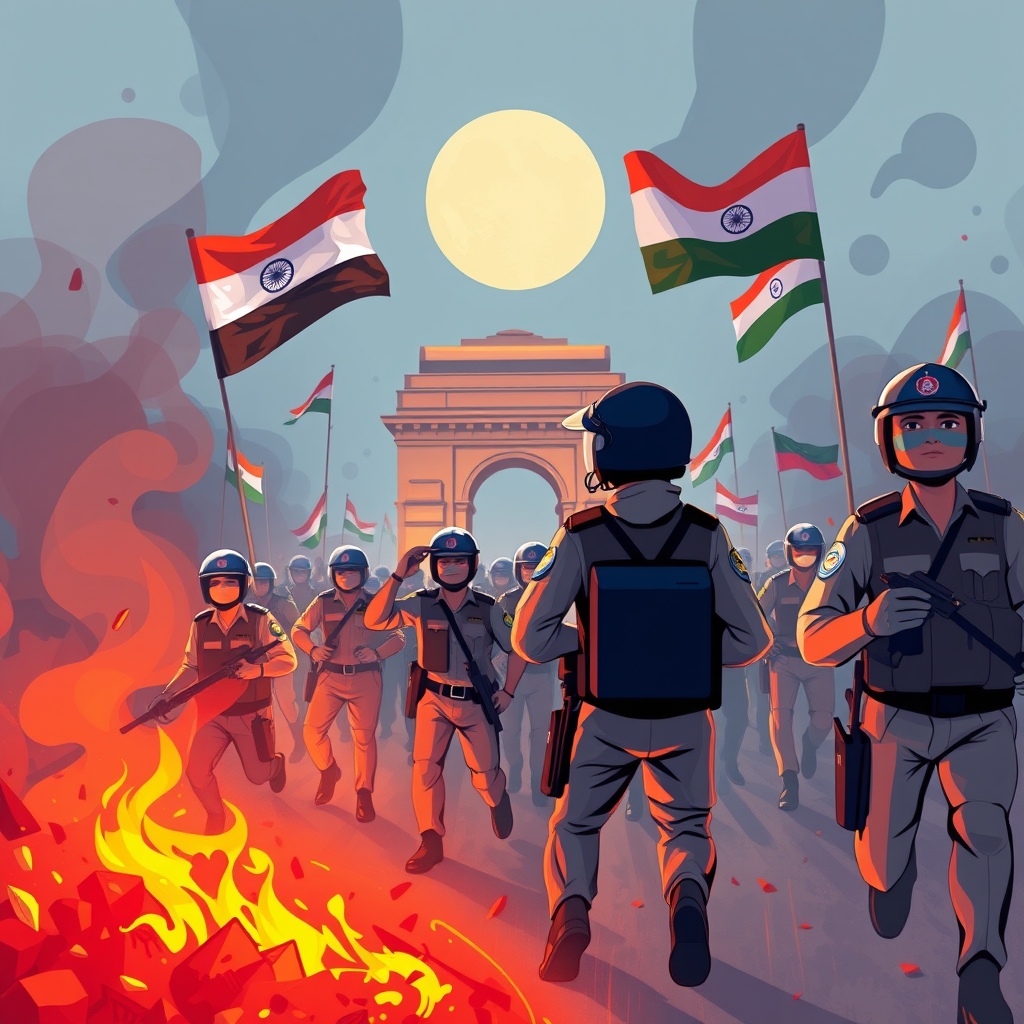
Delhi Unrest: Violent CJP Protest Leaves 118 Police Officers Injured
Chaos erupted in the national capital on Monday as the Cockroach Janta Party’s (CJP) "Sansad Chalo" protest march spiraled into widespread violence. The demonstration, which bypassed lawful restrictions, resulted in significant casualties among security forces and extensive damage to government property.
Escalation of Violence in the National Capital
What began as a protest march by the CJP transitioned into a violent confrontation with law enforcement in the New Delhi area. According to official statements from the Delhi Police, the protesters ignored repeated warnings and violated existing prohibitory orders, refusing to disperse despite clear lawful directions.
The situation escalated as the mob attempted to breach police barricades. Protesters reportedly used stones and other objects to attack security personnel, leading to a chaotic scuffle. The violence resulted in injuries to over 118 police personnel, a figure that notably includes high-ranking officers such as the Special Commissioner, Joint Commissioner, and several Deputy and Assistant Commissioners. The impact was not limited to senior leadership; several women police officers were also among those injured during the unrest.
Damage to Public Infrastructure and Legal Action
The scale of vandalism witnessed during the "Sansad Chalo" march was substantial. The Delhi Police reported that the violent mob targeted government assets, vandalizing between 15 to 20 government vehicles and causing extensive damage to other public property. While the police sustained over 100 injuries, approximately 60 protesters were also reported injured during the clashes.
In the immediate aftermath, law enforcement moved to restore order by detaining around 70 protesters. The Delhi Police have confirmed that legal proceedings are being initiated under the Bharatiya Nyaya Sanhita. The charges being registered include rioting, assault on public servants, and damage to public property, signaling a firm stance on maintaining the rule of law within the capital.
Security Implications for the Seat of Power
The targeting of high-ranking police officials—from the Special Commissioner down to Assistant Commissioners—highlights a significant security challenge. When protest movements transition from peaceful assembly to targeted assaults on the administrative machinery, it tests the resilience of the state’s internal security apparatus. The concentration of violence in New Delhi, the heart of India's governance, necessitates a rigorous review of how large-scale demonstrations are managed near sensitive government installations to prevent similar breaches of public order in the future.
What It Means for India
- Internal Security Resilience: The injury to high-ranking officers underscores the need for enhanced tactical training and specialized crowd-control protocols to protect the administrative core from targeted mob violence.
- Legal Precedent under BNS: The application of the Bharatiya Nyaya Sanhita in response to this incident will serve as a critical test case for how the new legal framework handles organized civil unrest and damage to state assets.
- Stability of the Capital: Frequent disruptions in the national capital can impact the perceived stability of the administrative center; ensuring that the right to protest does not infringe upon the safety of public servants is vital for maintaining institutional order.