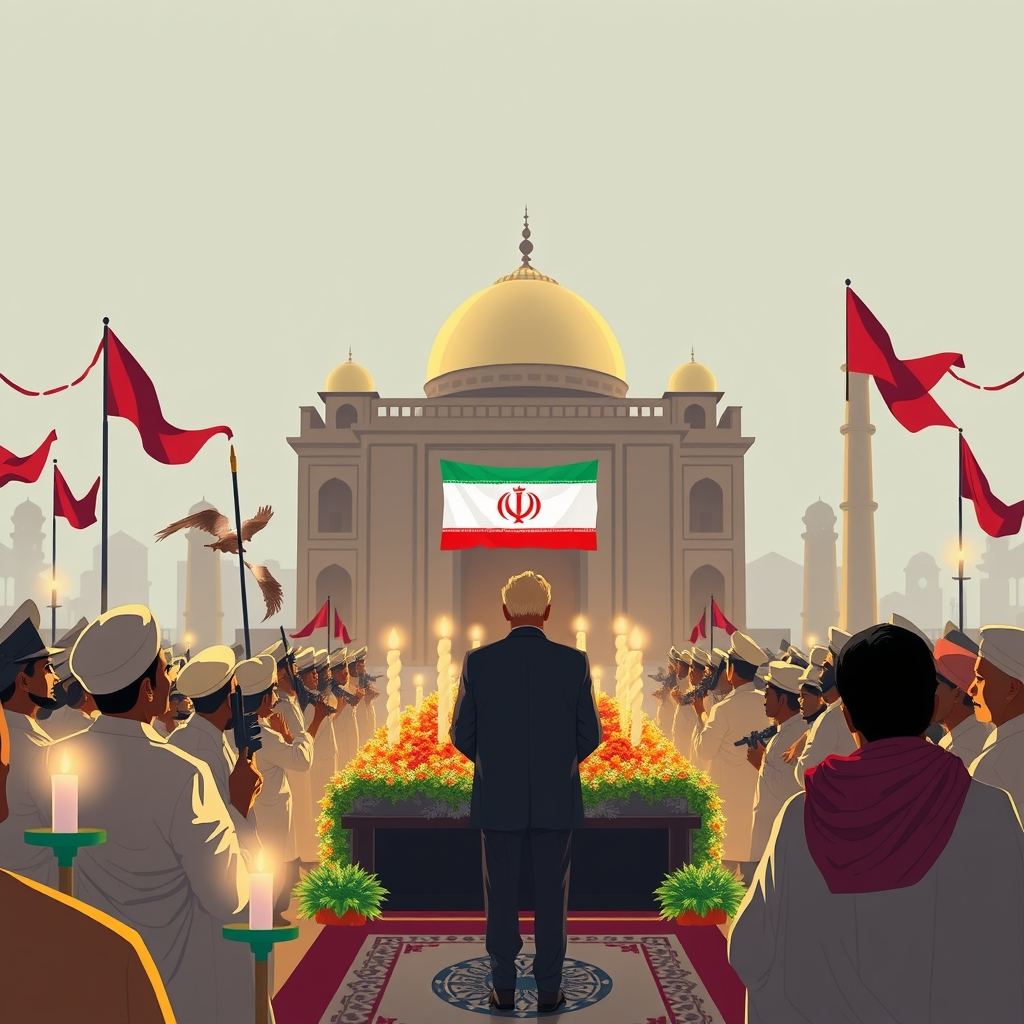
Iran Slams Trump’s ‘One Shot’ Threat Amidst High-Stakes Funeral Rites
Tensions in the Middle East have escalated following provocative remarks by US President Donald Trump regarding the potential elimination of Iranian leadership. As Iran holds massive funeral rites for its late Supreme Leader, Tehran has responded with a fierce condemnation of Washington's rhetoric, signaling a period of heightened volatility in the region.
Trump’s Provocative Rhetoric and the 'One Shot' Threat
During a recent interview, US President Donald Trump issued a blunt assessment of the current situation in Iran, suggesting that a swift, precision strike could eliminate the country’s top officials. Trump specifically questioned the sincerity of the massive crowds gathering for the funeral of the former Supreme Leader, Ali Khamenei. His comments implied that the political stability of the Iranian regime is fragile and that military action could provide a "one shot" solution to decapitate the leadership.
This rhetoric marks a significant departure from traditional diplomatic posturing, leaning instead toward a policy of maximum pressure and direct intimidation. By targeting the leadership during a period of national mourning, the US administration has signaled a willingness to bypass traditional de-escalation protocols in favor of aggressive deterrence.
Tehran’s Defiant Response: 'Ideals Can’t Be Killed'
Iran has responded to these threats with intense indignation, accusing the United States of lacking "civilisation, history, or honour." In an official statement, Iranian officials emphasized that while individuals can be targeted, the underlying revolutionary ideals of the Islamic Republic are indestructible.
The funeral ceremonies for Ali Khamenei have become a focal point of this geopolitical standoff. Tehran has projected the massive turnout at these rites as a powerful demonstration of national unity and public defiance against Western interference. For the Iranian leadership, the ability to mobilize millions serves as a psychological counter-narrative to Trump's suggestion of internal instability, framing the movement as a resilient force that survives beyond its individual leaders.
Escalating Regional Instability
The exchange highlights a deepening rift between the world's largest economy and a key pillar of the "Axis of Resistance." Trump’s suggestion of a surgical strike raises serious concerns about the potential for a miscalculation. Any kinetic action targeting high-level Iranian officials would likely trigger a massive regional response, involving various proxy groups across the Levant and the Persian Gulf, potentially disrupting global energy markets and shipping lanes.
The timing of these remarks is particularly sensitive, occurring as the Middle East navigates a complex landscape of shifting alliances and long-standing grievances. The shift from diplomatic maneuvering to overt threats of decapitation strikes indicates that the era of containment may be giving way to an era of direct confrontation.
What It Means for India
- Energy Security Risks: Any escalation between the US and Iran threatens the stability of the Strait of Hormuz, a critical artery for India’s crude oil imports, potentially leading to sudden price spikes and supply chain disruptions.
- Diaspora and Diplomatic Balancing: India must navigate a delicate diplomatic path, maintaining its strategic partnership with the United States while managing its historical and energy-based ties with Iran to ensure the safety of Indian nationals in the region.
- Regional Security Paradigm: Increased volatility in the Middle East may force India to accelerate its strategic autonomy, investing more heavily in maritime security and diversifying energy sources to insulate its economy from Middle Eastern geopolitical shocks.