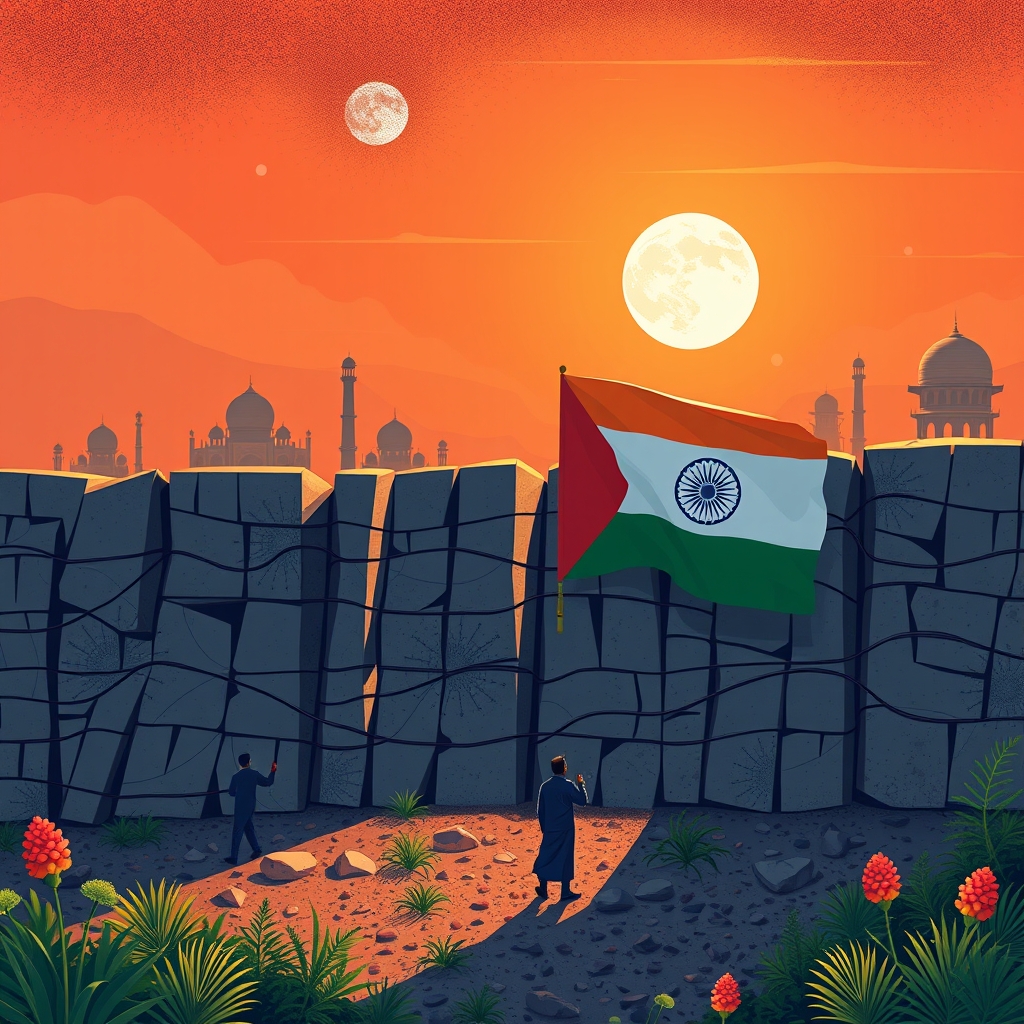
Israel’s New Earthen Barrier: Deepening the Physical Division of Gaza
As the ceasefire agreement in the Gaza Strip stagnates, the Israeli military is rapidly constructing a massive earthen barrier that threatens to permanently bifurcate the Palestinian enclave. This strategic move, characterized by miles of berms and advanced security zones, signals a shift from temporary military positioning to a long-term territorial reconfiguration.
The Rise of the Physical Divide
Recent satellite imagery reveals that the Israeli military has constructed over 23 km (14 miles) of earthen berms through the Gaza Strip. This barrier effectively separates the areas under Israeli military control from the rest of the territory, where the majority of Gaza’s 2 million residents are currently concentrated.
The construction is most aggressive along the so-called "yellow line"—a boundary established under the U.S.-backed ceasefire deal intended to serve as a temporary demarcation pending a full Israeli withdrawal. However, the rapid expansion of these berms suggests that what was meant to be a fluid line is being transformed into a rigid, fortified border. In southern Gaza, for instance, the berm network extended by over 2 km in just two weeks this month, slicing through the ruins of Rafah to isolate it from the Muwasi tent camps.
Engineering a "Security Zone"
Beyond simple earthworks, the Israeli military has confirmed the development of a sophisticated "security zone" around this line. This zone is being integrated with high-tech intelligence and technological assets to monitor movement and prevent infiltration.
The impact on the ground is devastating. On the side of the line controlled by Israel, satellite imagery shows a landscape of leveled towns, destroyed agricultural land, and new Israeli military bases built atop the ruins of former Palestinian communities like Bani Suheila. Conversely, the Palestinian population has been pushed into increasingly crowded and squalid coastal areas, heavily dependent on humanitarian aid.
The lack of precision regarding the "yellow line" has also led to increased casualties. Without clearly defined boundaries, Israeli forces have engaged in strikes that have killed hundreds of Palestinians, including civilians and children, who were unaware they had approached the restricted zone.
A Stalled Peace Process
The entrenchment of this barrier occurs against a backdrop of diplomatic paralysis. While the ceasefire agreement mandates that Israel eventually withdraw to the edges of Gaza to be replaced by an international security force, implementation has stalled.
The impasse is fueled by mutual distrust: international coordinators point to Hamas's failure to disarm, while Hamas accuses Israel of unilaterally violating the ceasefire terms through these physical demarcations. With the "Board of Peace," led by U.S. President Donald Trump, yet to oversee a transition, the physical reality on the ground is moving much faster than the political negotiations.
What It Means for India
For India, which maintains a delicate balance between its strategic partnership with Israel and its historical commitment to the Palestinian cause, this development carries several implications:
- Diplomatic Complexity: The physical division of Gaza complicates India’s "de-hyphenated" foreign policy, making it harder to advocate for a two-state solution as the territorial integrity of a future Palestinian state is being physically eroded.
- Regional Stability and Energy Security: Increased permanent militarization in the Levant heightens the risk of wider regional escalation, which could disrupt maritime trade routes and global energy markets critical to India’s economic stability.
- Humanitarian Advocacy: As the humanitarian crisis intensifies due to the segregation of populations, India will face increased pressure in multilateral forums like the UN to advocate for aid corridors that are not impeded by new military fortifications.