US-Iran Diplomacy in Qatar: Breakthrough or Brittle Truce?
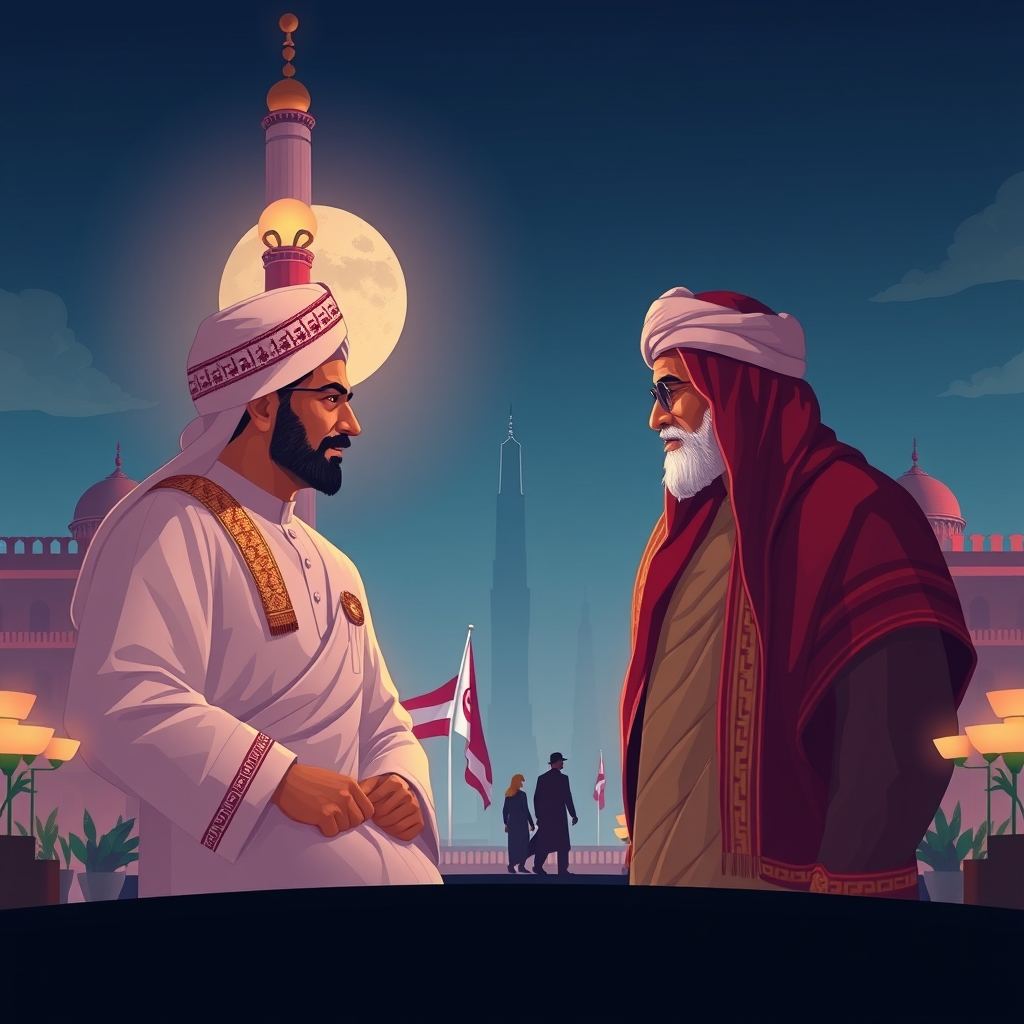
US President Donald Trump has signaled optimism regarding indirect negotiations with Iran held in Doha, Qatar, suggesting a potential path toward denuclearization and regional stability. Following recent military escalations, these talks aim to implement a memorandum of understanding (MoU) established at the recent Lucerne Summit to prevent a wider Middle East conflagration.
The Doha Framework: Implementing the Lucerne Accord
The recent discussions in Qatar, mediated by Qatar and Pakistan, represent a technical phase of diplomacy following the high-level summit in Switzerland. While Iran’s Deputy Foreign Minister Kazem Gharibabadi clarified that these were not direct negotiations, the talks focused on the practical implementation of the Lake Lucerne MoU.
Key components of this memorandum include a 60-day ceasefire, the reopening of the vital Strait of Hormuz, and a structured timetable for a final settlement concerning Iran’s nuclear program. A critical sticking point remains the release of frozen Iranian assets; officials have begun reviewing the allocation of an initial $6 billion to ensure essential goods reach Iran, a move seen as necessary for Tehran's cooperation.
Military Friction and the Strait of Hormuz
Despite the optimistic rhetoric from Washington, the path to peace remains fraught with "implementation challenges," as noted by Iranian negotiator Mohammad Bagher Ghalibaf. Recent weeks saw significant volatility, including Iranian strikes on commercial shipping in the Strait of Hormuz and subsequent US Central Command strikes on ten Iranian military targets. The tension further escalated when Iran targeted US bases in Kuwait and Bahrain.
The stability of the Strait of Hormuz is perhaps the most sensitive element of these talks. Any disruption in this narrow waterway threatens global energy security. The current discussions are specifically designed to establish communication channels to report and record violations, attempting to prevent accidental escalations from spiraling into full-scale regional warfare.
The Lebanon Factor and Regional Complexity
The negotiations in Doha are not limited to the US-Iran bilateral relationship; they are deeply intertwined with the conflict in Lebanon. Tehran has made it clear that any comprehensive deal must address the cessation of hostilities between Israel and Hezbollah, including the withdrawal of Israeli troops from southern Lebanon.
While the fighting between Israel and Hezbollah has quieted recently, the "battle" continues in the diplomatic corridors. US envoys Jared Kushner and Steve Witkoff have been actively engaging with Qatari leadership to navigate these multi-layered conflicts, attempting to link the nuclear issue with broader regional security concerns involving Lebanon and the Israeli-Palestinian dimension.
What It Means for India
The shifting dynamics in the Persian Gulf have profound implications for India’s strategic and economic architecture:
- Energy Security and Inflation Control: A successful reopening of the Strait of Hormuz and a stabilized Middle East are critical for India. Reduced tension in the Gulf typically leads to lower oil prices, helping India manage its current account deficit and curb domestic fuel inflation.
- Strategic Autonomy in the Middle East: As the US and Iran navigate a tentative peace, India must balance its growing strategic partnerships with the UAE, Saudi Arabia, and Israel, while maintaining its essential energy and diaspora ties with Iran.
- Maritime Security: Given India’s heavy reliance on sea lanes for trade with Europe and Africa, any resolution that formalizes maritime conduct in the Strait of Hormuz reinforces the importance of India's "SAGAR" (Security and Growth for All in the Region) vision and its role as a net security provider in the Indian Ocean Region.