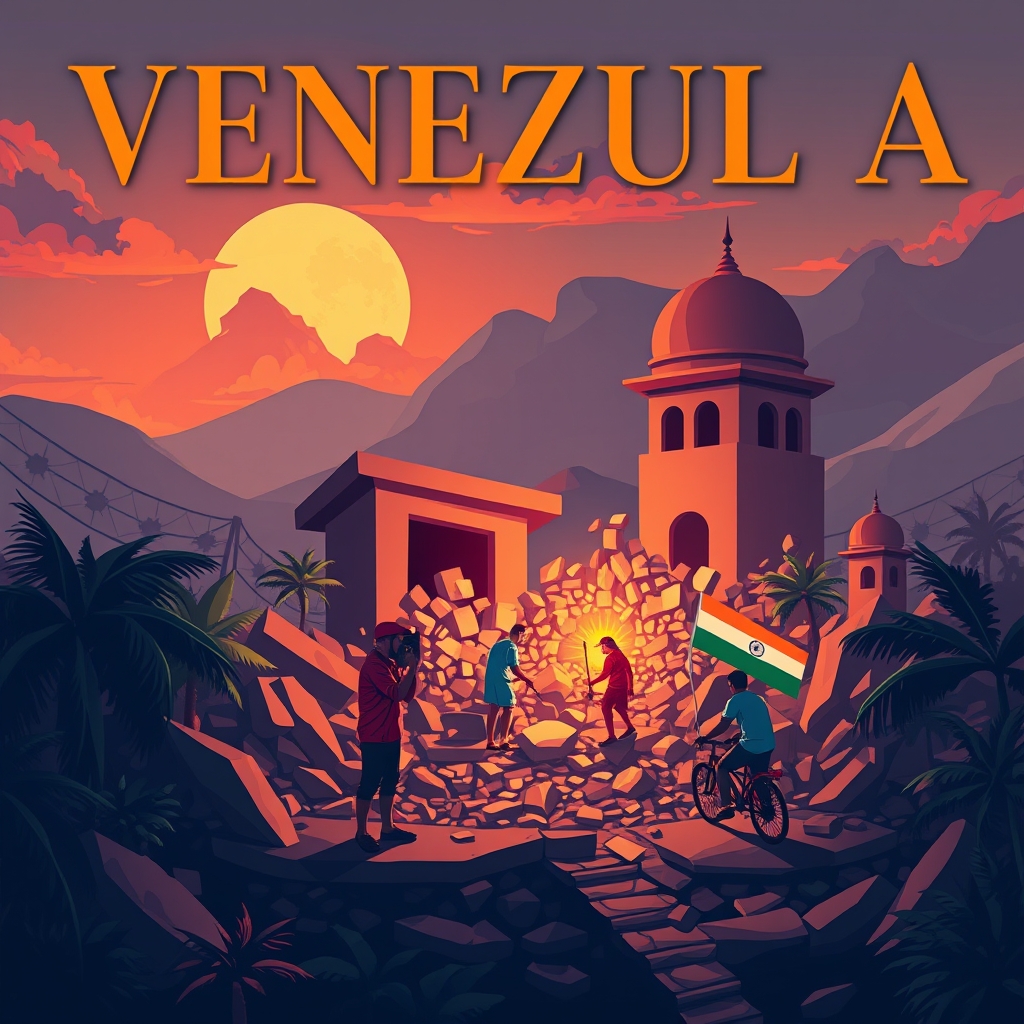
Venezuela Earthquake: Death Toll Hits 589 as India Sends Relief
A devastating series of two powerful earthquakes has struck Venezuela, leaving a trail of destruction and a rapidly rising casualty count. As the nation grapples with the aftermath, the international community has mobilized to provide critical humanitarian assistance to the affected regions.
The Scale of the Humanitarian Crisis
The humanitarian situation in Venezuela has turned critical following two massive seismic events. According to Acting President Delcy Rodríguez, as of Friday, June 26, 2026, the death toll has climbed to 589 individuals, with approximately 2,980 people reported injured. The destruction is widespread, with numerous buildings collapsed, leaving thousands of citizens in urgent need of shelter, medical care, and basic sustenance.
Rescue operations are currently underway, with local emergency services working tirelessly to locate survivors trapped beneath the rubble. The scale of the disaster has stretched local capacities to their limits, prompting an urgent call for global intervention to manage the growing number of casualties and prevent further loss of life due to secondary health crises or lack of essential supplies.
International Mobilization and India's Rapid Response
In response to the catastrophe, several nations have initiated relief efforts, deploying specialized search-and-rescue teams and emergency supplies. Amidst this global surge of solidarity, India has emerged as a key contributor to the relief mission, demonstrating its capability for rapid large-scale humanitarian deployment.
External Affairs Minister S. Jaishankar confirmed on Friday that India has dispatched significant aid to assist the Venezuelan people. The Indian Air Force (IAF) has deployed two C-17 Globemaster III transport aircraft to ferry essential supplies. This aid package includes 35 tons of emergency relief materials and specialized medical teams. Crucially, India is also deploying a mobile military field hospital to provide advanced surgical and trauma care, which is vital in the immediate aftermath of such a large-scale natural disaster where local medical infrastructure may have been compromised.
Strengthening Global Humanitarian Networks
The arrival of international teams, including the Indian contingent, highlights the importance of multilateral cooperation during natural disasters. While the immediate focus remains on life-saving measures, the logistics of such a mission—transporting heavy equipment and medical facilities across continents—showcase the growing importance of strategic airlift capabilities in international diplomacy. The coordination between the Venezuelan government and incoming foreign aid teams will be essential in ensuring that supplies reach the most devastated areas efficiently.
What It Means for India
- Demonstration of Soft Power: India’s rapid deployment of heavy-lift aircraft (C-17s) and specialized medical units reinforces its image as a "First Responder" in times of global crisis, projecting soft power far beyond the Indo-Pacific region.
- Expanding Strategic Footprint: By providing high-impact humanitarian assistance to South America, India is diversifying its diplomatic engagement and building goodwill with Latin American nations, which is essential for future resource and trade security.
- Operational Capability: The successful execution of a long-range humanitarian mission involving military assets demonstrates the Indian Air Force's growing ability to manage complex, large-scale logistics in distant theaters, bolstering India's global standing.