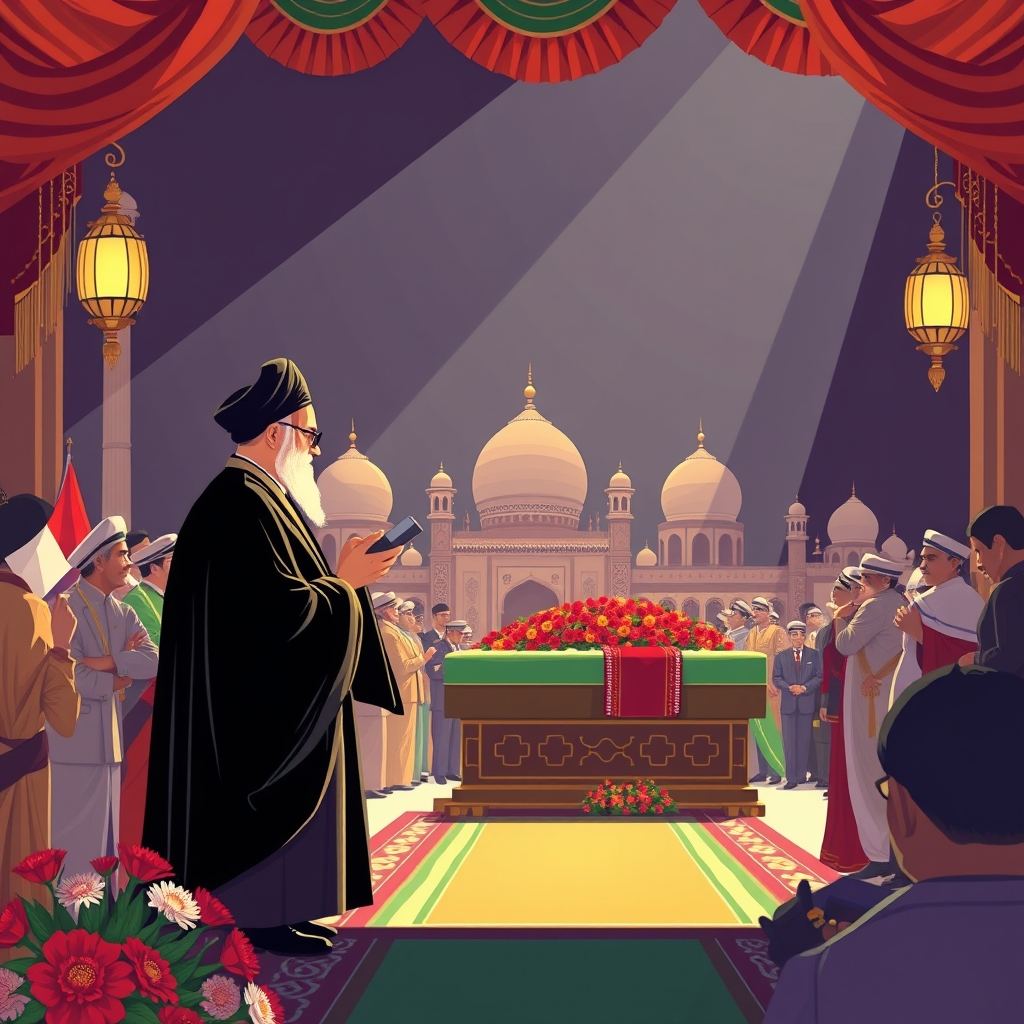
Iran Mourns Ali Khamenei as Funeral Ceremonies Begin in Tehran
The Islamic Republic of Iran has entered a period of profound mourning and geopolitical uncertainty following the funeral ceremonies for former Supreme Leader Ayatollah Ali Khamenei. Thousands of mourners gathered in Tehran to pay their respects to a leader whose death, alongside several family members, has sent shockwaves through the Middle East.
A Nation in Mourning and the Call for Retribution
On Friday, massive crowds converged on the Grand Mosalla in Tehran to witness the funeral rites of Ayatollah Ali Khamenei. The ceremony was marked by intense emotion, with the Supreme Leader’s coffin draped in the flag of the Islamic Republic and his signature black turban placed atop it. In a poignant display of the human cost of recent conflicts, the small coffin of his 14-month-old granddaughter, Zahra Mohammadi Golpayegani, was placed alongside him.
The tragedy that claimed the lives of Khamenei and his granddaughter occurred on February 28, during a joint military operation launched by the United States and Israel against Iran. The atmosphere at the Mosalla was charged with grief and anger; mourners carried red banners—a traditional symbol signaling a demand for vengeance—while chanting slogans calling for "revenge" and "death to America."
Transition of Power and Regional Implications
The funeral is not merely a religious or national event but a critical moment of political transition. High-ranking officials, including Parliament Speaker Mohammad Bagher Ghalibaf, were present to pay their respects. Notably, Ahmad Vahidi has been named the new chief of the Islamic Revolutionary Guards (IRGC), stepping into the role after his predecessor was also killed in the February strikes.
The funeral procession is scheduled to span multiple days and borders. After lying in state in Tehran until Monday, the remains will move to the clerical center of Qom on Tuesday. In a significant regional development, the procession will cross into neighbouring Iraq on Wednesday, visiting its holy cities before finally arriving in Mashhad, Khamenei’s home city, for burial on Thursday. This cross-border movement highlights the deep religious and political ties between Iran and Iraq.
India’s Diplomatic Presence
Despite the volatile geopolitical climate in West Asia, India has maintained its traditional diplomatic protocol. Representing the Indian government at the ceremony are Bihar Governor Syed Ata Hasnain and Minister of State for External Affairs Pabitra Margherita. India’s presence underscores its long-standing policy of maintaining engagement with all key stakeholders in the Middle East, even amidst significant regional upheaval and direct military confrontations between Iran and Western-aligned powers.
What It Means for India
- Heightened Regional Volatility: The death of the Supreme Leader following direct strikes by the US and Israel suggests a period of intense instability in West Asia. India must prepare for potential disruptions in energy security and maritime trade routes in the Persian Gulf and the Strait of Hormuz.
- Diplomatic Balancing Act: As Iran undergoes a leadership transition under heightened tensions, India will face the challenge of balancing its strategic partnership with the United States against its essential energy and diaspora interests in Iran.
- Security and Intelligence Monitoring: The rise of new leadership within the IRGC, specifically Ahmad Vahidi, necessitates close monitoring by Indian security agencies to assess how the new guard will navigate the post-Khamenei era and its impact on regional proxy dynamics.