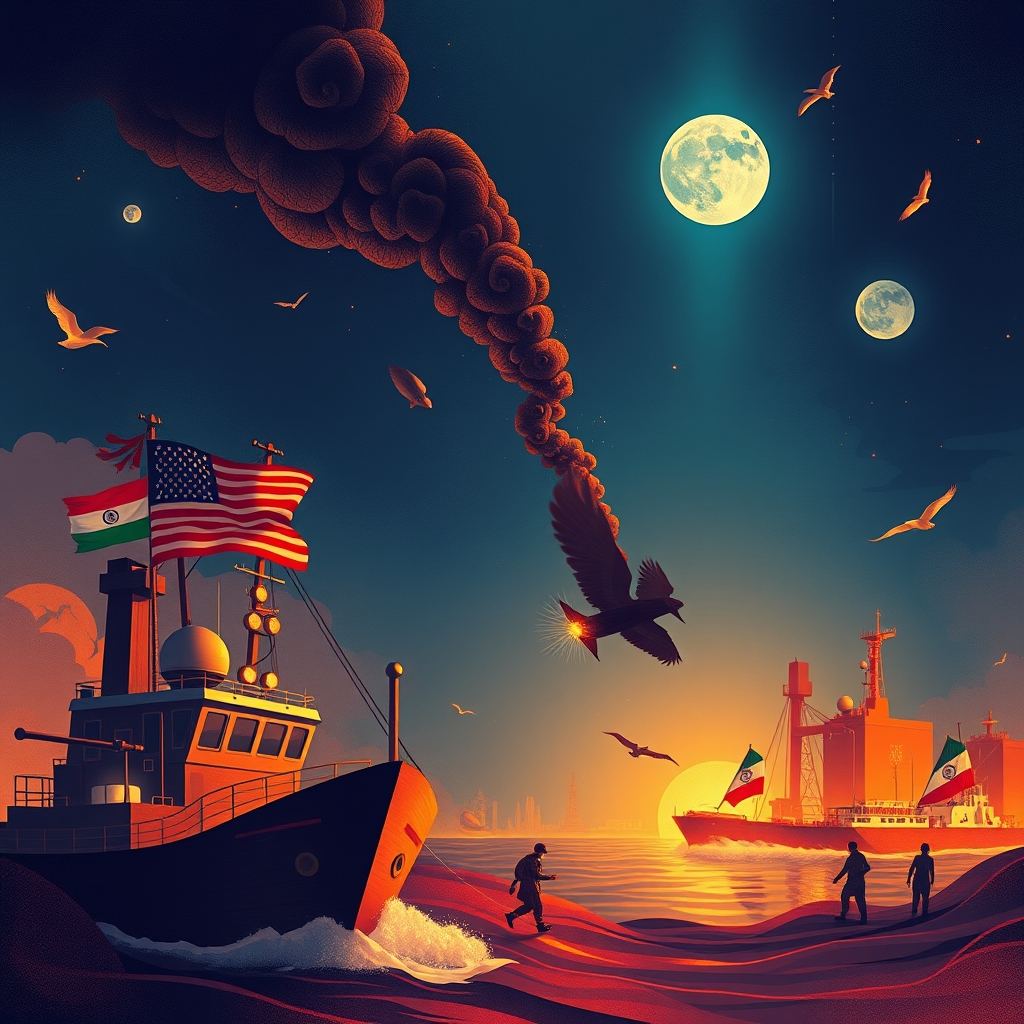
US Strikes Iran After Vessel Attack in Strait of Hormuz: Crisis Escalates
The geopolitical landscape of West Asia has reached a critical flashpoint following a maritime confrontation in the Strait of Hormuz. Tensions have surged as the United States launched retaliatory strikes against Iran after a Cyprus-flagged container ship was targeted, threatening to disrupt one of the world’s most vital energy arteries.
Maritime Escalation in the Strait of Hormuz
The crisis intensified on Sunday, July 12, 2026, when the Iranian Revolutionary Guards announced they had struck a vessel for allegedly deviating from an approved shipping corridor. While Tehran characterized these actions as "warning shots," the U.S. Central Command (CENTCOM) provided a more severe assessment, stating that Iran "blatantly attacked" the Cyprus-flagged container ship.
The impact on the vessel was significant; the ship suffered fire damage and engine room destruction, leaving a crew member missing. In immediate response, the U.S. military launched strikes aimed at degrading Iran's capacity to target civilian and commercial maritime traffic. In a drastic escalation, Iran has declared the closure of the Strait of Hormuz "until further notice," vowing that no vessels will pass through until American interventions in the region cease.
Parallel De-escalation Efforts in Lebanon
While the maritime situation in the Gulf is deteriorating, a separate diplomatic track is unfolding in Lebanon. A U.S. military delegation arrived in Beirut to meet with the Lebanese army command to facilitate the implementation of a framework agreement reached on June 26.
This agreement outlines a gradual Israeli withdrawal from specific southern Lebanese territories currently occupied by Israeli forces fighting Hezbollah. Under this plan, the Lebanese military is set to take control of "pilot zones"—small areas where Israeli troops will withdraw to allow the national army to deploy. The U.S. delegation's presence is intended to translate this framework into operational reality, seeking to stabilize the northern front even as the maritime front in the south heats up.
Regional Instability and Economic Risks
Despite the reports from Iranian state media suggesting that the situation remains calm in key port areas like Bandar Abbas, Sirik, and Jask, the declaration of a strait closure represents a massive shift in regional security. The Strait of Hormuz is a global chokepoint through which a massive percentage of the world's oil and liquefied natural gas (LNG) passes.
The dual nature of these developments—military strikes in the Gulf and cautious troop withdrawals in Lebanon—creates a volatile environment for global markets. The threat of prolonged naval warfare in the Hormuz strait could lead to a spike in global energy prices and a significant increase in maritime insurance premiums, affecting every major economy reliant on Middle Eastern energy.
What It Means for India
The escalating crisis in West Asia presents several direct strategic and economic challenges for India:
- Energy Security Vulnerability: As a major importer of crude oil and LNG from the Persian Gulf, any prolonged closure or instability in the Strait of Hormuz will lead to heightened energy costs and potential supply disruptions, impacting India's macro-economic stability.
- Maritime Trade Disruptions: Indian commercial shipping and merchant vessels frequently transit through these waters. Increased naval hostilities and the threat of missile strikes necessitate heightened vigilance and could increase the cost of freight and insurance for Indian exporters.
- Geopolitical Balancing Act: The simultaneous volatility in Iran and the delicate diplomatic shifts in Lebanon require India to navigate its strategic partnerships carefully, maintaining its interests in the Middle East while managing the fallout of U.S.-Iran military confrontations.