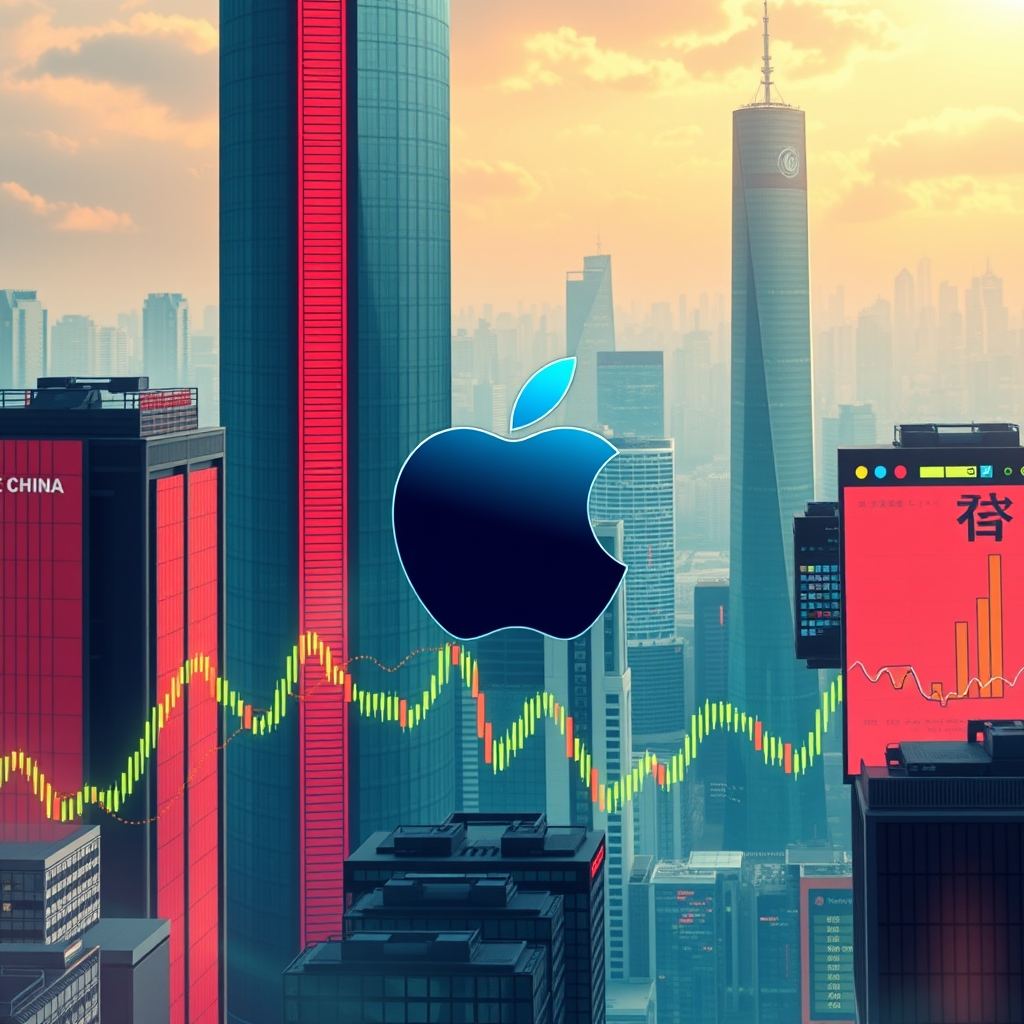
Apple won approval from China’s cyberspace regulator to roll out its Apple Intelligence generative-AI features on iPhones, iPads and Macs in the country, clearing the biggest regulatory hurdle the company has faced there. The decision, announced after almost two years of talks, opens the door for a China-specific AI experience powered by models from Alibaba and Baidu, and it nudged Apple’s stock up about one percent while lifting Alibaba shares roughly five percent in pre-market trading.
Why the clearance matters
China blocks most foreign AI services unless they meet strict data-security and localisation rules. Until now, Apple could only offer its AI-driven shortcuts and on-device suggestions, while competitors ship full generative capabilities. By joining the regulator’s approved-provider list, Apple stands shoulder-to-shoulder with domestic handset makers such as Huawei and Xiaomi, giving it a tool it can market as a premium differentiator in a market where consumers increasingly judge phones by the sophistication of their AI assistants.
The road to approval
Apple started courting Chinese authorities shortly after launching its global Apple Intelligence suite, which stitches together large language models from a variety of partners. The Cyberspace Administration of China (CAC) subjects any service that processes user data abroad to a rigorous vetting process that can include data-localisation mandates, source-code reviews and periodic security audits. Apple’s team supplied technical documentation, hosted on-site inspections and assurances that user data would stay within mainland China.
The breakthrough arrived when CAC formally listed Apple’s AI services among the “approved providers.” The label doesn’t guarantee a smooth rollout, but it does let Apple embed the technology in its devices without risking a shutdown or forced redesign.
Local AI partners: Alibaba and Baidu
To satisfy the localisation clause, Apple is building a China-only version of Apple Intelligence that runs on home-grown foundation models. Alibaba’s Qwen model serves as a core component, delivering natural-language understanding and generation across iOS, iPadOS, macOS and visionOS. Reports also say Baidu’s models will be tapped for additional capabilities, though the exact scope remains undisclosed.
These partnerships give Apple two advantages. First, they sidestep the data-export bans that have hampered other U.S. AI firms. Second, they let Apple claim its AI features are “powered by leading Chinese technology,” a selling point that may resonate with consumers wary of foreign data pipelines.
Market reaction and strategic stakes
The approval sparked immediate market moves. Alibaba’s shares rose close to five percent in U.S. pre-market trading, reflecting investor optimism that the partnership will drive new revenue for the e-commerce giant’s AI arm. Apple’s stock ticked up about one percent, a modest lift that underscores how much the market values the China opportunity relative to Apple’s broader earnings outlook.
Apple’s recent earnings report showed a 24.4 % year-on-year jump in shipments to China during the second quarter—a rare growth spurt for a company that has seen its market share plateau in recent years. Maintaining that momentum hinges on offering features that cheaper Android alternatives lack. Generative AI, which can draft messages, suggest photos and even compose code, is quickly becoming a headline feature in premium smartphones. By finally unlocking that capability in China, Apple positions itself to defend its premium pricing and keep its devices relevant in a market where many rivals already ship AI-enhanced phones.
Risks and counter-points
The move is not without controversy. Critics warn that relying on Alibaba and Baidu models could expose Apple to Chinese government scrutiny, especially if those models must comply with censorship or data-sharing directives. Apple’s privacy-first reputation may be tested if user queries travel through servers controlled by domestic firms.
Geopolitical tensions also loom. Ongoing U.S. export controls on advanced semiconductor equipment could limit Apple’s ability to update the hardware that powers its AI features, and any escalation in tech trade restrictions could force Apple to redesign its AI pipeline again. Investors are watching for signs that Apple can keep the China-specific stack insulated from such shocks.
What comes next
Apple не назначила официальную дату запуска функций Apple Intelligence, предназначенных исключительно для рынка Китая. Вероятно, компания будет внедрять сервис поэтапно, начиная с части функций iOS, прежде чем развернуть полный пакет на всех платформах. Разработчикам потребуется адаптировать свои приложения под новые API, а Apple придется подтверждать соответствие требованиям через регулярные аудиты CAC.
Ключевые показатели, за которыми стоит следить:
- Регуляторные последствия: Любые новые требования CAC, такие как дополнительные аудиты безопасности или журналы доступа к данным, могут повлиять на скорость развертывания.
- Метрики внедрения пользователями: Ранние показатели использования на устройствах iOS покажут, считают ли китайские потребители функции ИИ достаточно ценными, чтобы оправдать премиальную стоимость.
- Динамика акций партнеров: Колебания акций Alibaba и Baidu могут сигнализировать о том, как рынок оценивает долгосрочную прибыльность этого партнерства.
Итог
«Зеленый свет» от Китая позволяет Apple впервые внедрить генеративный ИИ непосредственно в свои флагманские устройства, используя локальные модели от Alibaba и Baidu для соблюдения строгих правил локализации. Это одобрение может усилить конкурентное преимущество Apple на рынке, где ИИ становится ключевым критерием покупки, но оно также привязывает компанию к китайским технологическим партнерам и регуляторному надзору, что может осложнить ее позиционирование в вопросах конфиденциальности и подвергнуть ее геополитическим рискам. Ближайшие несколько месяцев покажут, сможет ли Apple превратить разрешение регуляторов в реальную долю рынка или же это партнерство станет лишь очередной сноской в продолжающейся борьбе за доминирование в сфере ИИ.