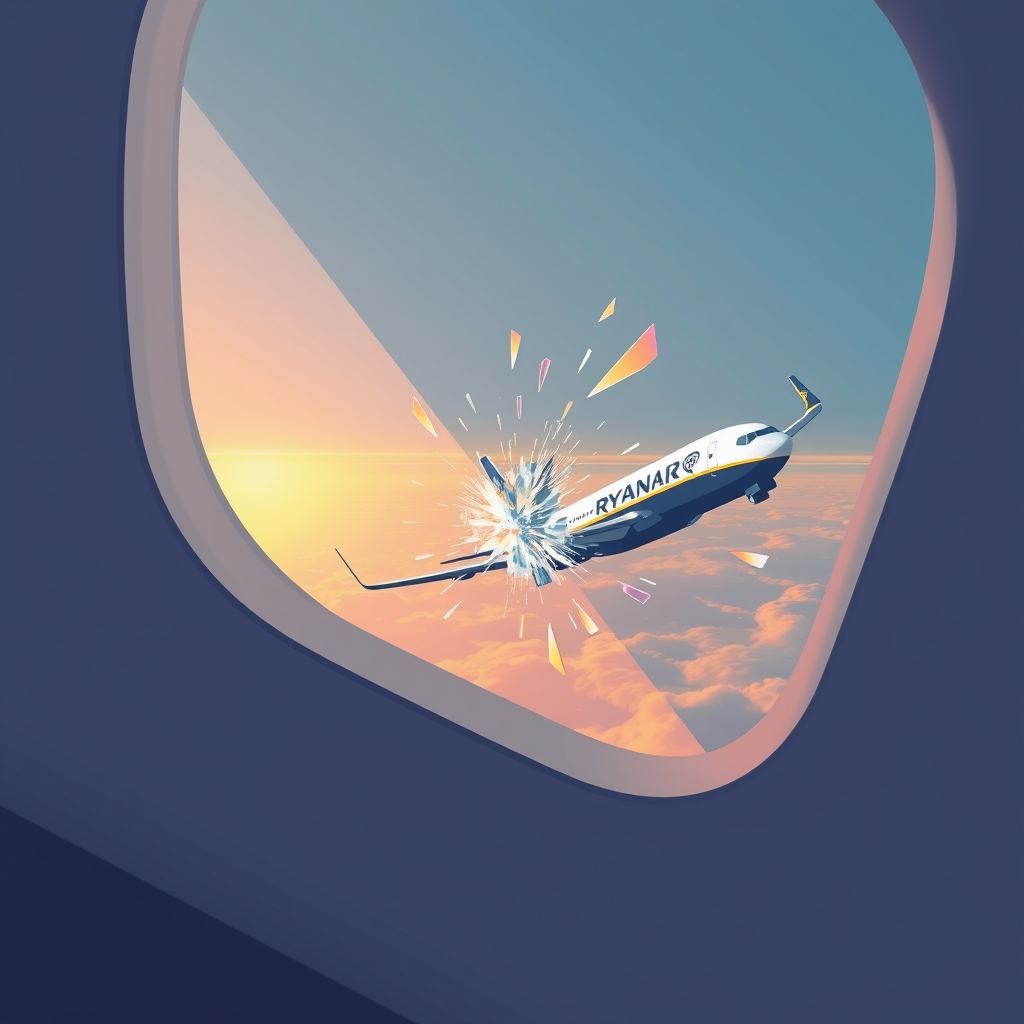
Mid-Air Crisis: Ryanair Flight Window Shatters at 20,000 Feet
A harrowing mid-air emergency unfolded on July 10, 2026, when a Ryanair Boeing 737 flying from Greece to Germany experienced a sudden cabin decompression. The incident, involving a shattered window and a passenger nearly pulled from the aircraft, has reignited global discussions on aviation safety and engine integrity.
The Incident: Decompression and Near-Fatal Chaos
The emergency occurred approximately six minutes after takeoff while the aircraft was climbing past 15,000 feet. According to eyewitness accounts, a deafening bang—likened to a bursting tire—echoed through the cabin as an engine blade malfunctioned. The rogue blade struck a cabin window, causing it to shatter instantly.
The sudden breach led to rapid decompression, triggering the deployment of emergency oxygen masks. In a terrifying sequence of events, a 61-year-old Serbian passenger seated next to the shattered window was partially sucked out of the aircraft. The passenger’s head and shoulders were exposed to the extreme conditions outside the plane at high altitude. In a remarkable display of presence of mind, the man's wife gripped his legs for approximately five minutes, preventing him from being pulled completely out of the Boeing 737. Fellow passengers eventually assisted in pulling him back into the cabin until the aircraft could make an emergency return to Thessaloniki.
Technical Failure: Engine Blade Damage and Structural Integrity
New video footage released following the incident provides a grim look at the mechanical failure that precipitated the crisis. The footage shows extensive damage to the engine's nacelle—the protective pod surrounding the engine—revealing that an engine blade was missing. This piece of debris is believed to have been the projectile that smashed through the cabin window.
The aircraft, a Boeing 737, managed to land normally in Thessaloniki. While the passenger survived with friction burns and neck and shoulder injuries, the event underscores the catastrophic potential of engine component failures. The incident highlights a critical vulnerability where mechanical failures in the propulsion system can directly compromise the structural integrity of the passenger cabin.
Global Aviation Safety and Oversight
This incident comes at a time when the global aviation industry is under intense scrutiny regarding the maintenance of aging fleets and the reliability of engine components. For low-cost carriers like Ryanair, which operate high-frequency schedules, the margin for error in maintenance and component fatigue is razor-thin. The investigation into the missing engine blade will be crucial in determining whether this was a result of a manufacturing defect, improper maintenance, or unforeseen material fatigue.
What It Means for India
As India continues to see an unprecedented surge in air travel and the expansion of its domestic aviation sector, this incident offers vital lessons:
- Stringent Maintenance Protocols: With India's rapid increase in flight frequencies, the Directorate General of Civil Aviation (DGCA) must reinforce rigorous, non-negotiable maintenance schedules for both domestic and international carriers operating within Indian airspace.
- Focus on Fleet Modernization: As Indian carriers expand their fleets with new-generation aircraft, the emphasis must remain on the quality of components and the reliability of engine technology to prevent similar mechanical failures.
- Crisis Management Training: The heroic actions of the passenger's wife and fellow travelers highlight the importance of passenger and crew training in handling sudden decompression and mid-air emergencies, which should be a core component of Indian aviation safety drills.