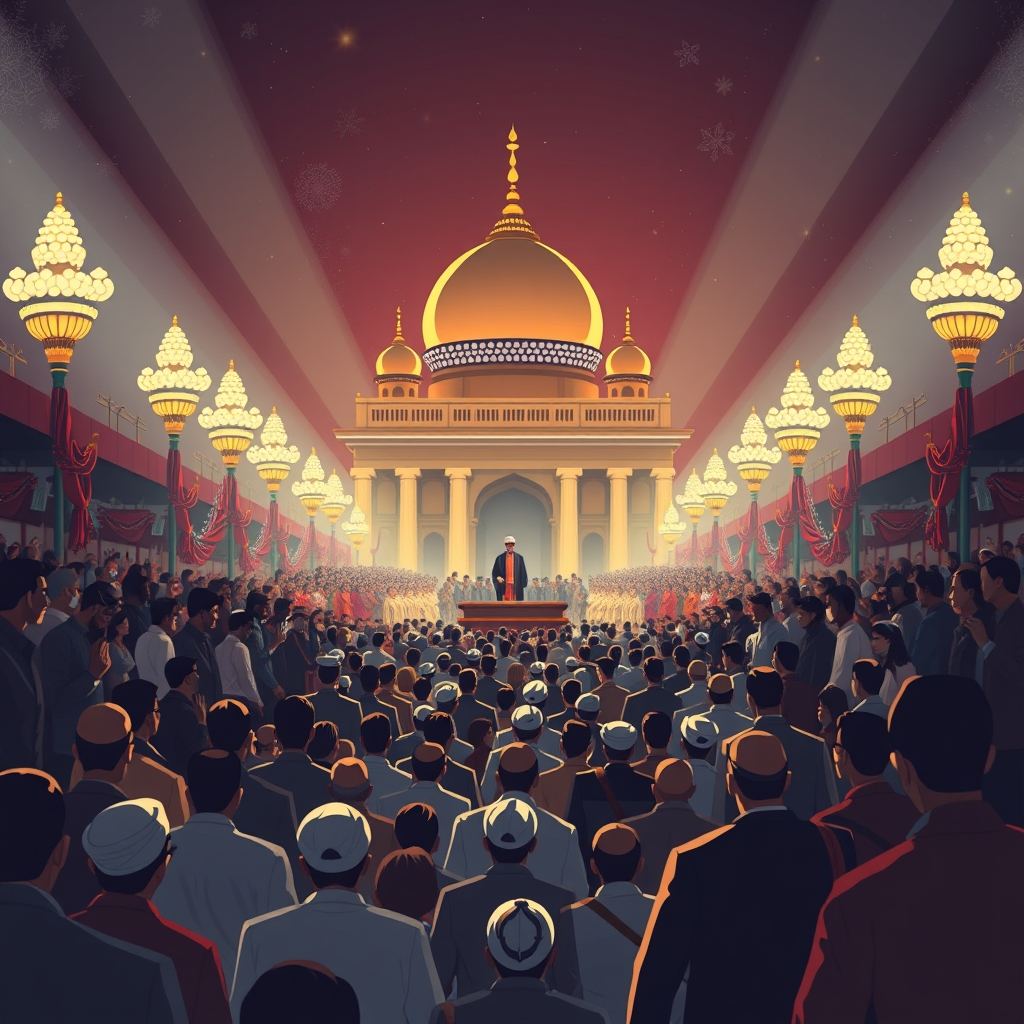
Tehran in Mourning: Massive Crowds Gather for Ali Khamenei’s Funeral
The streets of Tehran have been transformed into a sea of mourners as millions gather at the Grand Mosalla complex to bid farewell to Supreme Leader Ali Khamenei. Following his death in a targeted airstrike, the massive funeral ceremonies have become a flashpoint of intense emotion and geopolitical signaling across the Middle East.
A Nation in Mourning and Regional Defiance
The funeral proceedings in Tehran have been marked by unprecedented scale and raw emotion. As millions of Iranians converged on the Grand Mosalla complex, the atmosphere was defined by heavy prayers for the fallen Supreme Leader and his family members, who were reportedly killed alongside him in the airstrike.
Beyond the grief, the ceremonies have served as a platform for political defiance. Throughout the massive gatherings, chants of "Death to America!" and "Death to Israel!" echoed through the capital. These slogans underscore the deep-seated ideological friction between the Islamic Republic and Western powers, signaling that despite the loss of its top leadership, the fundamental tenets of Iran's revolutionary foreign policy remain potent among the masses.
Geopolitical Volatility and the Power Vacuum
The death of Ali Khamenei via an airstrike represents one of the most significant shifts in the Middle East's political landscape in decades. The circumstances of his death—a kinetic military action—suggests a high level of intelligence penetration and an escalation of shadow warfare that has now entered the open.
As the mourning continues, the global community is closely monitoring the transition of power within Iran. The sudden removal of a long-standing Supreme Leader creates an immediate question of succession. The stability of the Iranian state, the cohesion of the Islamic Revolutionary Guard Corps (IRGC), and the future of Iran's "Axis of Resistance" (including groups in Lebanon, Yemen, and Iraq) all hang in the balance. The intense regional tensions observed during the funeral suggest that rather than a period of calm, the immediate future may bring increased volatility in the Persian Gulf and broader West Asia.
Uncertainty in the Middle Eastern Security Architecture
The airstrike that claimed Khamenei’s life has fundamentally altered the security calculus for all regional players. For the first time in years, the central pillar of Iranian governance has been removed through direct military force, leaving a void that could be filled by hardliners seeking immediate retaliation or reformists attempting to navigate a new era of diplomacy.
The chants heard in Tehran reflect a populace that remains deeply committed to the anti-Western stance of the clerical establishment. This suggests that even if a new leader emerges, the institutional and ideological momentum of the Islamic Republic may continue to challenge the existing regional order, complicating any efforts at de-escalation by international mediators.
What It Means for India
- Energy Security Risks: As a nation heavily reliant on Middle Eastern oil, any escalation in conflict or instability in the Persian Gulf following the leadership vacuum in Tehran could lead to sudden spikes in global crude prices, impacting India's fiscal deficit and inflation.
- Strategic Balancing Act: India must navigate a delicate diplomatic path, maintaining its growing strategic partnership with the West and Israel while managing its critical "Link West" policy and energy interests with Iran, including the development of the Chabahar Port.
- Regional Security Implications: Increased volatility in West Asia could impact India's diaspora population in the Gulf and complicate maritime security in the Arabian Sea, requiring heightened vigilance from the Indian Navy to ensure uninterrupted trade routes.