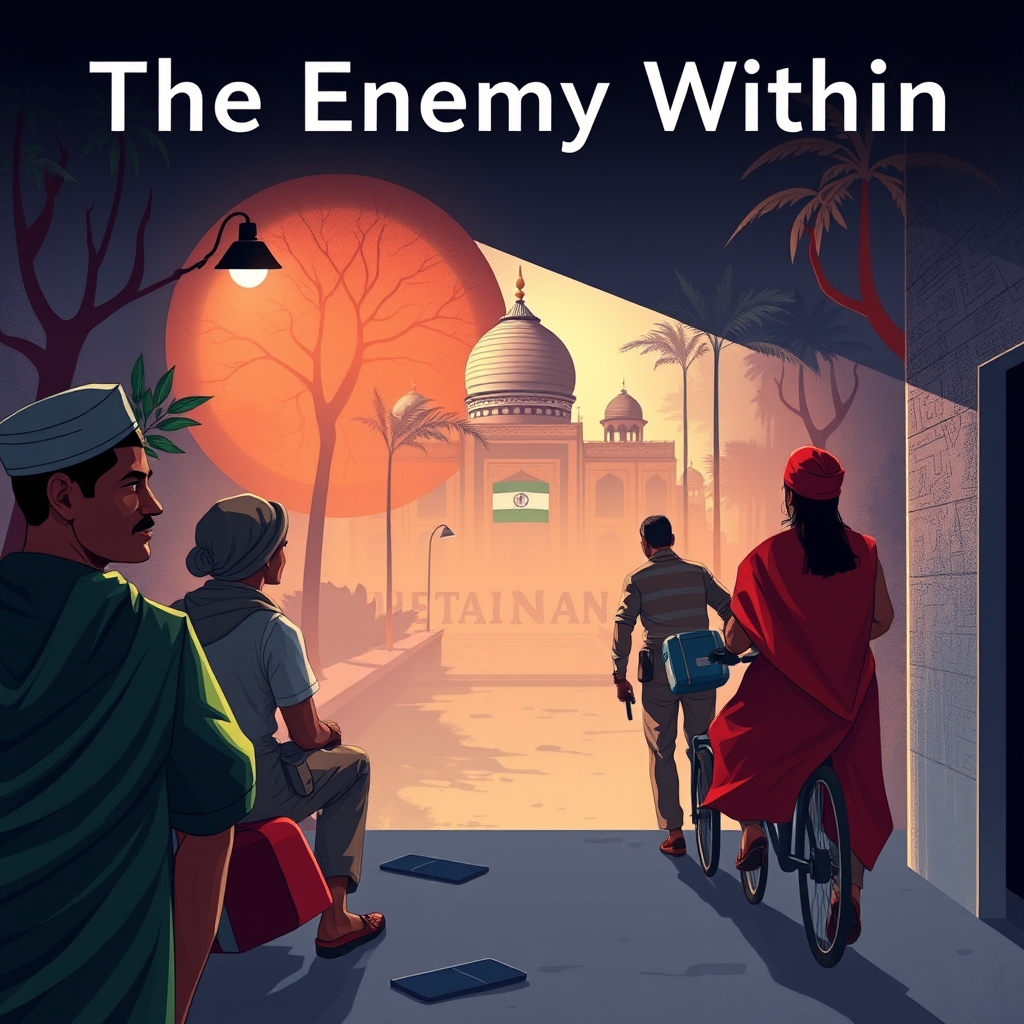
The Enemy Within: Lessons from Haiti on Internal Stability and Security
The Haitian proverb, "It’s the house's rat that eats the house," serves as a profound metaphor for the destructive power of internal instability and domestic subversion. While seemingly simple, this ancient wisdom highlights a critical geopolitical truth: the greatest threat to a nation's sovereignty often comes from within its own borders rather than from external adversaries.
The Anatomy of Internal Decay
The proverb addresses the concept of the "enemy within," where the very elements meant to reside within a structure—or a nation—become the agents of its destruction. In a geopolitical context, this refers to internal corruption, systemic institutional failure, and domestic insurgencies that erode a state's ability to function. Unlike a foreign invasion, which is an external shock that can often unify a population, an "internal rat" operates covertly, consuming resources, weakening defenses, and hollowed out the core of the state from the inside.
Historical and modern parallels can be found in nations where political factionalism, organized crime, or deep-seated corruption has crippled the central government. When the institutions designed to protect the citizenry—such as the judiciary, the police, or the civil service—become compromised, the nation loses its structural integrity. Much like a rat destroying a house's foundations, these internal actors do not need to attack the walls; they simply wait for the structure to collapse under its own weight.
Governance and the Erosion of Trust
The wisdom of this proverb also speaks to the importance of institutional vigilance. A house remains secure only as long as its inhabitants maintain its integrity. In modern statecraft, this translates to the necessity of robust checks and balances, transparency, and the rule of law. When political elites or powerful interest groups prioritize personal gain over national interest, they act as the "rats" that deplete the nation's collective wealth and security.
Furthermore, the proverb highlights the danger of complacency. A nation may possess a formidable military and a strong economy, yet remain vulnerable if the social contract between the state and its citizens is broken. Internal social unrest, fueled by inequality or perceived injustice, can create the vacuum in which subversion thrives, making the nation susceptible to both domestic collapse and foreign manipulation.
Strategic Resilience and National Integrity
To counter the threat of the "internal rat," a state must prioritize internal cohesion and institutional strength. Security is not merely a matter of guarding borders; it is about ensuring that the internal mechanisms of governance are resilient against corruption and fragmentation. Strengthening the bond between the state and its people through equitable development and justice is the most effective way to ensure that no internal actor can systematically dismantle the nation's foundation.
What It Means for India
- Institutional Integrity: For India, maintaining the strength of democratic institutions—such as the judiciary, investigative agencies, and the bureaucracy—is paramount to preventing internal decay and ensuring that corruption does not undermine national development.
- Internal Security Focus: As India manages complex internal security challenges, including insurgency and radicalization, the proverb underscores the need for a holistic approach that combines tactical strength with social integration to prevent internal fragmentation.
- Social Cohesion as Defense: Strengthening the social fabric and ensuring equitable growth across diverse regions acts as a primary defense mechanism, ensuring that internal grievances do not become tools for subversion by hostile actors.