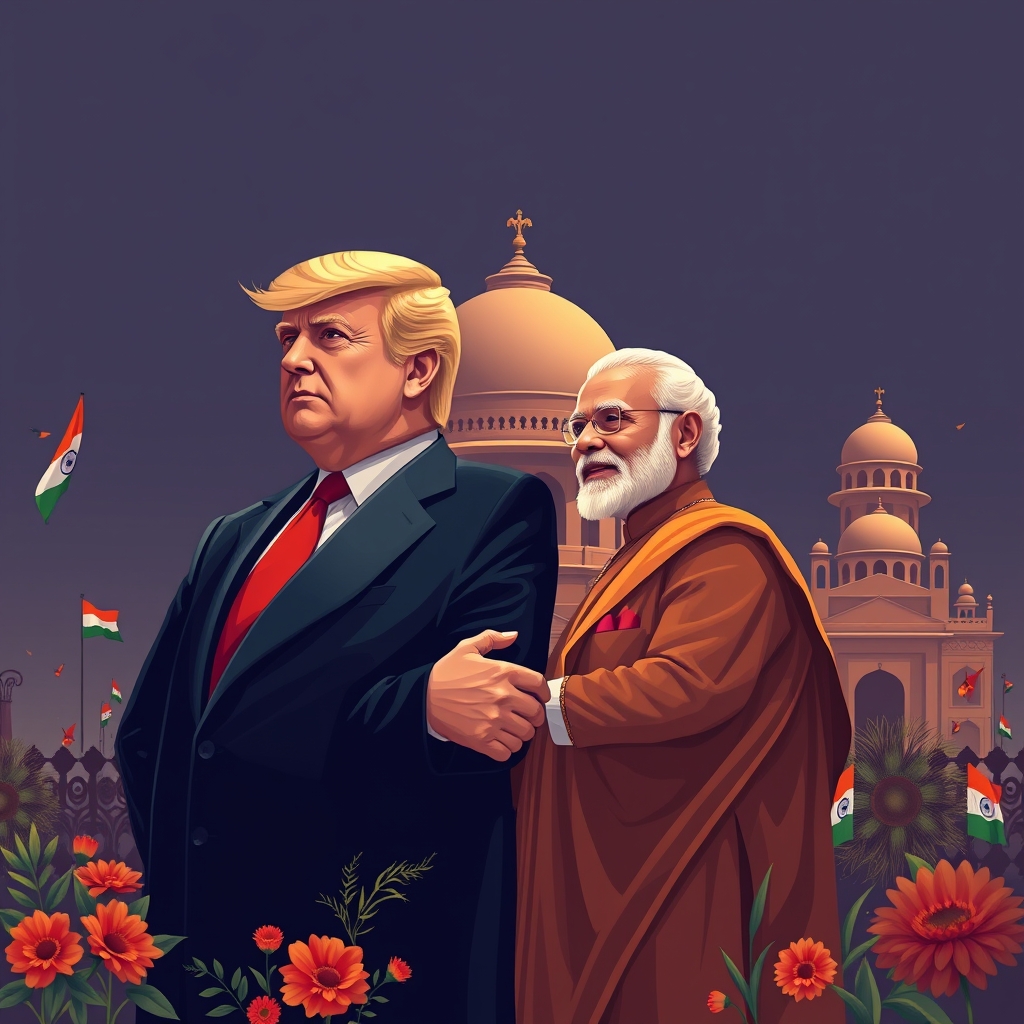
Trump and Modi Align on Illegal Immigration: Implications for India-U.S. Ties
The Trump administration’s recent overhaul of the U.S. immigration system has sparked concerns regarding visa stability, yet new diplomatic signals suggest a surprising ideological convergence. U.S. Ambassador to India Sergio Gor has highlighted that both President Donald Trump and Prime Minister Narendra Modi share a fundamental commitment to curbing illegal immigration.
Ideological Convergence on Border Security
In a recent interview at the White House, Ambassador Sergio Gor sought to calm anxieties in New Delhi by stating that the administration's immigration reforms are not "targeted at India." Instead, he framed the changes as a systemic overhaul aimed at fixing what the administration describes as "wide open" borders under previous leadership.
Crucially, Gor noted a significant diplomatic alignment between the two leaders regarding sovereignty and migration. He stated that Prime Minister Modi’s stance on preventing illegal migration is a position that President Trump "hundred per cent agrees with." This shared perspective on border integrity could serve as a foundational pillar for bilateral discussions, moving the conversation away from friction and toward a shared understanding of national security and rule-of-law principles.
Addressing the H-1B and Visa Concerns
Despite the high-level ideological alignment, the practical impact of these reforms cannot be ignored. Because of India's massive population and its significant role in providing skilled professionals and students to the U.S., any change to the visa system naturally affects a large number of Indians. Ambassador Gor acknowledged this reality, noting that while India is "impacted" by the scale of the changes, the intent is not to penalize Indian nationals or limit the mobility of the diaspora.
The Ambassador emphasized that the U.S. Embassy in India remains one of the busiest in the world, signaling that the machinery of people-to-people exchange, commerce, and professional mobility remains operational and vital to the relationship.
Strengthening Defense, Trade, and Energy Security
Beyond the complexities of immigration, the Ambassador underscored the widening scope of the India-U.S. strategic partnership. He pointed to two critical sectors: defense and energy. India currently conducts more defense exercises with the United States than any other country, reflecting a deep level of military interoperability.
In the energy sector, the administration encouraged India to continue diversifying its energy imports by sourcing more from the U.S. This move is framed as a strategic necessity for India's energy security. By reducing reliance on single-source regions—particularly volatile areas like the Strait of Hormuz—India can insulate its economy from geopolitical shocks, such as those seen during recent crises involving Iran.
What It Means for India
- Strategic Alignment on Sovereignty: The shared stance of Modi and Trump on illegal immigration may reduce friction on border policy, potentially allowing both nations to focus on more collaborative security frameworks.
- Need for Visa Resilience: While the U.S. maintains that reforms are not anti-India, the sheer scale of Indian professional migration means New Delhi must continue to engage in proactive diplomacy to protect H-1B and student visa pathways.
- Energy and Defense Opportunities: India stands to gain significant strategic autonomy by deepening its energy ties with the U.S. and expanding its defense cooperation, which helps mitigate risks associated with Middle Eastern volatility.