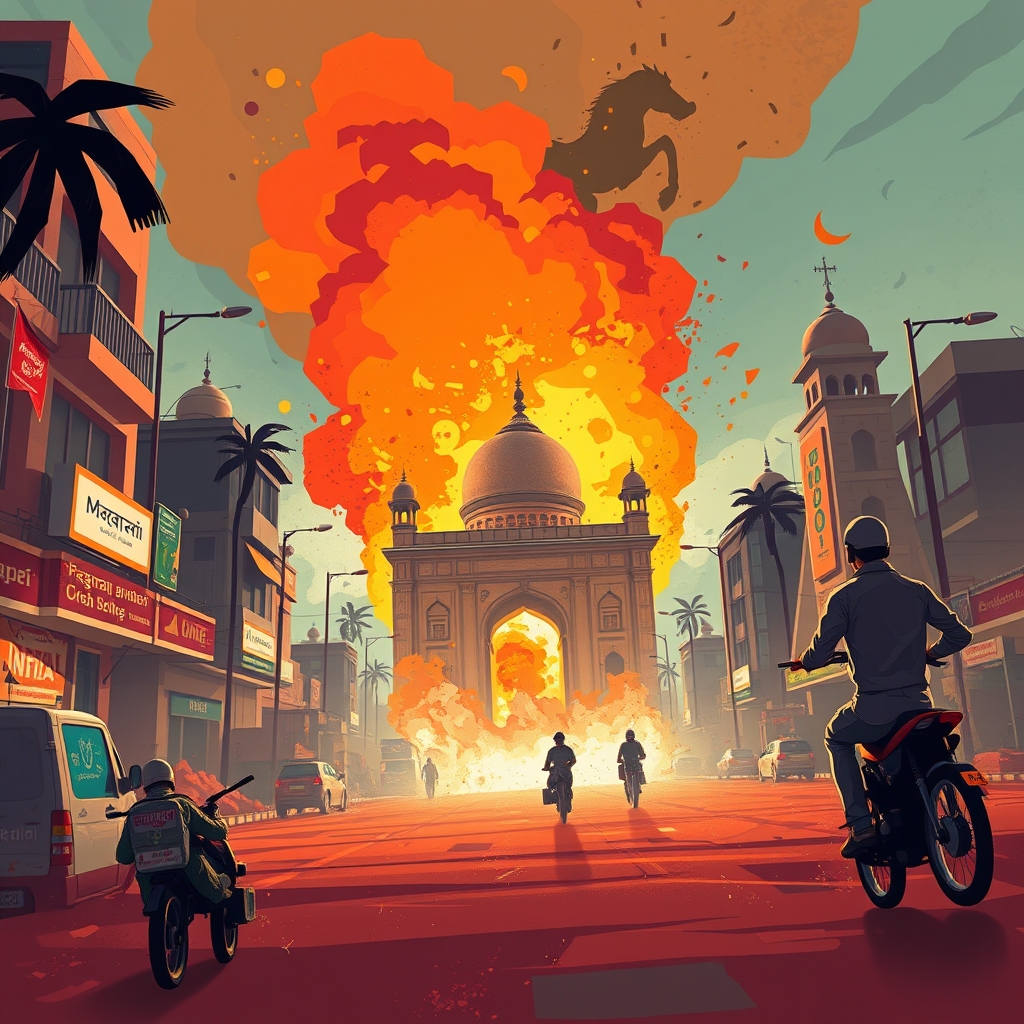
Chaos in Karachi: Explosion and Gunfire Near Pakistan Rangers Offices
A sudden explosion and intense heavy gunfire rocked Karachi's Mosamiat Chowrangi area on Saturday evening, June 27, 2026, sending shockwaves through Pakistan's economic hub. The incident, occurring near the offices of the paramilitary Rangers, has prompted a massive security lockdown and heightened fears of urban instability in the Sindh province.
Security Breach Near Paramilitary Installations
The violence began following a reported explosion near the offices of the Pakistan Rangers, a key paramilitary force responsible for internal security and border management. According to reports from ARY News and AFP, the blast was immediately followed by sustained heavy gunfire, indicating a coordinated kinetic action rather than a random occurrence.
In the aftermath of the blast, armed service personnel quickly moved to cordon off several streets in the Mosamiat Chowrangi area, the administrative heart of the Sindh province. The Edhi Foundation has confirmed that at least two individuals sustained injuries during the unrest and were subsequently rushed to local hospitals. The presence of armed guards at closed roads suggests a high-level security alert as the state attempts to contain the situation and identify the perpetrators.
State Response and Administrative Pressure
The political leadership in Sindh has reacted swiftly to the escalating tension. Sindh Chief Minister Syed Murad Ali Shah issued an official statement confirming that he had taken immediate notice of the explosion and the subsequent firing.
The Chief Minister has directed the police to reach the scene immediately to determine the exact nature of the incident—whether it was a targeted terrorist attack, an internal security breach, or an accidental explosion. He has also demanded a detailed report on the security lapse, placing the onus on law enforcement agencies to provide clarity on how an armed engagement could take place so close to high-value paramilitary installations.
The Pattern of Urban Instability
Karachi has long been a flashpoint for various forms of unrest, ranging from sectarian violence to political agitation and militant activity. An attack near the Rangers' offices is particularly significant because it strikes at the heart of the state's security apparatus.
For a country already grappling with profound economic volatility and political polarization, such incidents in its most vital commercial city exacerbate the sense of lawlessness. The ability of armed actors to engage in heavy gunfire near paramilitary offices raises serious questions regarding the intelligence capabilities and the territorial control of the state within its major metropolitan centers.
What It Means for India
- Heightened Border and Internal Vigilance: Attacks on paramilitary forces in Pakistan often signal shifts in militant capabilities or internal fractures within their security architecture, necessitating increased vigilance by Indian intelligence agencies along the western borders.
- Regional Instability and Spillover Risks: Continued volatility in Karachi and the Sindh province complicates the regional security landscape, potentially creating vacuum zones that non-state actors could exploit, which could indirectly impact India's internal security.
- Monitoring Proxy Dynamics: For New Delhi, such incidents serve as a critical data point in assessing the stability of the Pakistani state; persistent domestic chaos in Pakistan often dictates its external policy shifts and its reliance on various proxy groups.