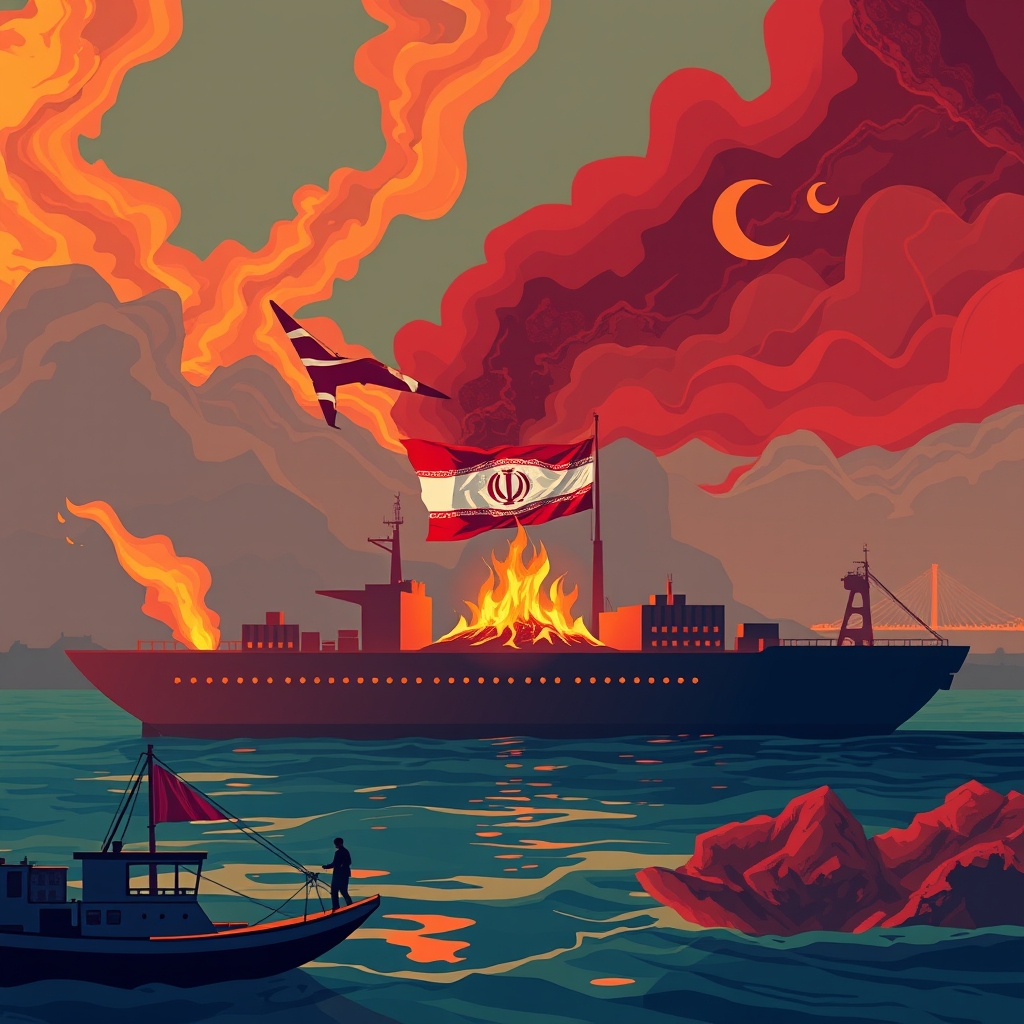
Iran Draws Red Line on Hormuz Amid Escalating US Strikes
The Strait of Hormuz has become the epicenter of a volatile confrontation as tensions between the United States and Iran reach a breaking point. Following a series of targeted American airstrikes, Tehran has asserted sovereign control over the strategic waterway, threatening to halt all shipping and negotiations if hostilities persist.
Escalation in the Strait: A Cycle of Strikes and Retaliation
The geopolitical landscape in the Middle East has shifted violently as the four-month conflict between the US-Israel axis and Iran intensifies. Recent developments saw the US Central Command launch a second round of airstrikes against ten specific Iranian military locations within the Strait of Hormuz. These targets included surveillance infrastructure, communication systems, air defense sites, and critical drone and minelayer storage facilities.
This US military action was prompted by an incident off the coast of Oman, where the Panamanian-flagged tanker Kiku, carrying crude oil for a Qatari state-run enterprise, was struck by Iranian military assets. In response, Iran launched drone and missile strikes against Kuwait and Bahrain. While Bahrain reported damage to a residential building and Kuwait successfully intercepted two ballistic missiles, the regional stability remains incredibly fragile.
Trump’s Ultimatum and Tehran’s Red Line
The rhetoric from Washington has turned exceptionally aggressive. President Donald Trump has issued a violent ultimatum, suggesting that if ceasefire violations continue, the US will abandon negotiations and "militarily finish the job," implying a move toward the total dismantling of the Iranian regime.
Conversely, Iran is utilizing its geographic leverage to counter US pressure. Foreign Minister Abbas Araghchi has declared a "red line," stating that under the existing US-Iran Memorandum of Understanding (MoU), only the Iranian administration holds the authority to manage and resume shipping through the Strait. Tehran has promised to return the waterway to its pre-war capacity within 30 days, but only under its own sovereign management and after the "removal of obstacles" posed by US intervention.
Global Energy Security at Risk
The economic implications of this standoff are staggering. While the Strait of Hormuz has technically reopened, the disruption has already resulted in the loss of 1.15 billion barrels of oil. With global reserves sitting at decades-long lows, the supply gap created by these hostilities is expected to take months to close, ensuring that energy price volatility will remain a dominant feature of the global economy.
What It Means for India
The instability in the Strait of Hormuz poses direct and significant challenges to India's national interests:
- Energy Security Vulnerability: As a major importer of crude oil from the Persian Gulf, any prolonged blockage or increased "risk premium" in the Strait of Hormuz will lead to a spike in domestic fuel prices, impacting India's inflation rates and trade deficit.
- Maritime Trade Disruptions: A significant portion of India's energy imports and trade with Europe and Africa passes through this narrow chokepoint. Increased hostilities necessitate higher insurance premiums for Indian shipping fleets and potential rerouting of vessels.
- Strategic Balancing Act: The escalation forces New Delhi to navigate a complex diplomatic tightrope, maintaining vital energy ties with Iran while managing a critical strategic partnership with the United States amidst a highly volatile Middle Eastern theater.