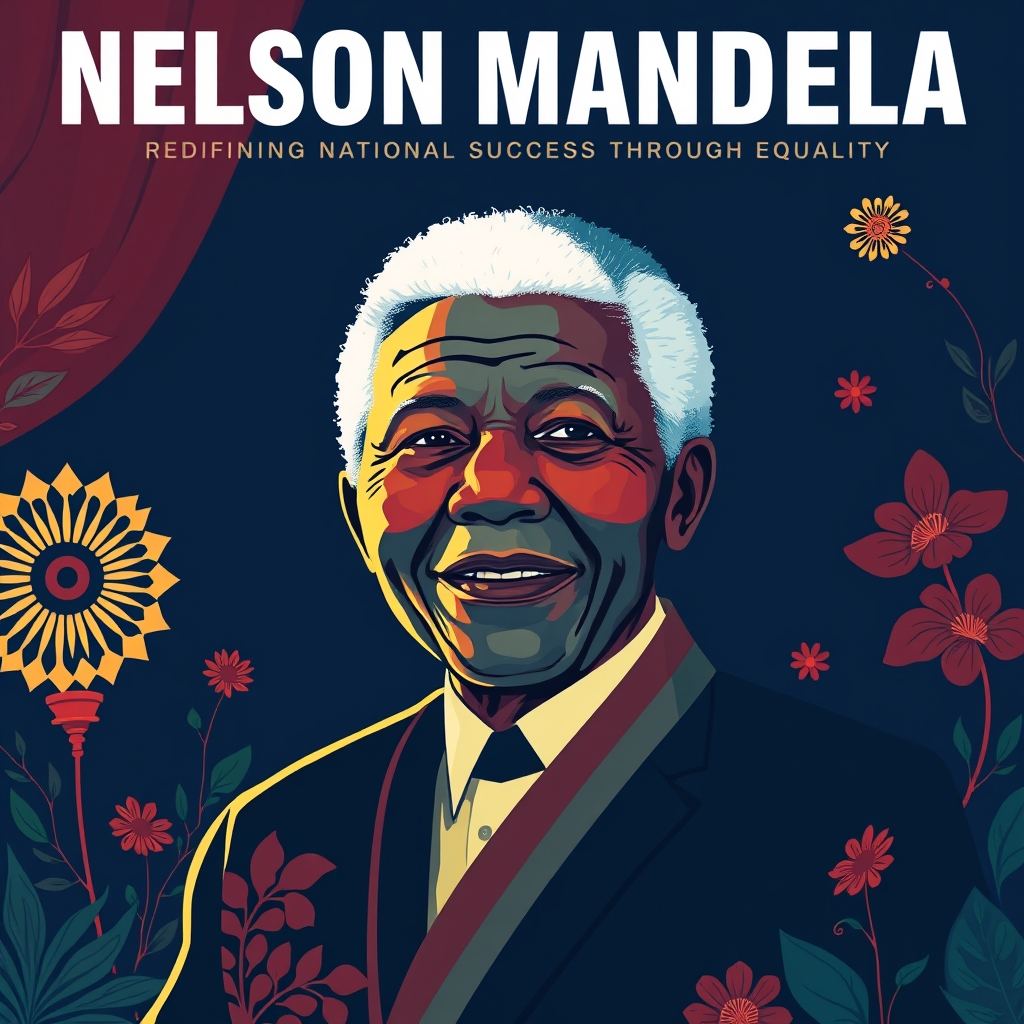
Nelson Mandela’s Legacy: Redefining National Success Through Equality
Nelson Mandela’s enduring philosophy offers a profound metric for evaluating the health and stability of a sovereign state. His assertion that a nation is judged by its treatment of its most vulnerable citizens remains a cornerstone of ethical governance and social cohesion.
The Moral Metric of a Nation
Nelson Mandela, the icon of anti-apartheid struggle, proposed a radical shift in how we measure developmental progress. While traditional metrics often focus on GDP growth, infrastructure, or the prosperity of the elite, Mandela argued that true societal success is revealed by how a state supports its most marginalized and vulnerable populations. This perspective was not merely theoretical; it was forged through his personal experiences with systemic injustice and his decades of imprisonment under an oppressive regime.
For Mandela, equality and fairness were not just political ideals but the fundamental building blocks of a functional society. He believed that a nation's strength is not found in the height of its skyscrapers or the wealth of its leaders, but in the dignity and opportunity afforded to those at the bottom of the social hierarchy.
From Injustice to Inclusive Governance
Mandela’s life work was a testament to the idea that systemic inequality is a threat to national security and long-term stability. By advocating for the rights of the disenfranchised, he demonstrated that social justice is inextricably linked to political legitimacy. His philosophy emphasizes that a nation cannot achieve true greatness if a significant portion of its population is left behind in poverty, discrimination, or lack of opportunity.
This approach to governance moves beyond "trickle-down" economics and focuses instead on "bottom-up" empowerment. When a state ensures dignity for its lowest citizens, it builds a foundation of trust and social capital that can withstand external shocks and internal tensions.
A Framework for Modern Societal Stability
In the contemporary geopolitical landscape, Mandela’s words serve as a reminder that internal social cohesion is a prerequisite for global influence. A country struggling with extreme inequality or the marginalization of specific communities often faces domestic volatility that can undermine its foreign policy objectives and economic resilience. Mandela’s message challenges modern leaders to view social welfare and civil rights not as charitable acts, but as strategic investments in the nation's longevity and moral authority on the world stage.
What It Means for India
- Strengthening Social Cohesion: As India pursues its goal of becoming a 'Viksit Bharat' (Developed India) by 2047, Mandela’s philosophy reinforces the need to bridge the rural-urban and wealth divides to ensure inclusive growth that prevents internal fragmentation.
- Human-Centric Development Models: For India's domestic policy, this underscores the importance of flagship schemes focused on the most vulnerable—such as food security, sanitation, and digital inclusion—as essential tools for building a resilient and stable democracy.
- Moral Leadership in the Global South: By championing the rights of the marginalized, India can further solidify its role as a leader of the Global South, advocating for a world order that prioritizes equitable development and human dignity over mere economic dominance.