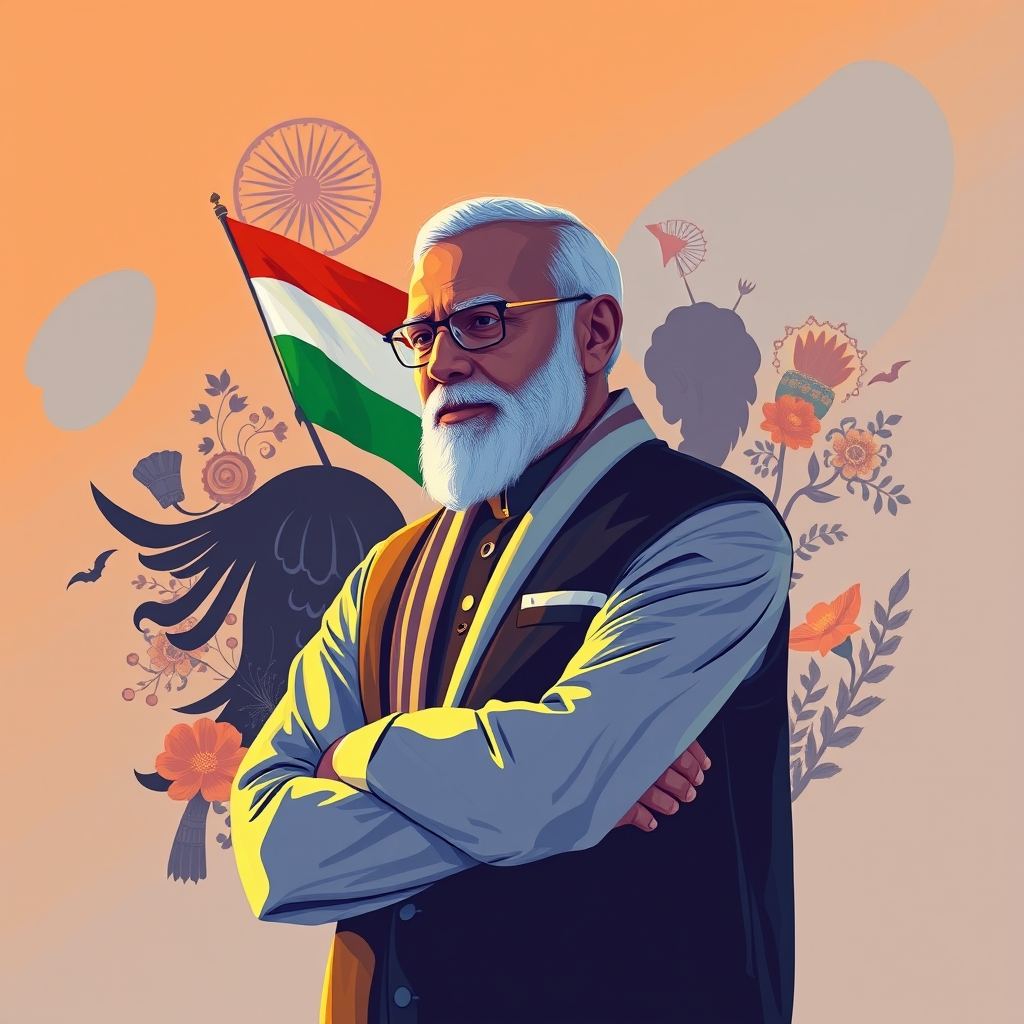
Poland Credits PM Modi for Preventing Russian Nuclear Escalation
Recent high-level remarks from Poland suggest that India’s strategic autonomy has played a decisive role in preventing the Russia-Ukraine conflict from escalating into a nuclear catastrophe. Polish Deputy Foreign Minister Wladyslaw Teofil Bartoszewski has highlighted Prime Minister Narendra Modi’s unique ability to influence President Vladimir Putin during critical moments of the war.
A Unique Diplomatic Bridge to the Kremlin
In a significant acknowledgement of India's global standing, Deputy Foreign Minister Bartoszewski stated that Prime Minister Modi is one of the few world leaders whose perspectives are taken seriously by the Russian leadership. Specifically, the Polish minister claimed that in late 2022, PM Modi played a pivotal role in persuading Russia against the deployment of tactical nuclear weapons.
This development underscores the value of India’s historical ties with the Soviet Union and its evolution into a leading power. Unlike many Western nations that have seen communication channels with Moscow shuttered, India’s decades-old relationship provides it with a rare "listening ear" in the Kremlin. Bartoszewski noted that because India is not viewed as a hostile entity by Russia, its appeals for restraint carry a weight that Western diplomacy currently lacks.
Moving Past the Oil Contention
The Polish minister also addressed the previous friction between Warsaw and New Delhi regarding India's procurement of discounted Russian crude oil. While Poland had initially criticized these imports—arguing they bolstered the Russian war economy—Bartoszewski noted that these differences have largely eased.
He acknowledged the economic pragmatism behind India's decisions, noting that the 40 per cent discount on Russian oil was a significant factor for India’s energy security. This shift in tone from a European power indicates a growing global acceptance of India's "National Interest First" approach to energy and foreign policy.
Moscow's Respect for India’s Strategic Autonomy
The Polish remarks align with recent sentiments expressed by President Putin himself. During the St. Petersburg International Economic Forum, Putin praised India's independent foreign policy, suggesting that attempts by the international community to pressure New Delhi into abandoning its ties with Moscow would be futile.
Putin emphasized that India's decisions are driven by its own national interests and that Moscow views any external pressure on India as detrimental to international relations. This mutual respect creates a diplomatic space where India can act as a mediator without being pigeonholed into a specific geopolitical bloc.
What It Means for India
- Validation of Multi-Alignment: The claims by a European minister validate India's policy of "multi-alignment," proving that maintaining ties with both the West and Russia allows New Delhi to act as a crucial stabilizer in global conflicts.
- Enhanced Global Mediation Role: If India is indeed perceived as a leader capable of preventing nuclear escalation, it solidifies New Delhi’s position as a "Vishwa Mitra" (friend to the world) and a primary architect of global peace processes.
- Strengthened Diplomatic Leverage: The easing of tensions with EU members like Poland over energy imports demonstrates that India's strategic autonomy is becoming a recognized and respected norm rather than a point of contention in the global order.