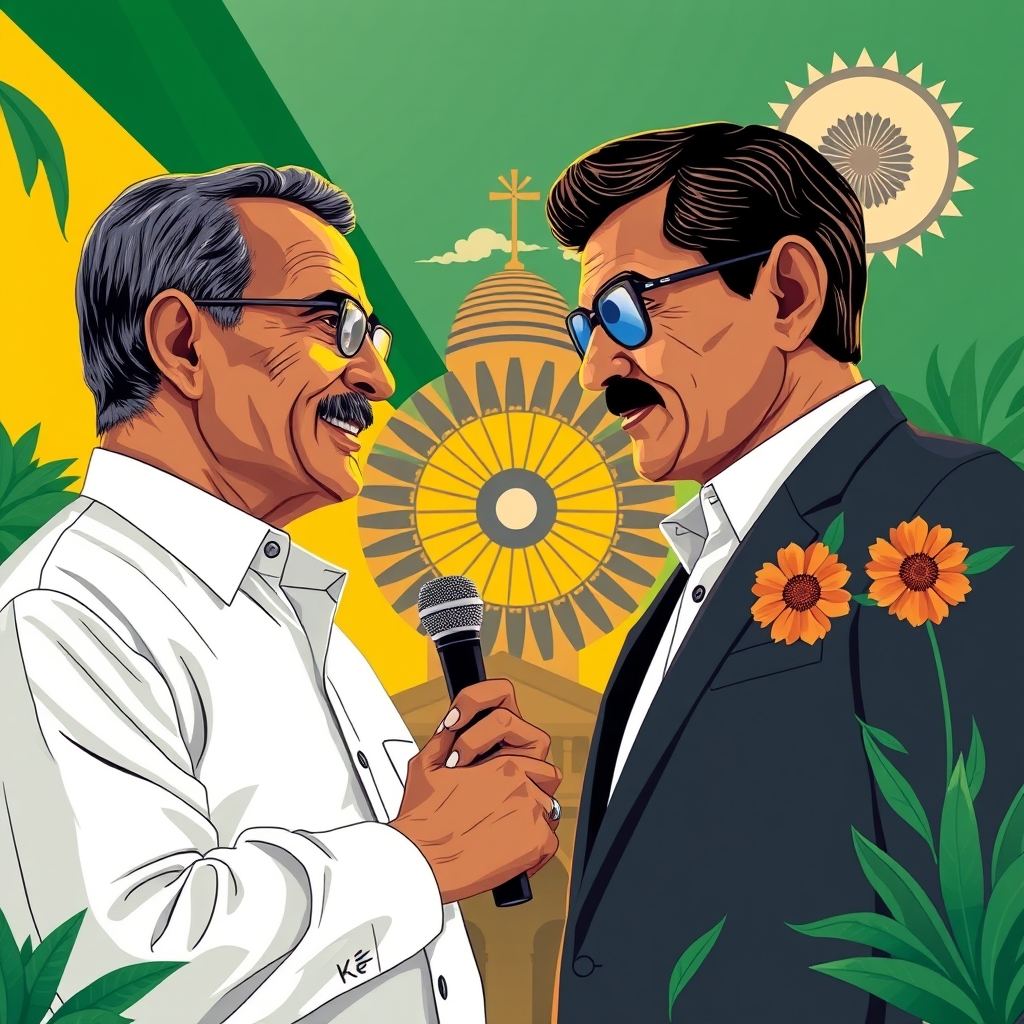
Brazil’s Tariff Crisis: Lula vs. Bolsonaro Amid US Trade Pressure
The escalating political tension in Brazil has reached a boiling point as President Luiz Inácio Lula da Silva accuses his rival, Flavio Bolsonaro, of "treason" over proposed U.S. tariff delays. As the October presidential elections approach, the intersection of American protectionism and Brazilian domestic politics is reshaping the geopolitical landscape of South America.
The Tariff Dispute: A Catalyst for Political Conflict
The core of the controversy lies in a recent proposal by the Trump administration to impose 25% tariffs on specific Brazilian goods. On July 1, 2026, Flavio Bolsonaro—the son of former President Jair Bolsonaro and a leading right-wing candidate—submitted a document to the United States Trade Representative. In this document, Bolsonaro suggested postponing the implementation of these tariffs until after the October presidential elections.
Bolsonaro argued that a delay is necessary to ensure the rate hike is not interpreted as an external attempt to influence the election outcome. However, President Lula has reacted with fierce condemnation, labeling the request an act of treason. Lula has further alleged that Bolsonaro is actively lobbying the White House to facilitate these "brutal" hikes, a charge that the right-wing candidate denies, claiming he only requested to testify at a hearing to prevent the tariffs entirely.
High Stakes in the October Presidential Race
Brazil is currently locked in a tight electoral battle between the leftist administration of Lula and the far-right movement represented by the Bolsonaro family. The U.S. administration's stance has become a pivotal campaign issue. With President Donald Trump expected to make a final decision on the tariffs by July 15, the timing of this decision could significantly impact voter sentiment.
The geopolitical dimension is deepened by the relationship between the Trump administration and right-wing leaders in Latin America. Trump has historically maintained close ties with figures like Jair Bolsonaro, who was previously convicted in connection to the 2022 coup plots. This alignment suggests that U.S. trade policy in the region is not merely an economic matter but a tool of political influence that could tilt the balance of power in Brazil.
Global Implications of US-Brazil Trade Volatility
The potential 25% tariff represents a significant shift toward protectionism that could disrupt global supply chains, particularly in commodities and manufacturing where Brazil is a major player. As the U.S. uses tariffs as a lever of foreign policy, middle-income powers like Brazil find themselves caught between domestic political stability and the economic realities of American trade shifts. The outcome of this dispute will signal whether trade policy in the Americas is becoming increasingly weaponized to serve specific political factions.
What It Means for India
- Trade Diversification Opportunities: If U.S. tariffs significantly impact Brazilian exports, India may find strategic opportunities to increase its market share in key sectors, provided it can manage its own trade relations with both nations.
- Global South Solidarity: The tension highlights the vulnerability of emerging economies to the unilateral trade decisions of superpowers, reinforcing India’s diplomatic push for a more predictable, rules-based multilateral trading system.
- Geopolitical Balancing: India must closely monitor the shift in Latin American politics; a more right-leaning, U.S.-aligned Brazil could alter the voting blocs in international forums like the G20 and BRICS, impacting India’s influence in the Global South.