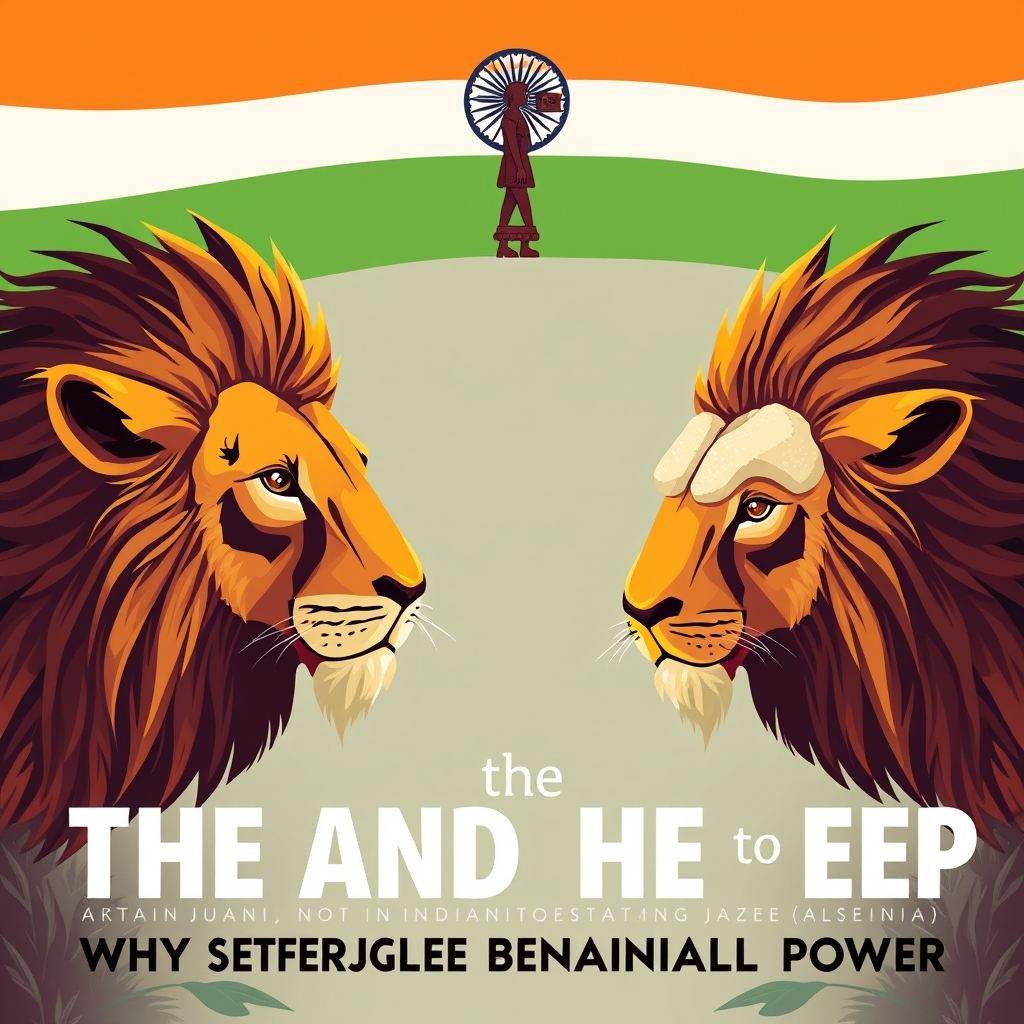
The Lion and the Sheep: Why Strategic Leadership Defines National Power
The timeless wisdom of Alexander the Great—that an army of sheep led by a lion is superior to an army of lions led by a sheep—serves as a profound metaphor for modern statecraft. In an era of shifting global hierarchies, this principle highlights that the strength of a nation lies not just in its raw resources, but in the quality of its strategic command.
The Psychology of Command and Battlefield Control
The core of Alexander’s philosophy lies in the ability of a leader to manage fear and instill purpose. According to historical analysis, a leader who can control the collective anxiety of their subordinates effectively controls the battlefield. In military and geopolitical terms, this transcends mere physical combat; it involves the psychological management of a nation's resilience during crises.
An "army of lions" lacking a central, decisive command structure often falls victim to fragmentation and indecision. Conversely, even a resource-constrained force can achieve disproportionate success if guided by a visionary leader capable of precise coordination. This demonstrates that leadership is the force multiplier that turns average assets into extraordinary strategic instruments.
Leadership as a Force Multiplier in Modern Geopolitics
In the 21st century, the "lion" is no longer just a general on a horse, but the architects of national policy, intelligence agencies, and diplomatic corps. The ability to provide precise guidance to exceptional talent is what separates rising powers from declining ones. Exceptional human capital, such as a highly skilled workforce or a sophisticated technological sector, remains dormant or chaotic without a unifying strategic vision.
History shows that perseverance at the top defines the success of the collective. Whether it is navigating complex trade wars, managing maritime security in the Indian Ocean, or responding to rapid technological disruptions, the decisiveness of a nation's leadership determines whether its citizens act as a cohesive unit or a disorganized crowd.
The Strategic Imperative for Emerging Powers
For a rising global power like India, the lesson of Alexander is particularly relevant. As India seeks to claim its seat at the high table of global governance, the focus must remain on the quality of institutional leadership. Strengthening the decision-making frameworks within our strategic, economic, and defense sectors is essential to ensure that India’s vast demographic dividend is directed toward high-impact national objectives.
The transition from a developing economy to a global leader requires leadership that can synthesize diverse interests into a single, unstoppable direction. It is the ability to maintain composure under global pressure and to provide clear, decisive direction during periods of volatility that will define India’s trajectory in the coming decades.
What It Means for India
- Institutional Resilience: India must focus on building robust, meritocratic leadership structures within its civil services and defense establishments to ensure that even during periods of external pressure, the nation maintains a single, coherent strategic direction.
- Harnessing Human Capital: As India leverages its "demographic dividend," the state must provide the "lion-like" strategic guidance necessary to transform a massive population into a disciplined, high-value workforce capable of competing globally.
- Decisive Foreign Policy: In a multipolar world characterized by uncertainty, India’s ability to project power and influence will depend on its leaders' capacity to manage strategic risks and maintain a steady course amidst the shifting allegiances of global superpowers.