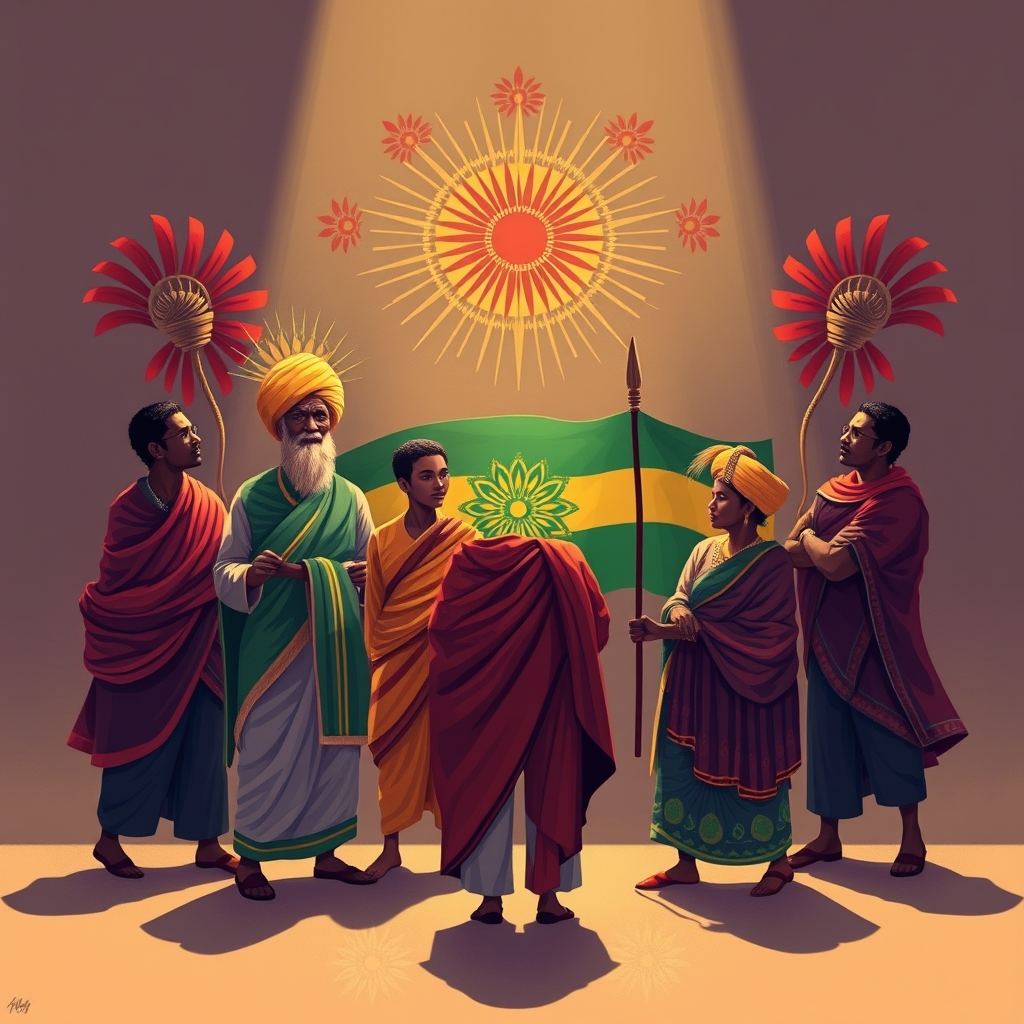
The Strength of Unity: Lessons from Ethiopia for a Multipolar World
The ancient Ethiopian proverb, "When spider webs unite, they can tie up a lion," offers a profound metaphor for the power of collective action. In an increasingly fragmented global landscape, this wisdom serves as a reminder that even the smallest actors can overcome formidable giants through strategic collaboration.
The Philosophy of Collective Strength
The proverb highlights a fundamental truth of geopolitical and social dynamics: individual fragility can be transformed into systemic strength through unity. A single spider web is delicate and easily broken, much like a single nation or small organization facing a superpower. However, when these webs are woven together, they create a web strong enough to restrain a lion—a symbol of overwhelming power and dominance.
This concept moves beyond mere cooperation; it speaks to the necessity of interconnectedness. In the context of modern diplomacy, it suggests that the traditional hierarchy of "great powers" versus "smaller states" is being challenged by the ability of the latter to form cohesive, purpose-driven coalitions.
Collective Action Against Great Power Dominance
In the contemporary international order, we see this proverb manifesting in various geopolitical shifts. The era of unipolarity, where a single superpower could dictate global norms, is transitioning into a more complex, multipolar reality. This transition is driven by middle powers and developing nations realizing that they possess significant leverage if they act in concert.
Whether through regional blocs, economic unions, or strategic partnerships, the "spider web" approach is becoming a primary tool for nations to safeguard their sovereignty. By pooling resources, intelligence, and economic influence, smaller players can create a "web" that can check the unilateral ambitions of much larger entities, ensuring that global governance is more inclusive and less dictated by a single center of gravity.
Unity as a Strategic Imperative
The proverb also serves as a warning against fragmentation. Just as a lion can easily break apart disconnected threads, global efforts to tackle shared challenges—such as climate change, food security, or maritime security—are often undermined when nations act purely out of narrow, parochial interests.
For effective collective action, there must be a recognition of shared vulnerability and shared goals. The strength of the web lies not just in the number of threads, but in the quality of their interconnection. In a world defined by interdependence, the ability to build these connections is the ultimate strategic asset.
What It Means for India
- Strategic Autonomy through Partnerships: India can leverage its "spider web" capability by strengthening ties with the Global South and middle powers, creating a collective voice that can balance the influence of major superpowers in forums like the UN and G20.
- Countering Unilateralism: As India seeks to protect its maritime and territorial interests, the principle of collective security—working through multi-lateral frameworks and regional groupings like QUAD or ASEAN—remains vital to check unilateral shifts in the status quo.
- Leadership in the Global South: By championing the cause of developing nations, India can act as the primary weaver of these "spider webs," positioning itself as a bridge between the traditional powers and the emerging collective of the Global South.