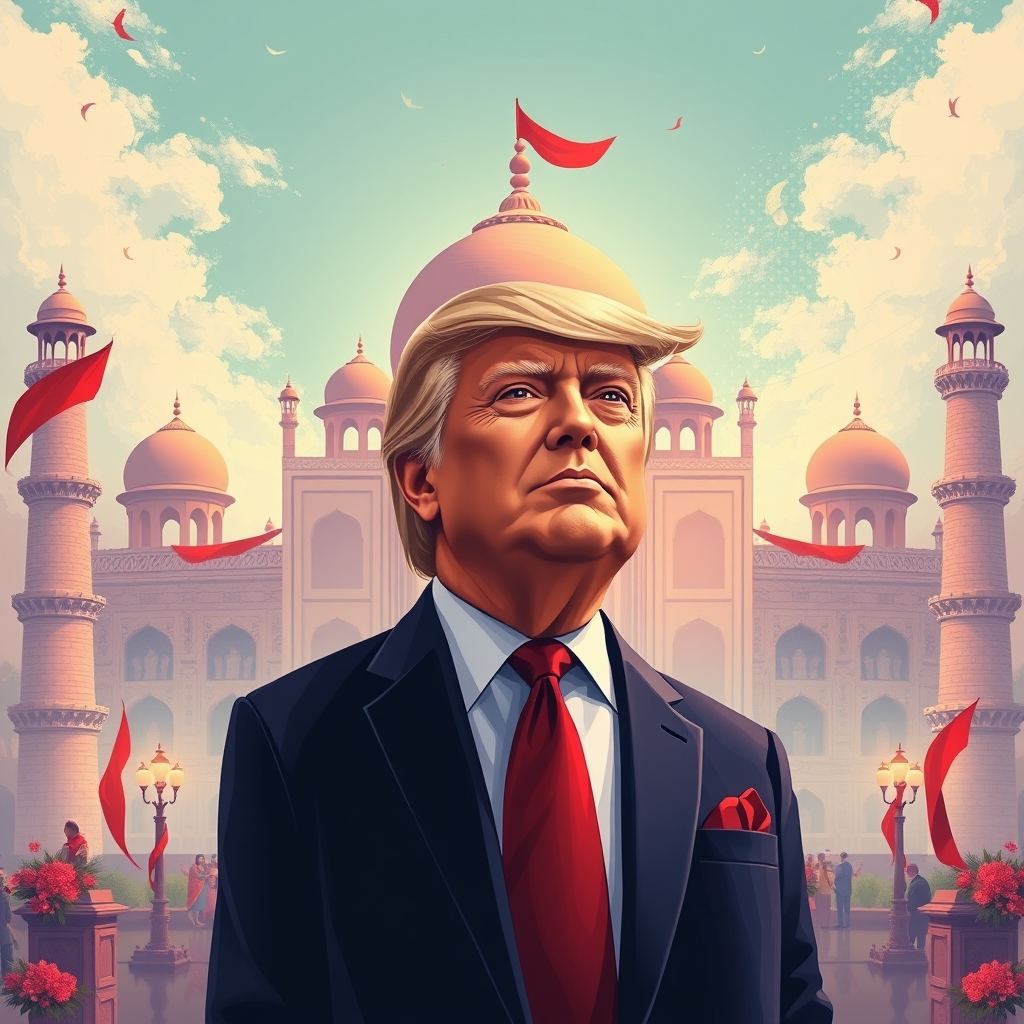
Trump Celebrates US 250th Anniversary: A Vision of American Exceptionalism
As the United States marked its 250th anniversary on July 4, 2026, President Donald Trump delivered a high-octane address at the National Mall in Washington. Framing the milestone as the "crowning achievement of human history," the President signaled a renewed era of American assertiveness on the global stage.
A Rhetoric of Strength and Uniqueness
Speaking at the "Salute to America" event, President Trump utilized the historic occasion to reinforce a narrative of national resurgence. His speech was characterized by an unapologetic stance on American exceptionalism, asserting that the United States is currently "stronger than ever" and performing better than at any other point in its 250-year history.
Trump’s rhetoric focused heavily on the moral and historical significance of the nation, describing the US as "the hope, the promise, the light and the glory among all of the nations of the world." By stating that "nobody can be like us," the President underscored a vision of American leadership that is defined by distinctiveness and self-reliance. This sentiment reflects a broader "America First" ideological continuity, suggesting that the US intends to navigate the mid-21st century through a lens of unilateral strength and historical destiny.
The Shift Toward Unilateralism
The President's emphasis on American greatness and the unique role of the American people serves as a signal to both allies and adversaries. The assertion that the United States is "doing better now than we’ve ever done before" suggests a domestic policy focus aimed at economic and social consolidation. For the international community, this brand of politics often translates into a more transactional approach to foreign policy and international institutions.
When a US administration frames the nation as the singular "crowning achievement of human history," it sets a tone for how Washington interacts with a multipolar world. It suggests a preference for bilateralism and a potential skepticism toward multilateral frameworks that might constrain American autonomy. This period of American history, as framed by the July 4th address, appears dedicated to re-establishing the US as the central, unchallengeable pillar of global order.
Navigating a Multipolar World
The 250th anniversary speech comes at a time when the global geopolitical landscape is undergoing rapid shifts. While the President celebrated the "glory" of the US, the rest of the world is increasingly looking toward regional powers and new economic blocs. Trump’s declaration of American supremacy serves as a direct counter-narrative to the rising influence of other nations, positioning the US as a nation that seeks to lead through unmatched power and historic precedent.
What It Means for India
- Strategic Autonomy: As the US doubles down on its own exceptionalism and unilateral strength, India's policy of "strategic autonomy" will become even more critical to navigate a world where US-led alliances may become more transactional.
- Defense and Technology Ties: A stronger, more assertive US may seek more robust security partnerships. India can leverage this by deepening high-tech defense cooperation and securing supply chains within the Indo-Pacific framework.
- Economic Competition and Opportunity: While an "America First" posture could present challenges in trade, India’s growing economic stature allows it to position itself as a stable, democratic alternative for global manufacturing and a key partner in the evolving global order.