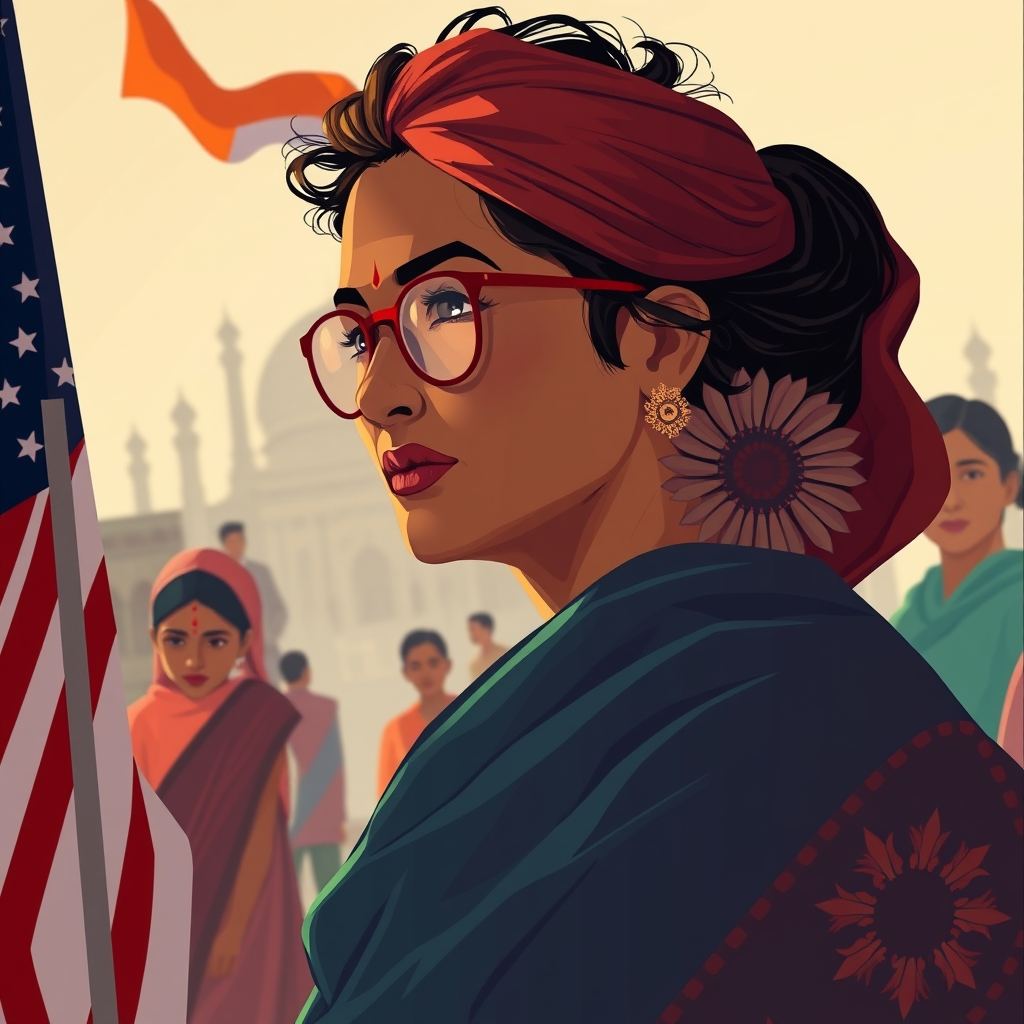
US at 250: The Battle for America’s Identity and Immigrant Future
As the United States marks its 250th anniversary, a profound ideological rift has emerged between two competing visions of the American Dream. The celebrations on July 4, 2026, have highlighted a stark divide between the inclusive, immigrant-centric narrative championed by New York Mayor Zohran Mamdani and the nationalist rhetoric projected by Donald Trump.
A Clash of Two Americas
On the historic occasion of the US semiquincentennial, New York City Mayor Zohran Mamdani delivered a landmark speech from City Hall, standing behind the desk once used by George Washington. Mamdani, a naturalized citizen born in Uganda, used the platform to celebrate the diverse waves of immigrants—including Irish, Chinese, Jewish, Italian, and Syrian communities—who shaped the nation despite systemic barriers.
Mamdani’s address was a deliberate ideological counterpoint to Donald Trump’s scheduled appearance at Mount Rushmore. While Trump’s event featured military bands, aviation flyovers, and a salute to the six branches of the armed forces, Mamdani reframed patriotism. He argued that true patriotism is not the absence of flaws, but the "righteous dissent" and the courage to demand progress. By skipping mentions of Christopher Columbus and instead crediting explorers like Giovanni da Verrazzano and Henry Hudson, Mamdani signaled a shift toward a more pluralistic historical understanding.
The Rise of Left-Leaning Urban Polities
The Mayor's speech comes at a critical juncture in American domestic politics. Mamdani’s recent success, along with several candidates he backed winning local elections, reflects a growing trend of left-leaning political shifts in major American urban centers such as Philadelphia, Denver, and Washington D.C.
This movement presents a vision of America that is structurally open to global migration, contrasting sharply with the restrictive, identity-focused politics often associated with the MAGA movement. The tension between these two poles—the "open" America versus the "exclusionary" America—is no longer just a debate about policy; it is a fight over the very definition of American citizenship and national purpose.
Geopolitical Implications and the Immigrant Engine
The ideological struggle within the US has global ramifications, particularly concerning migration and the "brain drain" or "brain gain" dynamics that affect developing nations. As the US debates its openness to newcomers, the resulting shifts in visa policies, work permits, and cultural integration will dictate the flow of human capital across the globe. For nations with large diaspora communities, the outcome of this internal American tug-of-war will determine the economic and political influence of their citizens living abroad.
What It Means for India
- Diaspora Influence: As the US navigates its identity, the political clout of the Indian-American community will be tested. A more inclusive, immigrant-friendly urban political landscape provides a stronger platform for the diaspora to engage in local and national policy.
- Human Capital Flows: The tension between Trump’s nationalist approach and Mamdani’s inclusive vision will directly impact US immigration policy. For India, this affects the ease of movement for students, tech professionals, and researchers seeking opportunities in the US.
- Soft Power Dynamics: The stability and ideological direction of the US influence its ability to lead globally. A deeply polarized America may struggle to project a consistent foreign policy, impacting strategic partnerships and bilateral trade agreements with New Delhi.