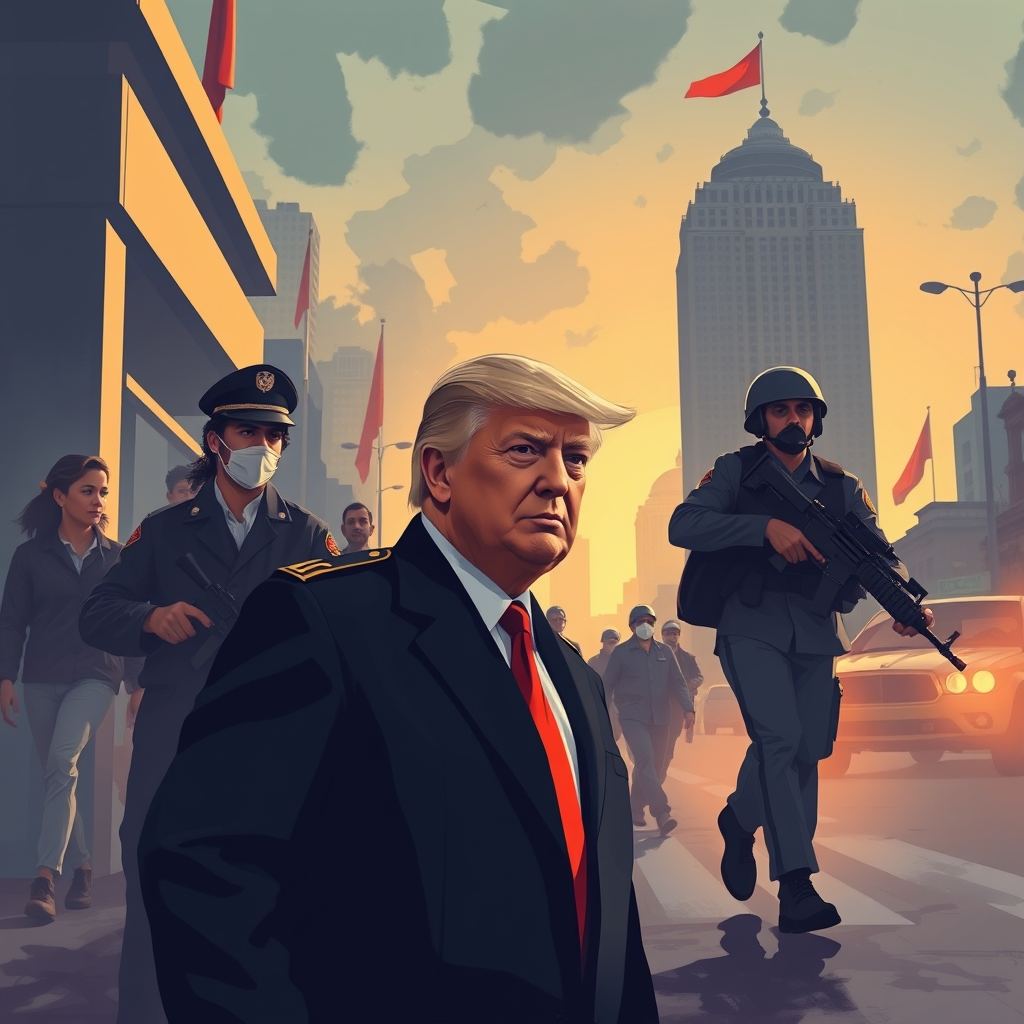
Trump Proposes Military Intervention in US Amid Chicago Violence
Former US President Donald Trump has intensified his rhetoric regarding domestic law and order, suggesting that military intervention could be the key to curbing rising crime rates. Following a recent mass shooting in Chicago, Trump asserted his ability to "fix this, FAST," signaling a potential shift toward a more securitized approach to American urban governance.
Escalation of Rhetoric Amid Chicago Violence
The call for military action comes in the wake of a violent mass shooting in Chicago, a city that has long served as a focal point for debates over American urban security and gun violence. Trump’s remarks follow a period of heightened tension in major US metropolitan areas, where recent incidents have underscored the volatility of domestic crime trends. By specifically targeting the situation in Chicago, Trump is leveraging a high-profile crisis to advocate for a doctrine of "law and order" that transcends traditional civilian policing.
His assertion that he can resolve such crises rapidly is not merely a campaign promise but a structural critique of the current US administrative approach to domestic security. This stance suggests that a second Trump administration might view domestic criminal activity through a lens of national security, potentially utilizing federal assets or military resources to stabilize high-crime urban centers.
The Policy Shift: Policing vs. Military Intervention
The crux of Trump’s proposal lies in the distinction between traditional law enforcement and military-style intervention. While local police departments are tasked with maintaining order under civilian oversight, the deployment of federal or military resources represents a significant escalation in the application of state power. This approach has historically faced intense scrutiny regarding constitutional boundaries and civil liberties in the United States.
Trump’s focus on "fixing it fast" reflects a preference for decisive, top-down executive action over the incremental, community-based policing models often favored by Democratic administrations. For a global audience, this highlights a deepening ideological rift in the US regarding how to manage internal stability. The debate is no longer just about crime prevention; it is about the extent to which the US federal government can—and should—exert force within its own borders to maintain social order.
Global Implications of a Securitized US Domestic Policy
While the immediate context is domestic, the implications of a US president using military-style tactics to combat crime are profound for global geopolitics. A nation that prioritizes internal securitization and aggressive domestic intervention may face shifts in its "soft power" projection. If the US becomes increasingly preoccupied with internal stabilization through forceful means, its ability to lead on international norms regarding human rights and democratic governance could be challenged.
Furthermore, the political stability of the US is a cornerstone of the global order. A leadership style that emphasizes rapid, forceful intervention can lead to increased domestic polarization, impacting the predictability of US foreign policy. As the US moves toward a pivotal election cycle, the way it addresses internal volatility will serve as a blueprint for how it engages with the world.
What It Means for India
- Predictability in Strategic Partnerships: A more securitized and inward-looking US administration may lead to a "transactional" foreign policy, where US engagement is heavily dictated by domestic stability and immediate security concerns, potentially affecting long-term strategic cooperation.
- Global Norms and Human Rights: If the US adopts more aggressive domestic policing models, India may observe a shift in the international discourse on governance, providing a complex landscape for India to navigate its own internal security challenges while maintaining its standing in the democratic world.
- Defense and Technology Cooperation: While domestic policy shifts are significant, India’s core strategic interests—such as iCET (Initiative on Critical and Emerging Technology) and defense manufacturing—are likely to remain robust, provided the US maintains its focus on countering common geopolitical rivals despite domestic political volatility.