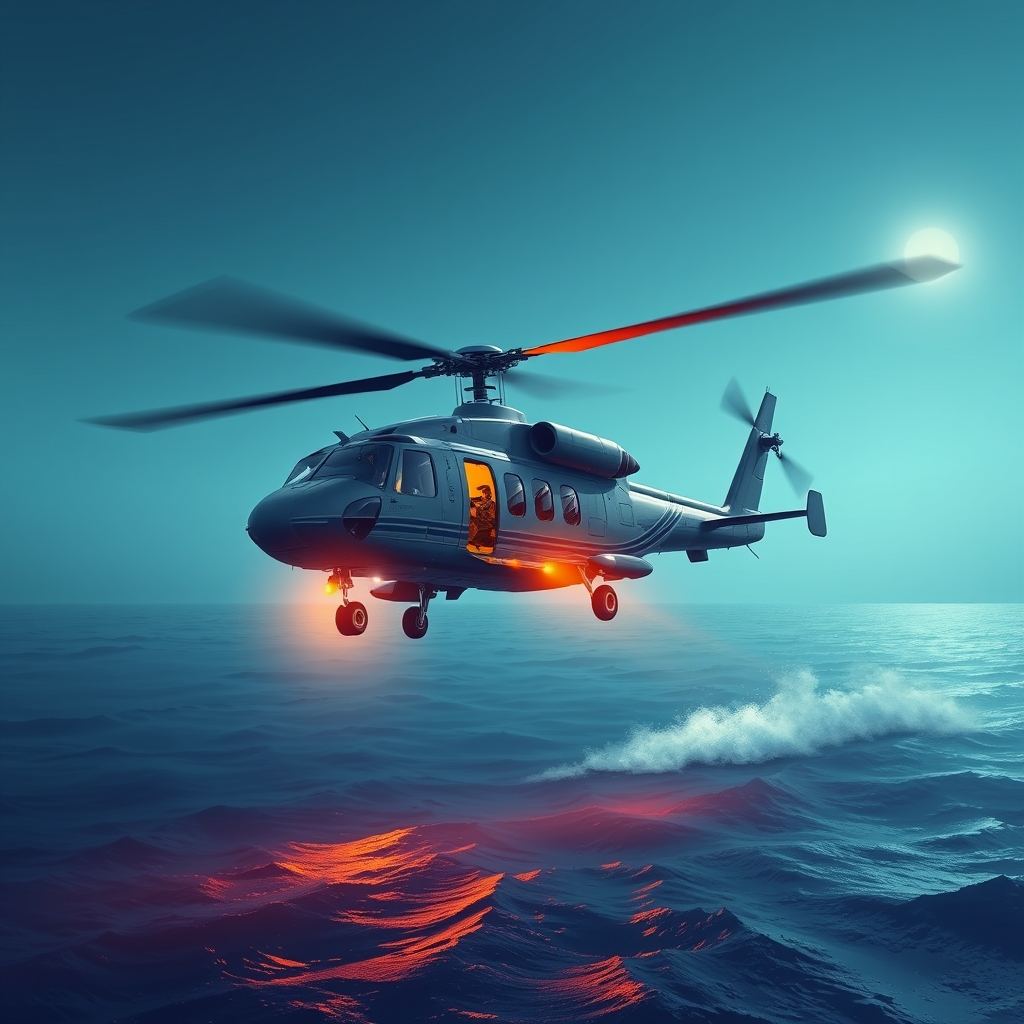
US Navy Helicopter Emergency Landing in Arabian Sea: Key Details
A US Navy Sea Hawk helicopter was forced to make an emergency water landing in the Arabian Sea early Tuesday, sparking immediate search and rescue operations. While three of the four crew members were successfully rescued and are reported to be in stable condition, one crew member remains missing as the US Navy intensifies its search efforts.
Details of the Incident and Rescue Operations
The incident occurred in the early hours of Tuesday when the US Navy Sea Hawk encountered an unspecified technical or operational issue, necessitating an immediate ditching in the Arabian Sea. Following the water landing, rescue teams were deployed to secure the survivors.
According to official reports, three crew members were pulled from the water and are currently in stable condition. However, the fourth crew member has not yet been located. The US Navy has confirmed that an active search and rescue mission is underway to find the missing individual. Crucially, the Navy has stated that there is currently no indication that the landing was the result of hostile action, even as regional tensions in the Middle East and surrounding maritime corridors remain high.
Investigation into the Cause of the Crash
As the search for the missing crew member continues, a formal investigation has been launched to determine the precise cause of the emergency landing. While the Navy has ruled out hostile involvement for now, the investigation will focus on several critical areas:
- Mechanical Failure: Determining if there was a malfunction in the Sea Hawk’s propulsion, electrical, or hydraulic systems.
- Environmental Factors: Assessing whether sudden weather changes or sea conditions contributed to the emergency.
- Human Factors: Reviewing cockpit procedures and crew response during the onset of the emergency.
The Arabian Sea is a critical maritime highway, and any incident involving high-end US naval assets attracts significant international scrutiny, particularly regarding the safety of maritime transit and the stability of naval operations in the region.
Strategic Context in the Indian Ocean Region
The Arabian Sea is a vital artery for global trade and a focal point for the security interests of many nations, including India. The presence of US naval assets in these waters is a constant feature of the Indo-Pacific security architecture. While this specific incident appears to be a non-combat technical emergency, it occurs against a backdrop of heightened maritime volatility.
The ability of naval forces to maintain operational readiness and respond to emergencies in the vast expanse of the Indian Ocean is a testament to their logistical capabilities. For the international community, the rapid response to this incident underscores the importance of search and rescue (SAR) protocols in high-traffic military zones.
What It Means for India
- Maritime Security Awareness: For India, incidents in the Arabian Sea highlight the necessity of robust maritime domain awareness (MDA) and the importance of maintaining high-readiness search and rescue capabilities in our own waters.
- Geopolitical Stability: While the incident is likely technical, India monitors all US naval movements closely; any escalation in regional tensions or unexplained naval mishaps can impact the security calculus of the Indian Ocean Region (IOR).
- Cooperation in SAR: Such incidents reinforce the importance of bilateral and multilateral cooperation between the Indian Navy and the US Navy regarding maritime safety, disaster response, and coordinated search operations in the North Arabian Sea.