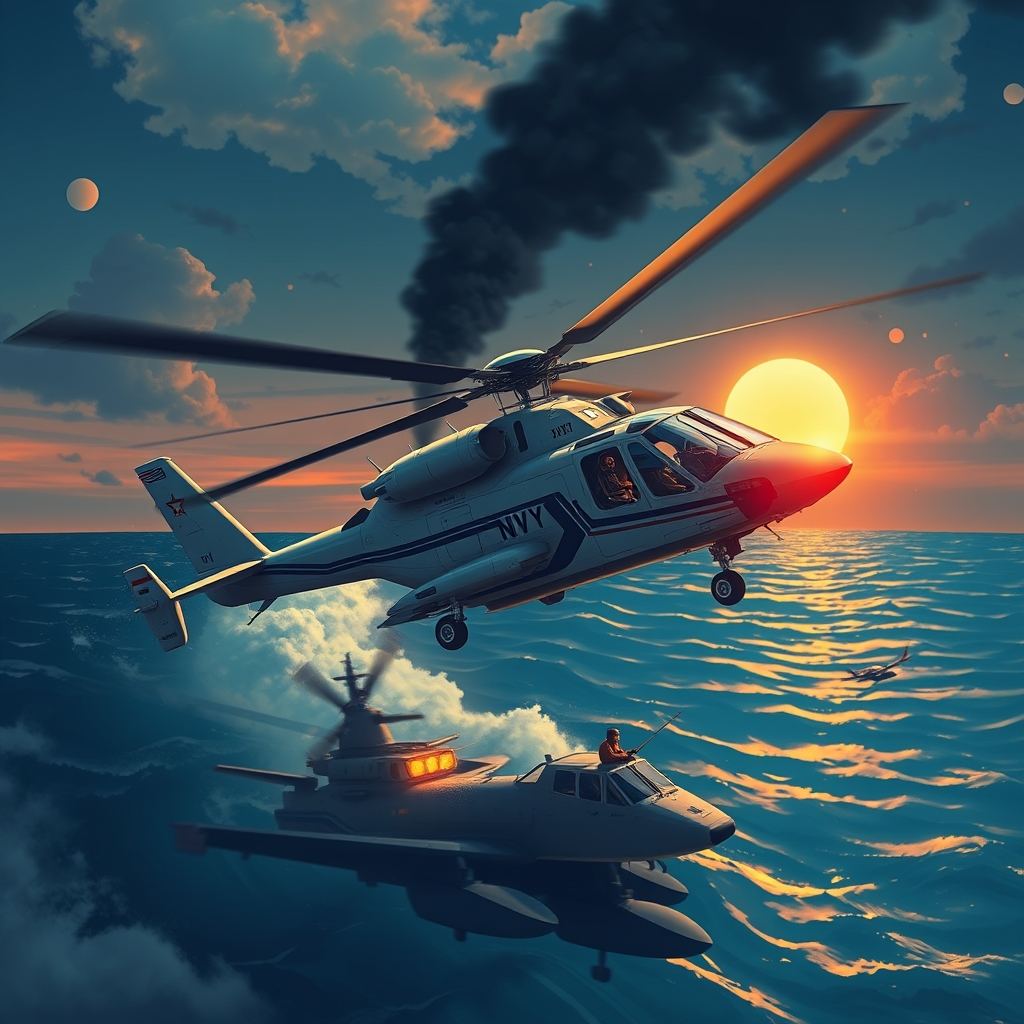
US Navy Seahawk Crashes in Arabian Sea: Search Operations Underway
A US Navy MH-60S Seahawk helicopter has made an emergency landing in the Arabian Sea, leaving one service member missing and three others wounded. The incident occurred on Wednesday, July 1, 2026, involving an aircraft deployed from the USS George H.W. Bush aircraft carrier.
Details of the Maritime Incident
According to an official statement from the U.S. Navy’s 5th Fleet, the MH-60S Seahawk helicopter was forced to conduct an emergency water landing in the Arabian Sea. While three crew members sustained injuries, they are currently reported to be in stable condition. However, the search for one missing aircrewman remains the primary focus of intensive naval operations.
The U.S. military has clarified that, at this stage, there is no indication that the crash was the result of hostile action or external interference. The cause of the incident is currently under formal investigation. Water landings pose extreme risks to helicopter crews due to the "top-heavy" nature of these aircraft, which can lead to them flipping upside-down upon submersion, complicating rescue efforts.
High Tensions in the Arabian Sea Region
The timing of this accident is significant given the volatile geopolitical climate in the Middle East and the surrounding maritime corridors. Although a ceasefire is currently in place between the United States and Iran, the U.S. military reports that forces in the region remain on high alert due to periodic flare-ups of violence.
The Arabian Sea serves as a critical artery for global energy supplies and international shipping. The presence of the USS George H.W. Bush aircraft carrier in these waters underscores the continuous U.S. maritime security footprint aimed at maintaining stability and monitoring regional actors. Any disruption in this area—whether through mechanical failure or kinetic conflict—immediately impacts the security calculus of all littoral states.
Strategic Implications for Maritime Security
The Arabian Sea is a vital zone for India’s maritime security and economic interests. As a primary route for Indian oil imports and a corridor for trade with both Europe and the Middle East, any instability in these waters necessitates constant vigilance from the Indian Navy.
The investigation into this crash will be closely watched by regional powers to determine if the incident was a purely technical failure or if it occurred amidst heightened electronic warfare or regional skirmishes. For India, the continued presence of heavy U.S. naval assets in the Arabian Sea provides a layer of regional monitoring, but also highlights the precariousness of the maritime commons during periods of U.S.-Iran tension.
What It Means for India
- Maritime Security Vigilance: India must maintain heightened maritime domain awareness in the Arabian Sea, as technical accidents or regional skirmishes can rapidly escalate into larger disruptions of sea lanes essential for Indian energy security.
- Geopolitical Stability: While the U.S. Navy's presence acts as a stabilizer, any escalation in the U.S.-Iran tension that could lead to further maritime incidents necessitates India to balance its strategic autonomy with the need for regional stability.
- Naval Cooperation and Intelligence: The incident underscores the importance of real-time information sharing and coordination in the Indian Ocean Region (IOR) to ensure that search and rescue (SAR) operations and maritime safety protocols are robustly maintained.